
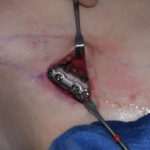
How much skull augmentation is realistically possible depends on the thickness of the scalp and the size of the implant. A major consideration in the custom skull implant design is an estimate of what the scalp can accommodate.,
The Main Limiting Factor: The Scalp
The skull bone itself is not the limitation in augmentation. The overlying scalp is the primary constraint.
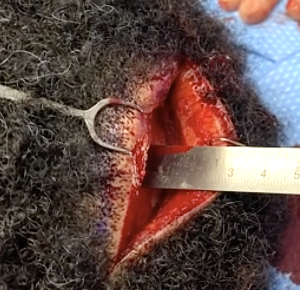 The scalp is thicker and tighter than facial skin. It functions like skin stretched over a beach ball (the skull). While it can stretch, it does so only to a certain point before problems arise, such as:
• Excess tension on the incision closure
• Stress on hair follicles with possible shock hair loss
• Prolonged tightness and discomfort
The scalp’s ability to stretch is directly related to its thickness. A thicker scalp generally stretches more. A thinner scalp has less elasticity. Scalp thickness varies significantly between individuals.
Scalp elasticity is influenced by:
• Ethnicity
• Skin pigmentation (greater pigmentation is generally associated with thicker scalp tissue and increased stretch capacity)
• Gender (males typically have thicker scalps than females)
• Age (elasticity decreases with age)
Realistic Skull Implant Augmentation Volumes
Below are typical ranges for most adults:
Conservative / Low Risk
Less than 100cc
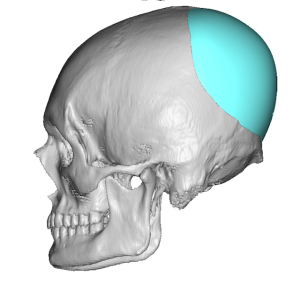 5–7mm implant thickness
• Very predictable
• Low tension closure
• Smooth recovery
• Rare healing issues
While this range is very safe—particularly in patients with thinner scalps—it may not provide enough volume for some patients’ aesthetic goals.
Moderate (Common Maximum for Most Patients)
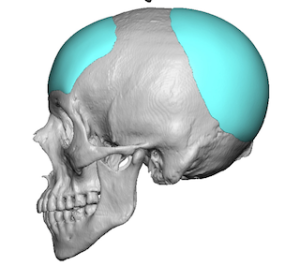 100–150cc
8–12mm implant thickness
• Provides noticeable augmentation
• Usually safe
• Requires good scalp elasticity
• Slightly longer swelling phase
This is the range most aesthetic skull augmentation patients ideally need and tolerate well.
Aggressive / Upper Limit
Greater than 150cc
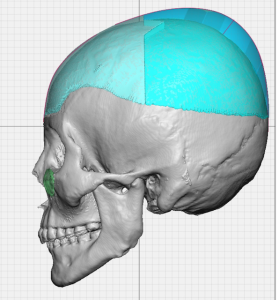 13–15mm+ implant thickness
• Significant scalp stretch
• Higher tension closure
• Increased risk of:
- Delayed healing
- Implant edge visibility
- Prolonged scalp tightness
- Shock hair loss
Not everyone is a candidate for this level of augmentation.
Rarely Feasible in One Stage
Greater than 15mm per side
This is usually not realistic without:
• Prior scalp tissue expansion
• Staged procedures
The scalp simply does not safely stretch this much in a single operation for most adults.
Tolerated Skull Implant Augmentation Volumes
Determining the shape, projection, and volume of a custom skull implant is as much clinical judgment as it is precise measurement. Each patient must be evaluated individually, balancing:
• Maximizing aesthetic improvement
• Respecting the safe limits of scalp stretch
For example:
An older, thin Caucasian female with a scalp thickness of ½ inch or less may have limited stretch capacity and tolerate only 60–80cc.
Conversely, a younger African American male with a scalp thickness of 1 inch or greater may tolerate 150–175cc.
These represent opposite ends of the scalp stretch spectrum. Most patients fall somewhere between these extremes.
Important Reality
Custom-designed skull implants can create dramatic and transformative aesthetic improvements. However, there are limits, and those limits must be respected to reduce the risk of complications.
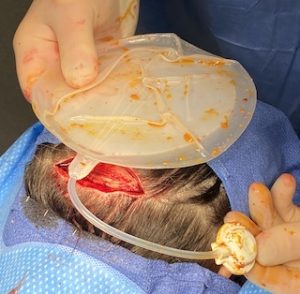 For patients seeking augmentation beyond the safe stretch capacity of their scalp, a first-stage scalp tissue expander may be beneficial before implant placement.
Dr. Barry Eppley
Plastic Surgeon