
Forearm implants are a niche type of cosmetic body-contouring procedure where a solid implant (usually silicone) is placed along the forearm to increase its size, definition, or symmetry.
Here’s the straightforward reality:
What they’re for
- Enhancing muscle appearance (especially for people who feel their forearms are underdeveloped)
- Correcting asymmetry from injury or congenital differences
- Very rarely done compared to other implants (like chest, calf, or facial implants)
Forearm Muscle Augmentation
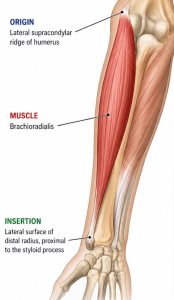 All aesthetic extremity augmentations are designed to augment a specific muscle and forearms are no different. The longest available forearm muscle is the brachioradialis which is a superficial muscle on the lateral/radial side of the forearm.
It forms the lateral border of the cubital fossa and is commonly visible as the prominent muscle running from the outer elbow toward the thumb side of the wrist. Its augmentation makes for the most visible forearm shape change.
How it works
- An incision is typically made at a skin crease at the antecubital fossa
- A custom-shaped silicone implant is inserted under the fascia of the muscle
- Positioned to mimic natural forearm musculature (usually along the brachioradialis muscle)
Pros
- Immediate and permanent size/shape change
- Can create a more “athletic” look without relying on muscle growth
Cons / Risks
- Highly visible area ? implant edges are hard to hide if the implant is not designed properly
- Risk of temporary nerve irritation (the forearm is dense with nerves and tendons)
- Implant shifting or unnatural contour
- Compartment tightness (can feel uncomfortable with movement)
- Infection or need for removal
- Limited number of surgeons experienced with this procedure
Reality check
This is not a common or widely standardized procedure. Many plastic surgeons often steer patients toward:
- Targeted training (forearms respond well to grip and pulling work)
- Fat injection grafting
- Injectable fillers
Case Example
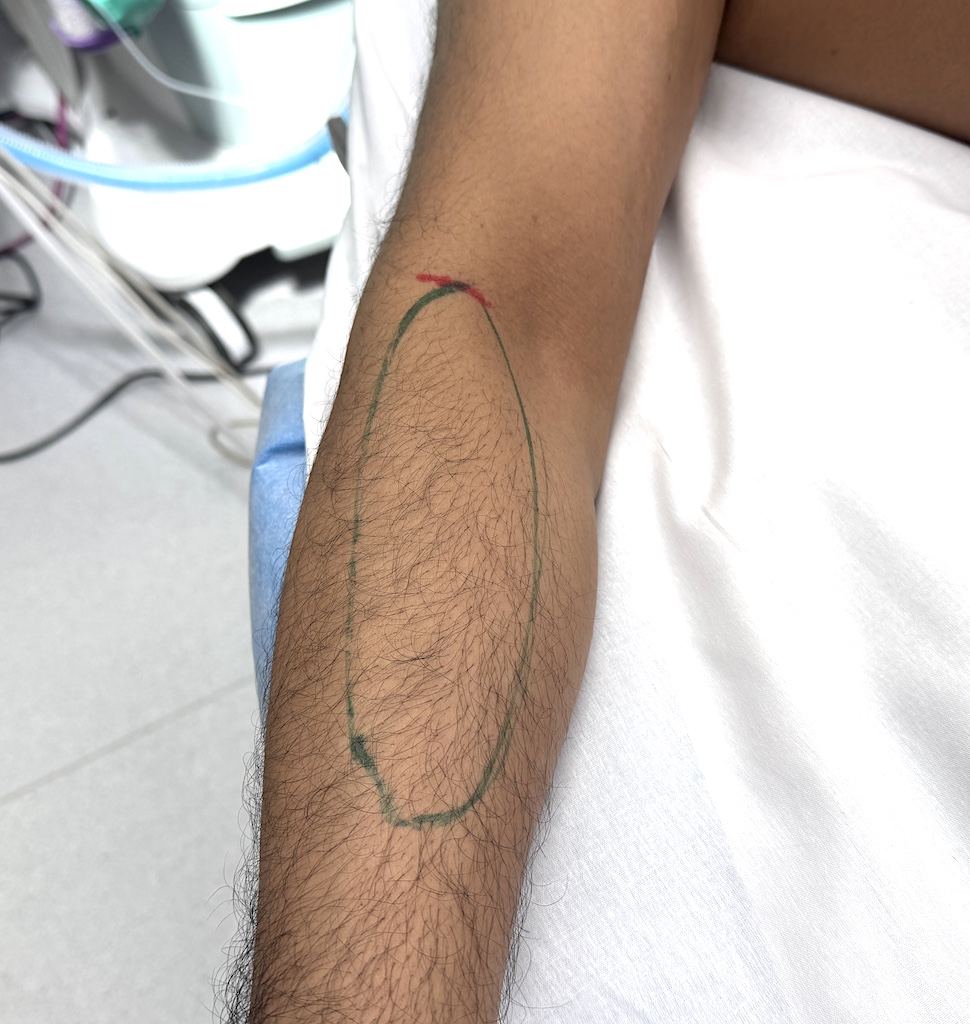
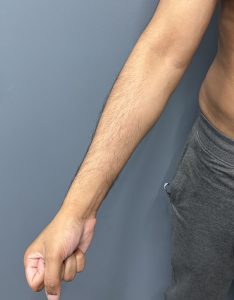 This male was undergoing other upper arm implants and also wanted to improve the size of his forearms. He felt most comfortable with an implant-based approach. Custom forearm implants were designed that were 16 cms long, 5cm wide and 6mms thick with finely feathered edges.
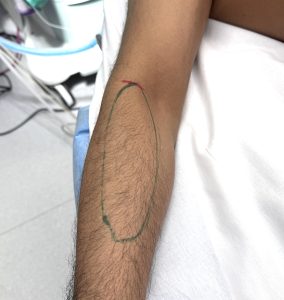 A 3m incision was made in a skin crease at the lateral antecubital fossa. The muscle fascia was exposed and a subfascal pocket was developed under and around the external skin markings.
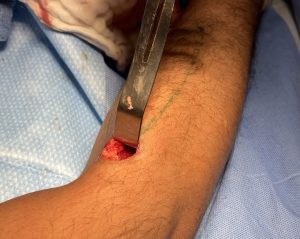
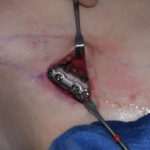
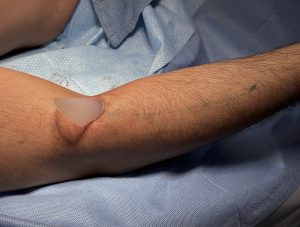 The soft silicone implant was rolled, inserted and then unrolled once inside the pocket. The key to implant placement is to make sure the proximal end of the implant was below the cut fascial edge and did not migrate upward when the elbow is flexed at 90 degrees.
 The fascia and skin are closed with resorbable sutures. No drain was needed.
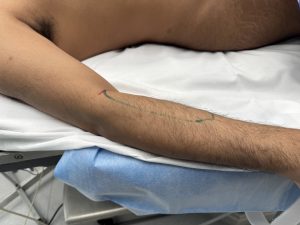
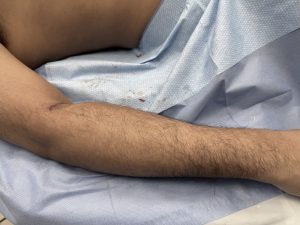 The forearm augmentation was visible but not excessive.
Discussion
If the goal is a larger looking or defined forearm look, implants are honestly one of the most assured methods to get there. There are several alternatives that can also be potentially effective and can also look natural.
1. Targeted training (most effective + safest)
Forearms respond extremely well to the right stimulus—most people just train them wrong or not directly.
High-impact movements:
- Heavy hammer curls
- Reverse curls
- Wrist curls (both flexion + extension)
- Farmer’s carries (huge for overall thickness)
- Dead hangs / grip training (Captains of Crush, fat grips)
Key insight:
Forearms grow best with high frequency + heavy grip demand, not just light reps at the end of a workout.
But training requires effort and some people[ have a limited capability to hypertrophy muscle within the scope of effort they are capable of doing. Not to mention that such training regimens must be continued for the muscle size to remain.
2. Fat grafting
- Uses your own fat (harvested via liposuction)
- Injected into the forearm for subtle volume increase
- Softer, more natural feel than silicone
Tradeoffs:
- Less dramatic than implants
- Some for all of the fat may resorbs (may need repeat sessions)
3. Temporary Fillers
- Hyaluronic acid or similar fillers
- Short-term volume boost
Reality check:
- Not common for forearms
- Expensive + temporary
- Risky in this area due to vascular structures
Bottom line
If you’re aiming for:
- Natural, athletic look – training + leanness
- Subtle enhancement – fat grafting
- Max size regardless of risk – implants
Dr. Barry Eppley
Plastic Surgeon