One of the most common facial concerns patients notice is hollowing or a sunken appearance under the eyes. While this can happen naturally with aging, some people are born with facial bone structure differences that make the under eye area appear more recessed even at a young age.
In younger patients, under eye hollowing is often caused by limited forward projection of the cheekbone and lower eye socket area. In older patients, the problem is more commonly related to soft tissue changes, such as fat loss and thinning skin. In some people, both factors are present.
A common feature seen in patients with a congenital under eye deficiency is called a negative orbital vector. This means that when the face is viewed from the side, the eyeball projects farther forward than the bone underneath the eye. This can create a tired appearance, visible lower eyelid show, and in some cases a slightly prominent or “bulging” eye appearance.
Why Injectable Fillers or Fat Often Do Not Fully Correct the Problem
Injectable fillers or fat can temporarily improve the appearance of under eye hollows, but they do not change the underlying bone structure. Patients with a significant skeletal deficiency may notice that fillers provide only partial improvement or require repeated treatments to maintain the result.
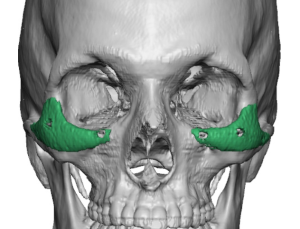
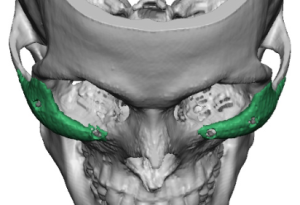
When the underlying issue is lack of bone support, improving the shape and projection of the infraorbital and cheek area can provide a more complete and long-lasting correction.
Infraorbital-Malar (IOM) Implants
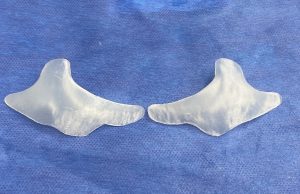
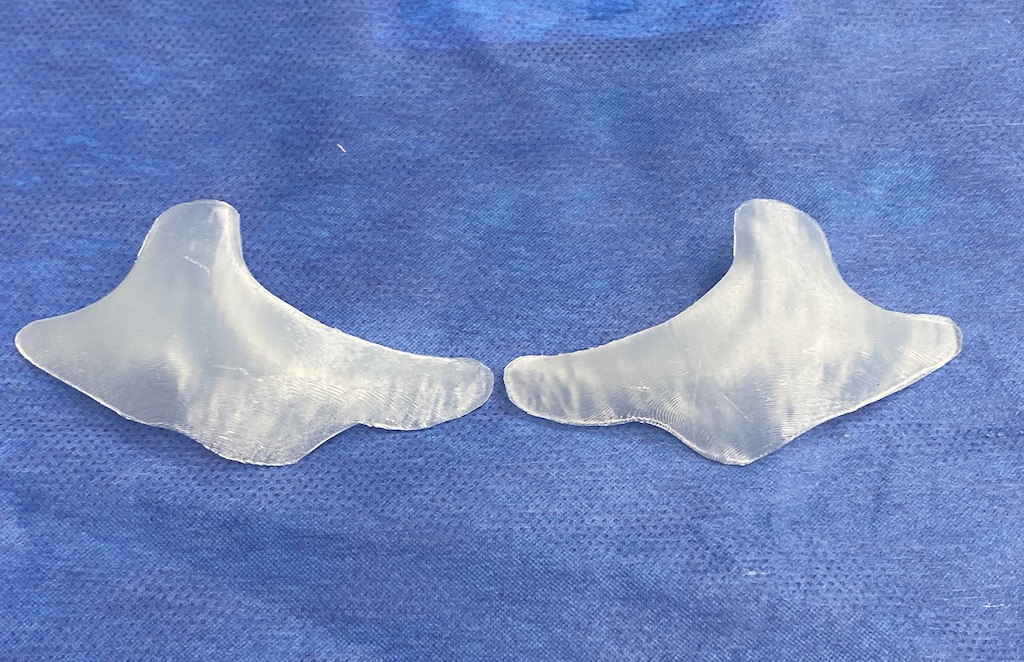
Infraorbital-malar (IOM) implants are designed to increase support beneath the eyes and improve cheek projection. These implants are custom-shaped to fit the patient’s anatomy and are placed to create a smoother transition between the lower eyelid and the upper cheek.
By adding structure to the underlying bone area, the implants can:
- Improve under eye hollowing
- Reduce the appearance of prominent eyes
- Improve lower eyelid support
- Create better facial balance and contour
- Enhance cheek projection
Case Example
This patient had naturally recessed under eye and cheekbone structure with a negative orbital vector appearance. From the side view, the eyes appeared more prominent because the surrounding bone support was limited.
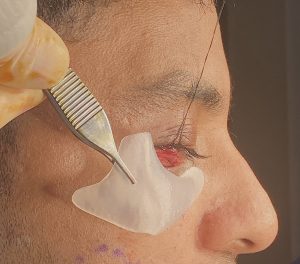
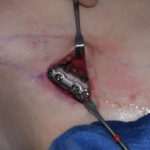
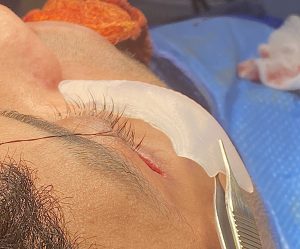 Custom infraorbital-malar implants were placed to increase projection beneath the eyes and across the upper cheek area. At the same time, a supportive lower eyelid procedure using a medium-thickness
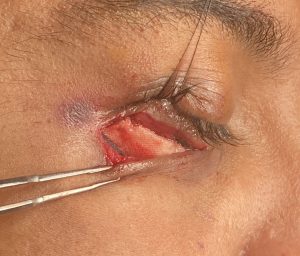 An AlloDerm graft was performed to help strengthen the lower eyelid tissues.
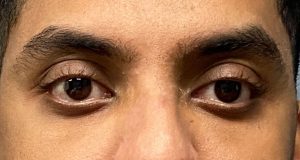
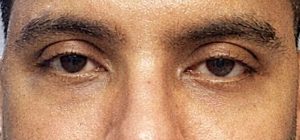
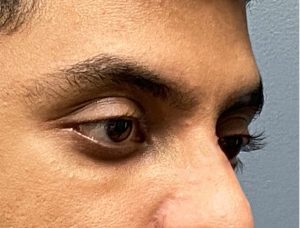
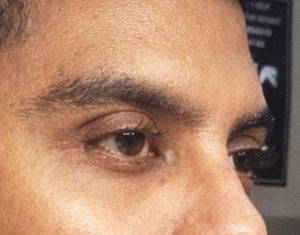 After surgery, the patient showed:
- Improved under eye fullness
- Better support of the lower eyelid
- Reduced appearance of eye prominence
- Improved facial balance and profile
- A smoother transition between the lower eyelid and cheek
Important Considerations
Patients with a negative orbital vector may also experience symptoms such as dry eyes or lower eyelid irritation. A careful ophthalmologic examination is important before surgery to evaluate eyelid function and eye health if the dry eye symptoms warrant.
Every patient’s anatomy is different, so treatment plans are customized based on the degree of skeletal deficiency, eyelid position, and desired aesthetic goals.
Key Points
- Under eye hollowing may be caused by both aging changes and inherited facial bone structure.
- A negative orbital vector means the eyes project farther forward than the surrounding bone support.
- Fillers may help temporarily, but they do not correct the underlying skeletal deficiency.
- Infraorbital-malar implants can improve support under the eyes and enhance cheek projection.
- Combining implant surgery with eyelid support procedures may provide the best result in selected patients.
Dr. Barry Eppley
Plastic Surgeon