
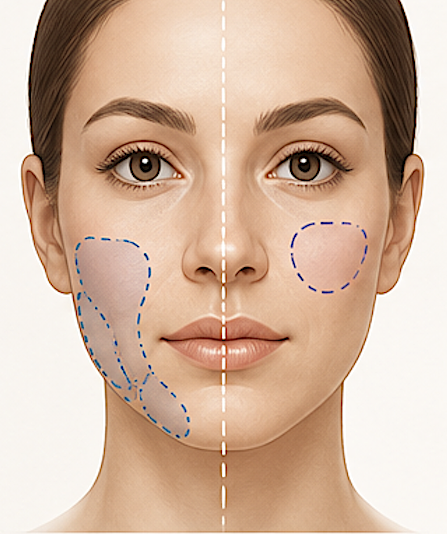
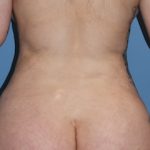
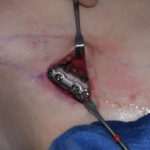
Perioral liposuction refers to very localized fat removal around the mouth region (“perioral” = around the oral opening). It is not a commonly named standalone cosmetic procedure in the way neck or abdominal liposuction is, but I have performed in hundreds of time by use small-cannula liposuction in selected areas around the lower face to improve contour.
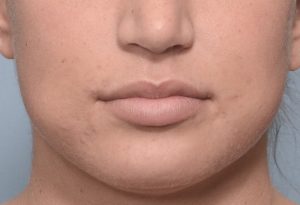
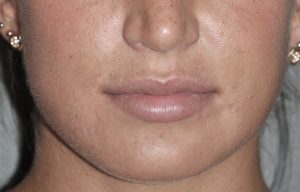
Areas that may be treated include:
- Nasolabial region (beside the mouth)
- Marionette line area
- Jowl/pre-jowl fullness
- Perioral mounds
- Lower cheek fullness
Goals
- Sharpen lower facial definition
- Reduce heaviness around the mouth
- Increase lower cheek concavity contour
- Decrease bulging or fatty fullness below the equator line (mouth corner to tragus of ear)
Important Considerations
The area around the mouth and the lower face can be effectively and safely treated by small cannula liposuction
- There are no motor nerves in the subcutaneous fat layer
- Skin quality and elasticity are important
- Over-aggressive fat removal can create undesired hollowing
- Aging around the mouth is often caused more by skin laxity and volume loss than excess fat
Perioral liposuction is frequently combined with
- Buccal lipectomy
- Facial implants
- Energy-based skin tightening
- Facelift/lower facelift techniques
- Perioral skin resurfacing
Technique
Typical features:
- Tiny access incisions hidden in mouth corner mucosalcreases
- Very small cannulas (microcannulas, 2.5mms or less)
- Can be performed under local anesthesia with sedation or general anesthesia
- Adequate fat removal (‘until the yellow turns red’)
Recovery
Common recovery includes:
- Swelling and firmness for 1–3 weeks
- Bruising for about 7–14 days
- No effective compression garment
- Final contour may take several months
Risks
Potential complications include:
- Irregularities or contour deformities
- Asymmetry
- Prolonged swelling
- Numbness
- Over-thinning/hollow appearance
- Scar tissue formation
The best candidates are patients with:
- Good skin elasticity
- Localized fullness
- Strong bone structure
- Realistic expectations
How does perioral liposuction differs from buccal fat removal?
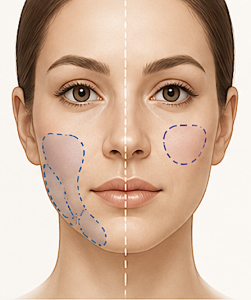
Perioral liposuction and buccal fat removal are quite different procedures anatomically, technically, and aesthetically, even though both affect the cheek facial contour.
Primary Difference
Perioral Liposuction
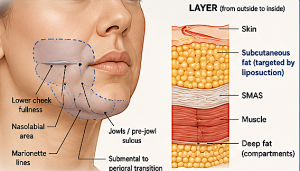
Removes superficial subcutaneous fat around the mouth and lower face using a cannula.
Targets:
- Jowls
- Marionette region
- Perioral fullness/mounds
- Lower cheek heaviness
- Pre-jowl sulcus transitions
The fat removed lies above the facial musculature and just beneath the skin.
Buccal Fat Removal
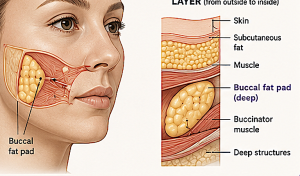
Removes the deep buccal fat pad through an incision inside the mouth.
Targets:
- Mid-cheek fullness
- “Chipmunk” or round facial appearance
- Lower anterior cheek bulk
The buccal fat pad is:
- Deep
- Encapsulated
- Located beneath facial muscles and adjacent to important facial nerve branches and Stensen’s duct.
Anatomical Comparison
|
Feature |
Perioral Liposuction |
Buccal Fat Removal |
|
Fat location |
Superficial/subcutaneous |
Deep buccal fat pad |
|
Depth |
Just under skin |
Beneath SMAS/musculature |
|
Access |
Tiny skin punctures |
Intraoral incision |
|
Area affected |
Lower face/perioral/jowl |
Mid-cheek hollowing |
|
Main contour effect |
Jawline & mouth contour |
Cheek narrowing |
|
Skin tightening effect |
Mild possible |
None |
|
Facial skeleton influence |
Highlights jawline |
Highlights zygoma |
Aesthetic Effect
Perioral Liposuction Produces
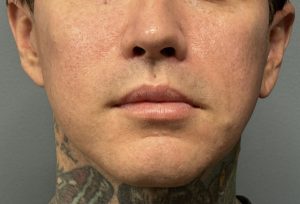
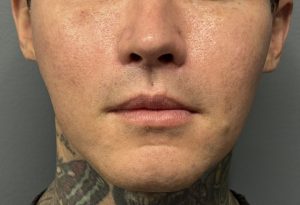
- Cleaner mandibular border
- Less lower-face heaviness
- Better jawline transition
- Reduction in jowling appearance
- Improved lower facial definition
It tends to create a:
- More sculpted lower face
- Leaner perioral appearance
- Sharper transition into the chin/jaw
Buccal Fat Removal Produces
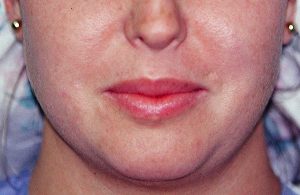
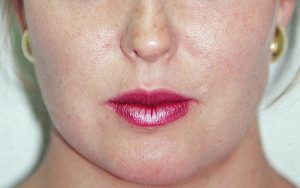
- More hollowed cheeks
- Increased cheekbone prominence
- Narrower facial width
- More angular/model-like appearance
It primarily affects:
- Midface contour
- Oblique facial views
Age Considerations
Buccal Fat Removal
Requires caution in:
- Thin patients
- Patients over 35–40
- Patients with early facial deflation
Why:
Aging naturally causes facial fat loss. Removing buccal fat can accelerate:
- Hollow cheeks
- Skeletonization
- Premature aging appearance
This is why a conservative approach with buccal fat excision is used in thinner facial patients. An aggressive buccal fat pad extraction is used in heavier, rounder fuller faces.
Perioral Liposuction
Often works better in:
- Mild lower facial fullness
- Early jowling
- Heavy lower-face contours
But excessive removal can also create:
- Perioral hollowing
- Harsh nasolabial transitions
- Irregular contour
But like buccal lipectomy patient election is critical. The aggressiveness of the technique varies with the patient’s anatomy.
Functional/Technical Differences
Buccal Fat Removal
More technically anatomy-sensitive because of proximity to:
- Buccal branches of facial nerve
- Parotid duct (Stensen duct)
- Buccinator muscle
Usually involves:
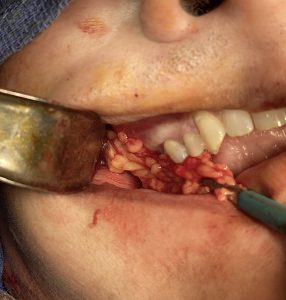
- Intraoral mucosal incision
- Blunt teasing out of fat pad
- Partial—not total—removal
Perioral Liposuction
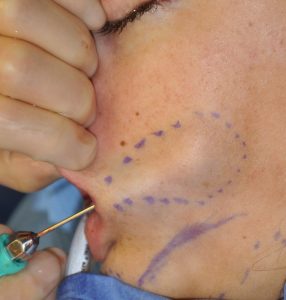
Involves:
- Small cannulas (often 1–2 mm)
- Fan-pattern superficial aspiration
- Internal puncture sites
Risk profile focuses more on:
- Surface irregularities
- Overresection
- Skin adherence problems
Which Patients Benefit Most?
Better Buccal Fat Candidates
- Younger patients
- Round faces
- Thick midface
- Good malar projection
- Persistent cheek fullness despite low body fat
Better Perioral Liposuction Candidates
- Lower facial heaviness
- Early jowls
- Thick lower-face soft tissue
- Good skin elasticity
- Desire for jawline refinement
Buccal fat removal and perioral liposuction often combined for maximal reductive contouring between the cheekbones and the jawline. Together these have been used with:
- Chin/cheek augmentation
- Jawline contouring
- Masseter Botox
- Rhinoplasty
- Neck liposuction
- Facelift
- RF tightening
One of the biggest modern aesthetic concerns is that aggressive buccal fat removal can make patients look prematurely aged years later. In contrast, conservative lower-face/perioral contouring tends to age more naturally when appropriately selected.
Dr Barry Eppley
Plastic Surgeon