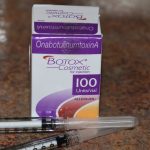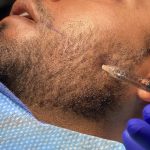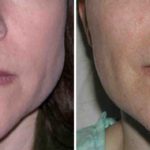
Botox is the #1 injectable cosmetic treatment and has been largely responsible for the wave of non-invasive aesthetic office treatments and for the widespread development of the medical spa concept. It has also been the major impetus for the number of non-cosmetic physicians offering beauty treatments. The simplicity of its use and the predictability of its results makes such treatments seem easy with few complications or problems. For these reasons, many nurses (and even aestheticians and cosmetologists) in some locations provide the actual injection treatments. (purportedly under some physician’s ‘oversight’)
The simplicity of any treatment does not necessarily guarantee a good result. In most cases, it is difficult to not chose Botox as a correct treatment for undesired lines and wrinkles from hyperactive or normal facial expressions. Whether it is the glabellar furrows or crow’s feet, Botox is always the first (and really only good) treatment of choice. Below the eyes, however, Botox is often not the only or even the best treatment for wrinkling problems around the mouth and neck. Most times, the mouth and neck are better off with either other minimally-invasive treatments or actual plastic surgical procedures. The problem is….if all you have in your treatment bag is Botox or a few injectable fillers….a patient’s result will not only be limited and disappointing but a waste of a patient’s money.
For Botox to be maximally effective, it must be mixed properly and used relatively promptly. Botox comes as a powder in a bottle that is so minute it is virtually impossible to see. It is reconstituted with saline on-site and, although the manufacturer provides recommendations as to how it is to be mixed (how much saline is put into the bottle), the treatment provider can do as they will. Because of profit margins involved, it is tempting for some to create a ‘dilute’ Botox mixture by adding more saline than the manufacturer recommends. This creates more Botox available to be injected and a greater number of patients can be treated….but it usually doesn’t work as well, if at all, and it lasts a shorter period of time. You the patient would have no idea whether the Botox you received was diluted…and I have found most patients don’t even know how many units they have or usually receive. They simply know the price they paid. The other factor that affects the effectiveness of Botox is how long after it is mixed is it used. Botox is not like wine….age does not make it better. After it is mixed it should be used within 24 to 48 hours at the longest. While the manufacturer recommends hours to a day, a day or two after mixing does not seem to change its effectiveness. How ‘old’ the Botox you have received is unknown to any patient. One indication that the Botox you may receive is fairly fresh is how busy is the practice or location where you receive it. (how often do they do Botox treatments) Daily? Weekly? Monthly? The busier a practice is, the more likely they will have fresher Botox.
Botox is a remarkable medical treatment that offers unparalleled wrinkle-reduction results in the forehead and around the eyes. While it is a simple injection treatment, its results can be affected by the training and experience of the injector and how it is reconstituted and when after it is used.
Dr. Barry Eppley
http://www.eppleyplasticsurgery.com/
http://www/ologyspa.cpm
Clarian North Medical Center, Carmel, Indiana
Clarian West Medical Center, Avon, Indiana
Indianapolis
The treatment of migraine headache patients by Botox injections has been shown to be effective in specific patients who have identifiable triggers of the supraorbital and supratrochlear, zygomaticotemporal, greater occipital, and septal trigeminal nerves. The temporary relief from Botox has led to the concept that relieving pressure on the nerves by muscle resection (surgical decompression) can subsequently be effective and may provide a more long-term solution to the migraine problem.
Surgical decompression of migraines, pioneered by plastic surgeon Dr. Guyuron in Cleveland, has shown that a high percentage of carefully-chosen patients may benefit. (> 90%) On average, most migraine patients experienced improvement at one year follow-up, needing less medications for management. While some patients do experience a ‘cure’, this is not the majority. A recent publication in the July 2008 issue of Plastic and Reconstructive Surgery by Dr. Poggi of Wichita confirms these results in their own reported experience. One of the most interesting findings of their study was that two-thirds of the patients felt that surgery offered better relief than Botox injections.
Surgical decompression involves removing muscle that intertwines or lays against the nerve. In the frontal area, this can be done endoscopically (like an endoscopic brow lift) or directly through an upper eyelid incision. As of now, this is a surgeon’s choice and the evidence that one method is superior over the other remains to be conclusively proven. For the zygomaticotemporal, greater occipital and septal trigeminal nerves, a direct open approach is used.
For those patients whose migraine headaches are of sufficient frequency and are not well controlled by medication, surgical decompression of trigger points offers potential for improving their lives.
Dr. Barry Eppley
http://www.eppleyplasticsurgery.com
http://www.ologyspa.com
Clarian North Medical Center, Carmel, Indiana
Clarian West Medical Center, Avon, Indiana
Indianapolis
A weekdoes not go by that I do not find several patients that have confused Botox with injectable fillers in terms of what it can do for in-office facial wrinkle and line reduction. I have heard many patients say “Can you fill up my lips with Botox’ or ‘I need a filler between my eyes to stop me from frowning’. The confusion is that some patients believe that all that comes out of a needle is the same. While such confusion is understandable due to the relative newness of these treatments, that is a little like saying that a scalpel does all the same surgeries. Injectable materials are treatments which have different mechanisms of action, even if the end result is often times similar. (wrinkle reduction)
To clear up the confusion, I often explain to patients the difference between static wrinkles and dynamic wrinkles. Dynamic wrinkles are those wrinkles and lines that appear when your face is moving or expressing. When we were younger, the only lines and wrinkles we had were dynamic. Our face was otherwise wrinkle-free when we weren’t expressing ourselves. Static wrinkles are those facial lines that are evident even when our face is still. All dynamic wrinkles, with age, will eventually lead to static wrinkles.
These two types of wrinkles are what separates Botox and any of the injectable fillers. Botox is for dynamic wrinkling. It is a muscle-paralyzing or muscle weakening agent so it will soften the wrinkles and lines that occur from a dynamic facial movement, such as between the brows with frowning….or the crow’s feet from smiling. Injectable fillers are for static wrinkling. They soften lines and larger wrinkles by plumping them out so they look less evident at rest. In some cases, the combination of Botox and fillers are used when the line or wrinkle is very deep and weakening the muscle action will help perserve the longevity of the filler material but not being ‘beaten on’ by muscle movement. This is most common in the furrows between the eyebrows. (’11 sign’)
Dr. Barry Eppley
http://www.eppleyplasticsurgery.com
http://www.ologyspa.com
Clarian North Medical Center, Carmel, Indiana
Clarian West Medical Center, Avon, Indiana
Indianapolis
I read a recent article that reports that drinking directly from water bottles can cause just as many upper lip wrinkles as smoking. I wouldn’t doubt it as any activity that makes your lips pucker, which activates the orbicularis oris muscle which encircles the mouth, can cause wrinkles to appear on the upper lip. The development of such wrinkles is a function of both the activity and how often it is done. Drinking water these days for some people is about as frequent as a regular smoker who does one or two packs per day.
As a general principle, wrinkles form on the face perpendicular to the direction of action of the underlying muscle movement. For example, horizontal forehead wrinkles are the result of ther vertically-oriented and moving frontalis muscle which extends from the brows upward into the scalp. Since the mouth’s main muscle (like the eyes) is a sphincter or encircling muscle which lies parallel (horizontal) to the upper and lower lip (except at the corners), it is no surprise that the lips (particularly the upper) develops vertical wrinkles in some people. The other factor that highly contributes to lip wrinkles is the thickness of your skin and the size of your lips. (which is interrelated) The thicker your skin, the less likely you will ever develop them. Take a look at African-Americans and people of Middle Eastern Descent, you rarely ever see them develop wrinkling of the lips. (and they have larger lips to begin with….as their skin is thicker)
Treatment of lip wrinkles is a challenging problem. I tell patients to think of it as improvement as there is no complete cure in most cases. For small and fine lines that are mainly located at the junction of the skin and the lip, an injectable filler can make a nice improvement…if you can accept having slightly to substantially larger lips. (whichever you desire) When the lip wrinkles are deeper and run higher into the upper lip, the concept of skin resurfacing comes into play. Usually this means laser resurfacing and it is just a question of how deep to go and how much recovery does the patient want. Laser resurfacing with lip augmentation with an injectable filler is the most common method by which I treat more significant lip wrinkling issues. This is done in the office under local anesthesia unless the patient is having other facial procedures which requires a trip to the operating room with the use of deeper anesthesia. There is some current debate between the laser techniques of resurfacing or peeling and the use of fractional (fraxel) laser treatments, but there is no hard clinical evidence at this point to say conclusively that fractional laser treatments are better. In the more severe cases, a small amount of Botox to help reduce the amount of muscle movement can also be helpful when done with fillers or laser resurfacing but you must be careful to not use to much lest you make your smile have an unnatural appearance.
Other methods of upper lip resurfacing for lip wrinkles is currently being evaluated. One method is to combine laser resurfacing with the use of sandpaper (yes I said sandpaper), known as laserbrasion. With this technique, the laser is only used for the first pass (to remove the very top layer of skin) and the deeper layers are then taken done by fine sandpaper. The concept here is that the use of sandpaper causes less trauma (no heat) and will heal faster without the prolonged redness. And it is just as effective as the laser but safer and with less complications than if one used traditional dermabrasion. The other method is known as percutaneous collagen induction therapy. (PCIT) Known aerating your lawn, a small wheel with fine needles is run over the upper lip, cutting many fine holes into the deeper portions of the skin. As this heals it causes the skin to thicken which helps reduce the amount of visible wrinkling.
Upper lip wrinkles in some women are unavoidable and can be very troubling. Injectable lip fillers, laser resurfacing, abd Botox can help but there is no permanent cure. The alternative treatments of fractional laser treatments, laserbrasion, and collagen induction therapy are interesting but it is too early to know if they will offer better results.
Dr. Barry Eppley
http://www.eppleyplasticsurgery.com/
http://www.ologyspa.com/
Clarian North Medical Center, Carmel, Indiana
Clarian West Medical Center, Avon, Indiana
Indianapolis
Lines around the eyes give a variety of emotional expressions, most of which convey a negative impression. These periocular lines, or crow’s feet as they are commonly referred to, are the result of normal but excessive muscle action of the underlying orbicularis oculi or sphincter muscle of the eye. As wrinkle lines form perpendicular to the action of the encircling muscle around the eye, wrinkles develop and radiate outward in a ’sunray’ effect. Elimination or softening of these lines is a frequently requested procedure. While this request is simple, adequately treating crow’s feet often requires combination therapy.
Botox remains as the primary treatment method for the crow’s feet area. Trying to remove these wrinkles without reducing their muscular action will produce disappointing results. Three injections sites for each side will usually suffice, placing them along the lateral orbital rim from below the eyebrow to the body of the zygoma. I never inject below the zygoma for fear of causing paralysis of the upper lip. Most patient’s will have a large vein or two in this area so it is important to avoid these and stay further temporally if necessay, otherwise a nice large bruise will result which will take weeks to go away. A total of 10 to 12 units of Botox per side is usually an adequate dose. For the younger patient without established crow’s feet wrinkles, the use of Botox will be completely preventative if treatments are maintained.
For the older patient who at rest already has established crow’s feet wrinkles, combination therapy will be needed. Botox in combination with laser resurfacing can produce some really significant results. Since the eyelids and the surrounding skin is quite thin, it is an area that is particularly reponsive to laser resurfacing. For most patients that have a treatment focused on the crow’s feet area alone, we are not talking about deep laser surfacing. Rather I use a light to moderate depth laser resurfacing so that healing occurs quite quickly, usually within three to five days. Laser depths around 35 to 50 microns (deep laser resurfacing is around 200 - 300 microns) are easily tolerated in the office under topical anesthetic cream, are quick to perform, and require minimal post-treatment care. The crow’s feet area is pre-treated with Botox during the same visit and then laser resurfaced. To keep the recovery quick, the depth of laser penetration is keep limited. Think about a series of these treatments done twice a year to eventually get the best result.
Botox and light laser resurfacing are the principal methods of treatment for crow’s feet. Botox alone is a great treatment for young patients given its prophylactic effects. When laser resurfacing of the crow’s feet skin is needed, a good long-term result is only possible if the underlying muscle action is controlled.
Dr. Barry Eppley
http://www.eppleyplasticsurgery.com
http://www.ologyspa.com
Clarian North Medical Center, Carmel, Indiana
Clarian West Medical Center, Avon, Indiana
Indianapolis
Botox is now the most well known injectable cosmetic facial treatment and is phenomenally effective at reducing undesired lines of facial expression, particularly in the forehead and eye area. The temporary paralysis effect of Botox works by reducing muscle pull on the overlying skin. Since lines and wrinkles form on the face from the pull of muscle that runs perpendicular to the line or wrinkle, this provides a strategy for where to place Botox injections. In the glabellar frown wrinkles, which are the number one facial area for Botox injections and the facial area from which the initial clinical studies for FDA approval were done, injection into the brow depressors (corrugator and procerus msucles are the main ones) is an effective approach.
Coincidentally, and with a simultaneous positive aesthetic result, paralysis of the brow depressors leaves the brow elevator muscles unopposed. In so doing, a minor brow lift is obtained in many patients. As the eyebrows are elevated by the vertical-running frontalis muscle, the lack of any down pull by the depressors allows this muscle to raise the eyebrows to some degree. Multiple clinical studies have shown that modest brow elevation occurs in the range of 1 to 3mms. This may sound like a modest amount, but in the face this can be a make a real observable difference.
Brow elevation with Botox can be done for the inner brow, outer brow, or both. It all depends on where one places the injections. As the most common area for Botox injections is in the glabellar area, only an inner brow lift will result. To create a more complete eyebrow lift, the outer brow depressors must be paralyzed as well. This means injecting out on the side of the brow to weaken the downward pull of the orbicularis oculi muscle. Injecting both inner and outer brows can create a ‘chemical’ brow lift which appears within seven days after the injections.
I have found that brow lifting with botox works best in female patients who do not have thick forehead skin or heavy brow tissue. It seems to be less effective in males although this probably dose-related as it is well known that larger muscles needs higher doses of Botox to be effective.
Dr. Barry Eppley
http://www.eppleyplasticsurgery.com
http://www.ologyspa.com
Clarian North Medical Center, Carmel, Indiana
Clarian West Medical Center, Avon, Indiana
Indianapolis
As we age, one of the many facial changes is the loss of volume in the cheek area. This is most apparent in patients that are thin or have a normal age-appropriate weight. The cheek prominences become less and more saggy. In addition, the area below the cheek bone known as the submalar or buccal cheek area will often become more indented. In some patients, this can create a ‘gaunt’ or aged look. People who are heavy rarely develop this sign of facial aging as their cheeks remain fuller and more rounded, creating the ‘Santa Claus’ effect. (round and jolly but vibrant)
While the most effective long-term solution to cheek volume loss is surgical (midface lift, cheek implants, submalar implants, or fat injections), injectable fillers offer a quick and effective method of a subtle cheek enhancement. By injecting volume into the cheeks or below in the buccal area, the face can appear more youthful and ‘uplifted’. The effect is not designed to be dramatic, nor should it be, but a subtle improvement that looks natural. This is a quick solution that has immediate effects without the swelling and potential bruising from surgery.
While the effect injectable cheek augmentation is only temporary, how long it lasts will be influenced by what type of injectable filler is used. The hyalurons, such as JuvaDerm and Restylane, will last in the range of 4 to 6 months, in some cases maybe a few months longer. When using the particulated fillers, such as Radiesse or ArteFill, I would expect the effect to last longer in the range of 9 to 12 months. (or basically double that of the hyalurons)
Injectable cheek augmentation can be enhanced by the simultaneous use of Botox injections in the crow’s feet and cheek areas. The objective being to weaked the expression lines around the eyes so that the amount of wrinkling with smiling is less. The combination of these injectable midface treatments makes for a nice rejuvenation of the middle third of the face that looks very natural and relaxed. All done in less than 30 minutes and you are on your way back to work or home for the evening without anyone being the wiser!
Dr. Barry Eppley
http://www.eppleyplasticsurgery.com/
http://www.ologyspa.com/
Clarian North Medical Center, Carmel, Indiana
Clarian West Medical Center, Avon, Indiana
Indianapolis
Botox, the world’s most popular injectable cosmetic treatment, works by providing a temporary muscle paralyzing effect reducing or eliminating unwanted facial expressions. The vast majority of Botox used for this purpose is done in the forehead and around the eyes. In the masseter muscle, however, repeated Botox injections over time can actually reduce the size of this large muscle improving external appearance and reducing muscle-clenching pain symptoms.
The use of Botox for masseter muscle reduction is well chronicled in the Korean medical journals. In this ethnic group, it is often desired to reduce the size of the muscles for the cosmetic purpose of making the face look less square. Botox done over time is so effective that the surgery historically used to achieve the same effect, masseter muscle reduction and mandibular angle reduction, is now reserved only for patients that demonstrate an actual bony prominence as the primary source of the problem.
Botox injections in the masseter muscle are easy to do. Have the patient clench their teeth together and the prominent bulging of the masseter muscle borders are easily seen. I usually inject right into the prominent bulging areas with 6 units per bulged area and stay closer to the angle areas of the jaw and its lower border to avoid injecting into the parotid gland. Plus, the thickest bulk of the masseter muscle lies low anyway. I have found that it takes about 25 - 35 units per side to get a good effect. So when I run out of bulging areas to inject, I will make sure I inject at the front and back of the muscle at the bottom of the jaw until I reach that number of units.
While effects can be usually been fairly quick, as judged by less muscle pain and headaches, it takes about 6 months before actual visible shrinking of the muscle is seen. Botox injections should be repeated every 4 months up to a years worth of treatment to see the best results. The decreased size of the muscle is impressive after a year of Botox therapy. I have been surprised to see that the results of masseter muscle reduction seem to be maintained even if no further Botox injections are done. I don’t have a good physiologic explanation as to why that would be so, as Botox does not cause any permanent atrophy in the muscles of facial expression. But I have seen it enough now to realize that it is real clinical finding with Botox use.
Dr. Barry Eppley
http://www.eppleyplasticsurgery.com
http://www.ologyspa.com
Clarian North Medical Center, Carmel, Indiana
Clarian West Medical Center, Avon, Indiana
Indianapolis
I recently had a patient who came to see me to get lipodissolve treatments. She stated that she was a perfect candidate for it. When I asked how she knew that, she said she had been injected last month at a party at one of her friend’s spa. Out of curiosity I queried further to find out (to no surpise) that she had no idea if the person who injected her was even a doctor of any kind, she didn’t know what was injected into her, nor did she have any understanding as to how Lipodissolve therapy even worked. As it turned out she had only 4 injections across her entire stomach area.
The relative ‘ease’ of doing injection beauty treatments such as Botox, soft tissue fillers, and lipodissolve has created the concept of the spa or home party atmosphere for a girls nite out. I won’t go into the obvious, and much written about, issue of…is there a physician on the guest list. Besides the fact that these are true medical treatments that shouldn’t be done outside of a physician’s office (increased risk of complications) and it is against the code of ethics of most physicians to offer medical treatments as a prize or incentive, there is a much more significant issue that most patients/consumers miss. These beauty treatments work best when done in the context of understanding the facial aging process. All injectable therapies play a role in the treatment of facial aging, but where they fit and whether they are good for you can only be determined by sitting down with a plastic surgeon and discussing the big picture. I see lots of patients who come in for Botox, for example, but have no idea how it works and what it is really good for. Injectable fillers are the same way, they can not cure and solve all facial wrinkling issues.
The consideration of these issues brings to light the point that I am driving it…value for what you are getting. Just because you are getting a good ‘deal’ on some injectable treatment by doing it at home or in a spa setting doesn’t mean it is even what you really need. It may not even be the most appropriate type of treatment for what you want to achieve. Injectable home or spa parties miss out on one of the most important issues of any medical treatment, pre-treatment education and consideration of other treatment options. That deal you are getting may turn out to be wasted money and effort. As the old saying goes, many times you do get what you pay for.
Dr. Barry Eppley
http://www.eppleyplasticsurgery.com
http://www.ologyspa.com
Clarian North Medical Center, Carmel, Indiana
Clarian West Medical Center, Avon, Indiana
Indianapolis
I read earlier this week of another Botox ‘concern’ this week on the internet which reported ‘Botox moves from the face to the brain’. This news story was based on a recently published paper in the Journal of Neuroscience. The concern is that Botox apparently can migrate from where it is injected to somewhere in the brain, suggesting that this may be potentially harmful. At the least, it sounds harmful anyway.
Doing my due diligence, I decided to read the article for myself as undoubtably patients will ask me about it. The article is officially titled ‘Long-Distance Retrograde Effects of Botulinum Neurotoxin A’ authored by an team of scientists at the Neuroscience Institute in Padova, Italy. It was published in the Journal of Neuroscience on April 2, 2008. In this study, botulinum toxin A was injected into rats either into various areas of the brain or into its whisker facial muscles. The most potentially relevant injection site for cosmetic purposes is the facial muscle site. They found that some of the botulinum enzyme remnants were later found at the facial nucleus site in the brain. Thus, confirming the novel finding that botulinum toxin has the ability to move ffrom the nerve endings in the face to the brain…..at least in rats.
What does this mean to the cosmetic patient who regularly gets botox injections? Not much in my opinion. First, this was a study performed in rats, so it does not mean it works the same way in humans. Secondly, the study did not show any harmful effects to the rat despite this finding. Third, the type of botulinum A and the dose used were different than what is used for cosmetic purposes in humans. As billions of cosmetic Botox injections have now been done in humans with no significant problems ever reported to date, this is a very interesting study but the correlation to human applications has not been made.
Or as one of my patients said after asking me about this news story this week……too bad for the rats but I will not stop getting my Botox!
Dr Barry Eppley
http://www.eppleyplasticsurgery.com
http://www.ologyspa.com
Clarian North Medical Center, Carmel, Indiana
Clarian West Medical Center, Avon, Indiana
Indianapolis