Explore the World of Cosmetic Plastic Surgery, Medical Spa, and Skin Care from Indianapolis Plastic Surgeon, Dr Barry Eppley

Archive: facelift

Facelift in Men in Indianapolis
Posted on 19 July 2008 | Category: facelift, facial aging, male plastic surgery, necklift

Men pose uniquely different challenges than women when it comes to the consideration of facelift surgery. Men age just like women but usually are only concerned with their neck when becomes more of a waddle. As a result, they often are seen in plastic surgery consultation with more advanced facial aging concerns than what one sees in women. Because of their more advanced neck issues and the heaviness of the male skin, minor or more minimally invasive procedures are not going to be effective at making a significant difference in their neck. Only a real facelift procedure will do the trick.

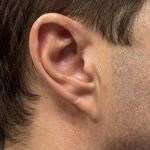
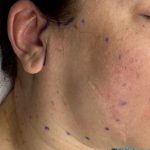
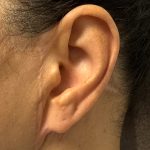
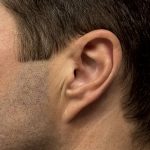
But the typical facelift operation is more difficult in men because of two hair issues….their beard skin and the hairline and quality of hair density (or lack thereof) around their ear area. As the conventional facelift procedure uses incisions in and around the ears, with a subsequent redraping of skin back and over the ear, men will often end up with beard skin behind their ear and potentially even inside their ear after the skin excess is trimmed. For this reason, the male facelift must often use an incision in front of the ear at the junction of the beard and non-hearing skin just in front of the ear to keep hair out of the ear after the operation. Keeping beard skin from ending up behind the ear is difficult and most men should expect that they will have to shave behind their ears after a facelift procedure. ( at least for an inch or behind the ear lobe)

For some men, their sparse hair over the temple areas and around the ear may make a conventional facelift very difficult to do to end up with good camouflaged scars. This is rarely a problem in women. Usually the scar ends up above the ear in the hairline, but with todays’ very short hairstyles particularly in men with thin or little hair,  it may not be very camouflaged and this is a very real consideration and concern. No male wants any area of the facelift scar to be visible so where to end the scar, and how that may affect the outcome of the procedure, must be thoroughly discussed prior to facelift surgery.

Me also will not get as dramatic a change in the neck as women will with a facelift. The heaviness and thickness of male facial skin does not allow it to tightened as much. And the way the facelift must be done in consideration of their hairline will also play a role in the outcome. Men are also prone to more ‘rebound relaxation’ in the jowl and neck area after surgery due to the quality of their skin, another factor that plays into the long-term outcome. Fortunately, men do not usually want a dramatic change anyway from any facial procedure so all of these issues usually add up to a good result that will please most men.

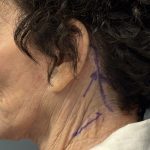
In rare cases of the much older male (usually greater than 65) who has a large neck waddle and does not want or can not undergo a significant operation, the direct neck lift can be an option. Rather than using any incisions around the ears, the loose skin is cut out directly in the neck. This produces a pretty significant change that offers a much more limited recovery. And can be a consideration if the man can accept a scar running vertically down from the chin to the adam’s apple. Surprisingly that scar can heal very nicely due to it being in beard skin which scars less than non-beard skin most of the time. 

Dr. Barry Eppley

http://www.eppleyplasticsurgery.com

http://www.ologyspa.com

Clarian North Medical Center, Carmel, Indiana

Clarian West Medical Center, Avon, Indiana

Indianapolis

Getting Rid of that Double Chin
Posted on 18 July 2008 | Category: double chin, facelift, lipodissolve, liposuction, neck waddle, necklift

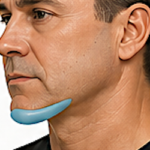
Whether you are young or old, some people end up with that annoying double chin even if they are not overweight. And while there are some ways to camouflage it, like wearing a turtleneck, that often is not practical or desired. Many times, that double chin or extra ‘neck’ is not seen or fully appreciated until one sees themselves in profile in a photograph. I have had many patients tell me that want initiated the consult was that they saw themselves in a school reunion, family picture, etc and they were surprised how they looked. Almost always, the surprise is the appearance of the jowl line and neck.
Double chins or neck waddles are the result of excess fat and hanging loose skin for some. In the younger patient, it may be a lot of extra fat and not so much extra skin although the weight of the fat pulls it down, making it look like there is more extra skin than there is. That distinction is important as it changes the strategy for what will be the most effective treatment.
If extra neck skin is not the dominant problem (usually the younger patient), then a fat-based treatment method shoudl be fairly effective. If the amount of fat or the double chin is small, then office-based Lipodissolve injections could be very effective. This is a slow process that takes months for maximal results to be seen. The biggest issue with Lipodissolve, however, is not the series of treatments but the swelling that will occur after each treatment session. It may only last for 4 or 5 days but the neck will essentially double in size for that time period. The most efficient treatment method for the fat neck would be liposuction. While that is surgery, it is both more efficient and effective and one only has to go through swelling and bruising of the neck one time.
When extra skin is a more significant issue, then a fat treatment alone will not work well and one will likely end up with even more loose sagging neck skin. In these cases, some type of neck lift (aka a facelift) must be done to remove the loose skin by lifting and working it out around the ear area where incisions can be placed more discreetly. In the older man, a direct neck lift can be done which is much simpler and highly effective although one has to be able to accept a fine line scar running from under the chin down to the adam’s apple.
Double chin reduction can be a very gratifying procedure and can be approached with Lipodissolve injections, liposuction, or some form of a facelift. The best procedure is the one that matches the cause of the double chin…too much fat, too much skin, or both.
Dr. Barry Eppley
http://www.eppleyoplasticsurgery.com/
http://www.ologyspa.com/
Clarian North Medical Center, Carmel, Indiana
Clarian West Medical Center, Avon, Indiana
Indianapolis

The Lonely Facelift
Posted on 15 July 2008 | Category: facelift, facial aging, limited facelift

The concept of a facelift for many patients, initially, seems extreme. Prospective patients often have a vision of being swollen and bruised for weeks over their entire face. Such thoughts have driven some patients to other less or minimally-invasive procedures which are often inappropriate for their facial aging problem. They may have been less invasive and may have cost less, but the end result may have also been disappointing.

Some potential patients suffer two fundamental misconceptions about facelifts…what they are and what the recovery may be. Over half of the facelifts that I do are done in isolation without any other facial procedures. Some patients are only concerned about the appearance of their neck and are not concerned about their eyes, for example. If that is only what concerns the patient, then that is the only issue that needs to be addressed.

An isolated facelift, or a neck-jowl lift, causes none of the issues that many patients fear. There would be no swelling or bruising around the eyes. The neck and jowl line will have some mild swelling and bruising…but it will be painless as the neck and jowl skin are numb for several months after surgery anyway. The only discomfort will be around the ears where the incisions are placed. The ears will be tender for a week or two as these incisions heal. While I use a head dressing that wraps around the neck for the first night….with surgical drains… all of this gets removed the following morning. In limited facelifts, there is no further dressing needed. In full facelifts, a small neck strap is used for a few more days. Showering and washing one’s hair can be done the next morning. There is no concern about getting the incision lines wet. Once can style and blow-dry their hair as they wish. Even with some mild swelling and bruising the neck and jowl

Patuent fears about facelift surgery are often unfounded. When done as the only facial procedure, a facelift is much easier to go through than most envision. An improved understanding of a facelift and its recovery is helpful for patients to make better decisions and ensure a good return on their investment.

Dr. Barry Eppley

http://www.eppleyplasticsurgery.com/

http://www.ologyspa.com/

Clarian North Medical Center, Carmel, Indiana

Clarian West Medical Center, Avon, Indiana

Indianapolis

A Facelift That Is Quick and Fits Your LIfestyle
Posted on 13 June 2008 | Category: facelift, facial aging, limited facelift

Limited Facelift in Indianapolis
As we age, our face starts to show jowling and loose neck skin. This happens due to the pull of gravity on our facial tissues whose attachments to the underlying bones and tissues gradually loosens. While there are other signs of facial aging, these are often the most bothersome to many people. Most do not notice these facial aging signs that much until they see themselves in pictures from a side or profile view, to which they may be quite surprised that their neck or jowls looked ‘that bad’.
All facelifts are not done alike. Simplistically, they fall into two main categories….full and limited. The limited facelift has become quite popular and represents nearly 50% of all facelifts that I do today. The limited facelift goes by a lot of different names such as the LifeStyle Lift, Quick Lift, Swift Lift, S-Lift. to name a few of the most prominent and marketed. There are other names as well and there will be more marketed and practice-branding names in the future. But essentially they are all the same (despite what each may claim) with a few minor variations that quite frankly don’t mean anything to you as a patient nor to the long-term outcome of the procedure. The difference between a full and limited facelift is…..that the limited facelift is to no surprise more limited. Very little work is done in the neck area and the procedure and scar is isolated to in front of the ear. Mechanically, the upward pull of the limited facelift is fairly vertical as opposed to a full facelift which is closer to 45 degrees so that the excess neck tissue can be worked out behind the ear.
The result of a limited facelift is obviously less than that of a full facelift but the results in the jowl and upper neck area can still be quite impressive nonetheless. The key to a very satisfied outcome after a limited facelift is in proper selection of the patient. My approach in patient selection is that it is good for two types of patients. The ideal candidate is the ‘younger’ patient who has early onset or only a moderate degree of jowling and loose neck skin. These are the perfect patients for the procedure as they will get an ideal result. Furthermore, their ‘problem’ doesn’t merit a full facelift anyway. The other patients who can benefit are those whose jowl and neck issues are more severe, and they would get a better result from a full facelift, but they desire less of an operation for a a variety of personal reasons. As long as they can accept and have been fully apprised that the result will not be similar to a full facelift, they can get good results also. For these type patients, its all about understanding that the results are effort-driven. The less of a procedure you do, the less of a result you will get.
Unlike some advertised plastic surgery procedures, the limited facelift lives up to its hype. It is a 60 to 90 minute outpatient procedure that requires no drains or dressings. A good social recovery (how do I look?) does take only about a week. Other than some mild ear tenderness, there really is no pain. When combined with other facial procedures (which may require a more normal recovery), even more dramatic changes can be achieved.
Dr. Barry Eppley
http://www.eppleyplasticsurgery.com
http://www.ologyspa.com
Clarian North Medical Center, Carmel, Indiana
Clarian West Medical Center, Avon, Indiana
Indianapolis

Indianapolis Facelift Surgery - Limited vs. Full Facelifts
Posted on 31 May 2008 | Category: facelift, limited facelift

Besides patient misconceptions about what a facelift really is, patients are also unaware that there are different types of facelift procedures today. As part of a basic concept of ‘matching the solution to the problem’, a facelift procedure should match the degree of anatomic facial aging, age of the patient, what recovery a patient wants to go through, and how much they want to pay for what type of result. All of these considerations go into the decision as to what type of facelift should be done.

Today, facelift operations go by a lot of different names that are primarily marketing in origin. Essentially, facelifts may be dividied into two types, limited and full facelifts. The most popular and marketed facelift today is the limited facelift. It goes by a lot of different names such as short scar facelift, lifestyle lift, MAC lift, quicklift and numerous others, but in the end they are all really the same operation from a patient’s perspective. A limited or ‘mini-facelift’ is a scaled-down modification of a full facelift where the incision (scar) is restricted to in front of the ear only and the amount of skin raised up and ultimately trimmed off is confined to in front of the ear and down into the jowl area only. In many cases, liposuction of the neck is done with the limited facelift. This produces a nice change in the jowl and upper neck area that needs only a very short recovery. (less than a week) It can often be performed under twilight anesthesis as an outpatient procedure. It is best used in two types of patients, younger patients who have early signs of aging with only small amount of neck and jowl issues and the older patient (who really needs a full facelift for the best result) who does not want to go through a full facelift or, for medical reasons can not go through a full facelift…and is willing to accept as a trade-off a result that is less than that of a full facelift. In other words, someone who is willing to accept some modest facial improvement with limited downtime, costs, and risks of complications. When done with other procedures, such as blepharoplasty and chemical or laser skin peels, the results from a limited facelift are even better.

A full facelift still remains as the gold standard to which any lower facial procedure must be judged, whether that be a limited facelift, threadlift, or a non-surgical ‘liquid’ facelift. The best results in the patient with more advanced facial aging will always come from a full facelift. A full facelift is where the incisions (scars) run in front of and behind the ears for a more extensive lifting of the neck area. Once can not expect a limited facelift to produce the same result as a full facelift. Full facelifts, while sounding more ominous and extensive, do not require a significantly prolonged recovery. They add a few days to the social recovery aspect (up to 10 days to look socially good) but do not require weeks of recovery as many patients think.

Both full and limited facelifts are effective operations that have less recovery and discomfort than most patients think. Which facelift type is best for any patient is based on a thorough discussion with a plastic surgeon to balance the issues of how much solution is needed for the magnitude of the  problem.

Dr. Barry Eppley

http://www.eppleyplasticsurgery.com

http://www.ologyspa.com

Clarian North Medical Center, Carmel, Indiana

Clarian West Medical Center, Avon, Indiana

Indianapolis

Indianapolis Facelift Surgery - Understanding What A Facelift Is
Posted on 30 May 2008 | Category: facelift, facial aging

I would have to say that one of the biggest misconceptions on the part of patients in plastic surgery is in understanding what a facelift is. On a near daily basis, I explain to potential patients, much to their surprise, that what they envision a facelift to be it is not. Most patients have the perception that a facelift involves the entire face, from the scalp down to the neck. And they envision weeks of horrid facial swelling and bruises. These images are further fostered by what they have seen on the internet and on TV.

In reality, however, this is not what a facelift is. A facelift is a rather poorly named surgical procedure. More accurately, it should be called a neck or neck-jowl lift for this is what it actually does. A facelift affects only the lower third of the face and does nothing for the upper and middle thirds of the face. It helps re-create a sharper neck angle and gets rid of those saggy jowls. When a facelift is done in isolation, there is no bruising or swelling around the eyes or the rest of the face! Many times, however, patients wants a more complete facial improvement and then simultaneous procedures involving the eyes, nose, or mouth may be done with a facelift, the effect of which is to more closely mimic the images that patients originally imagined a facelift to be.

When I do a facelift only, patients do have a head dressing and surgical drains for the first night after surgery. However, these are removed the next day and replaced with a small chin strap that they wear for the rest of the week. Patients may shower and wash their hair the next day. Short of bending over or strenuous exercise there are no specific activity restrictions. Recovery is really of a social nature, rather than that of a physical one. There is virtually no pain and only some mild tenderness around the ears. You really will look pretty from a facelift only procedure in seven to ten days.

Undergoing a facelift should not be viewed, therefore, as a scary or arduous undertaking. Most patients will tell you that it was a lot easier than they had imagined. Many times patients will want a more complete amount of facial improvement and surgery on the eyes (blepharoplasty) would be the most plastic surgery procedure done with a facelift. This is because most patients feel that the eyes and neck are their top two facial aging concerns they want improved.

Dr. Barry Eppley

http://www.eppleyplasticsurgery.com

http://www.ologyspa.com

Clarian North Medical Center, Carmel, Indiana

Clarian West Medical Center, Avon, Indiana

Indianapolis

Facelifts and Patient Concerns
Posted on 23 May 2008 | Category: facelift, facial aging

Facelifts do an excellent job at achieving a rejuvenated facial appearance by tightening the neck and eliminating those sagging jowls. In the world of plastic surgery, there has been much debate over decades as to the best way to get and maintain a good facelift result that will hold up over years. These include such concepts as platysmal release and plication and many different methods of SMAS development and repositioning, all methods that manipulate the tissues from the deeper muscles up to the overlying skin. While there is clearly benefit to doing so, there is no concensus on which methods are most optimal. Moreover from a patients perspective, they are completely unaware of these types of non-skin efforts and, while they are very interested in getting a good long-term result, there are certains aspects of a facelift from which they have more important concerns.

First and foremost, patients certainly do not want to sustain any complications from surgery particularly om their face. The most dreaded complication of a facelift would be an injury to the facial nerve. While such a rare injury, if it occurs may only be temporary, but any form of transient facial nerve paralysis is unsavory. Deeper plane facelifts definitely have a greater risk of this problem. The balance of its benefits vs its risks must be thoroughly discussed with your plastic surgeon during your consult.

Secondly, patient do not want to have any telltale signs of having had a facelift. This would be the result of poor scar placement around the ears or an altered temporal hairline that is moved up too high. In my opinion, proper incision placement is more important than whether one does a deep plane technique or not. Also, patients definitely do not want an unnatural look from being pulled ‘too tight’. I have yet to see a patient who has asked that their face be pulled as tight as possible. What patients have to realize is that their cheek-lip grooves (nasolabial folds) or the down turning of the corners of the mouth will not be improved no matter how tight a facelift is pulled. They require other simultaneously done procedures at the time of the facelift to get improvement in those aged areas.

Lastly, most patients really don’t want a long social recovery after a facelift, meaning that they look ‘bad’ for two or three weeks due to swelling and bruising. No matter how good the long-term result will be, they will never forget that type of recovery. Patients want a good result, but they also want a recover that is not unduly prolonged.

Facelifting surgery is a balance of how aggressive to be with the lifting and tightening process at the risk of a longer recovery and an increased rate of complications. A good thorough consult before your facelift with your plastic surgeon should cover these issues in detail so you can make an informed decision. 

Dr. Barry Eppley

http://www.eplpeyplasticsurgery.com

http://www.ologyspa.com

Clarian North Medical Center, Carmel, Indiana

Clarian West Medical Center, Avon, Indiana

Indianapolis

What To Do With That Aging Neck
Posted on 17 May 2008 | Category: facelift, facial aging, neck-jowl tuck-up

While there are many changes that occur in the face as we age, one of the most bothersome to many patients is the changes that occur in the neck. Progessive fullness of the neck, loose sagging skin, the development of vertical banding, the numerous horizontal wrinkles that appear low in the neck and the loss of a good sharp neck angle all capture the eye of the patient and others as well. These neck changes rank right up there with aging around the eyes as the most concerning facial aging concerns to most patients.
Like the rest of medicine, it is important to determine what the anatomic problems are in the neck to match up the best operation to improve it. Younger patients often just have some beginning neck fullness and a little bit of jowling. Simple liposuction and a little jowl tuck-up may be all that is needed in these younger patients. In some of these cases, I have used LipoDissolve injections alone and have gotten a good result if the patient can tolerate the temporary swelling that comes after eacj injection session and the 3 to 4 months to get the final result. Older patients usually have more sagging and loose skin and something like a more extended facelift (neck-jowl lift) is more appropriate. This is where sitting down with your plastic surgeon and going over your concerns with the aid of a mirror is so important. The selection of which operation is best for you will depend on a good understanding on your part of what do you want to see changed and what are you willing to go through to get it.
The aging neck in the male poses some different issues. They often have more skin excess and the facelift incisions that are used in females have to be altered to account for the male beard pattern. In addition, males have a much greater tendency towards some relapse after facelift surgery due to their thicker and heavier skin. Men also have a much greater aversion to major facelift surgery and may opt for an alternative procedure known as a direct neck lift. This procedure dramatically reshapes the neck and can produce a very sharp neck angle…but at the cost of a midline neck scar from below the chin down to the adam’s apple. For some older men this may be a good trade-off and this scar usually turns out fairly well due to how better hair-bearing skin heals scars.
Dr. Barry Eppley
http://www.eppleyplasticsurgery.com/
http://www.ologyspa.com/
Clarian North Medical Center, Carmel, Indiana
Clarian West Medical Center, Avon, Indiana
Indianapolis

The Resurgence of Facelift Procedures
Posted on 15 May 2008 | Category: facelift, neck-jowl tuck-up

In looking at the latest plastic surgery statistics listed in the Plastic Surgery News, the single procedure with the greatest area of growth was that of facelifts. The statistics show that nearly 116,200 facelifts were performed on patients age 40 or older in 2007, an increase of 14% over 2006. On the one hand, that statistic seems surprising given all of the non-invasive or minimally invasive procedures which are currehtly touted. On the other hand, I am not surprised as I have seen a similar increase in my own practice.

I think what is being ‘discovered’ is that the minimally invasive procedures have sparked more interest in facial rejuvenation for sure. But when patients come in for a consult, what they often find out is that the best value (what do I get for what I am paying) comes from a facelift-type procedure. The facelift may be combined with other things such as chemical peels, laser resurfacing, Botox, and injectable fillers, but the cornerstone of improvement comes from ‘traditional’ lifting and removing excess skin. A tightening and plumping approach if you will.

Also, what the statistics do not report is what type of facelifts are being performed. My guess would be that much of the increase is in the more limited or mini-facelifts that are so popular today. For patients in their 40s, a limited facelift can be a very quick and effective procedure that will stave off the need for a full facelift and more extensive facial rejuvenation procedures until a much later date…or maybe thet might never be needed at all if smaller procedures are done earlier and with some frequency over time.

Dr. Barry Eppley

http://www.eppleypalsticsurgery.com

http://www.ologyspa.com

Clarian North Medical Center, Carmel, Indiana

Clarian West Medical Center, Avon, Indiana

Indianapolis

Managing the Jowls of Facial Aging
Posted on 06 May 2008 | Category: facelift, jowl lift, jowls, lipodissolve, skintyte

One of the earliest signs of facial aging is the development of jowls or jowling. The jowls are areas of skin and fat that have fallen from the side of the face to hang along or below the jawline. As we age, these areas tend to become more noticeable as the sag worsens. The once straight jawline of youth is gradually replaced by the saggy full jowls of the aging face. Why this occurs is the age-old phenomenon of time and gravity, weakening the attachments of the skin to the underlying muscle so that a tight bond between the two no longer exists.
I see many patients who are bothered by jowling, including younger patients who often see this as one of the first signs of real aging. There are numerous options to treat the jowls, both surgical and non-surgical, with varying degrees of effectiveness. The most effective methods, to no surprise, are surgical and include facelifts and liposuction. A facelift in its fullest extent is a jowl-neck lift. In its more limited form, it is primarily a jowl lift. It works by pulling skin and deeper tissues up and back, eliminating the jowls by pulling loose tissue above the jawline again. The loose jowl tissue is simply repositioned and not removed. More minor procedures that have recently gained popularity, which aims to do the same thing, are the Threadlifts or Featherlifts. In this simple procedure, barned sutures are passed deep into the cheek and facial tissue above the jowl area and cinched up from above. For very minor degress of jowling, this has some benefit but is not effective enough with large amounts of jowling and the long-term results with these procedures is suspect. Actually removing jowl fat can be done with liposuction, reducing their size. This can be done alone or in conjunction with some form of a facelift. When performed alone, liposuction of the jowls must be done very carefully and conservatively, lest you get irregularities that are apparent in the overlying skin. When done with a facelift, the lifting and tightening of the skin usually eliminates this concern.
Non-surgical options include skin tightening by heat-generating devices and LipoDissolve. neither approach treats both of the jowl issues, skin and fat, and therefore they are usually less effective than surgery. Heating the underside of the skin through a series of treatments can cause a tightening effect. Devices such as Thermage or SkinTyte do it differently but the objective is the same, heat up and the skin on its underside and cause it to tighten. The long-term results of this procedure appear to be short-lived and that is why I perform them in conjunction with other procedures rather than as a stand alone technique. LipoDissolve treats the jowls by fat-dissolving injections done as a series. As the fat dissolves, the jowl is reduced in size. In my experience, it is just as effective as liposuction, albeit a lot slower. When performing non-surgical jowl reduction, I like the combination of LipoDissolve and Skin Tyte. That combination seems be particularly effective as both components of the problem, skin and fat, are addressed. They are also great touch-up procedures to do after a facelift when a little rebound relaxation in the jowl area occurs.
The jowsl can be treated by numerous surgical and non-surgical methods. Limited and full facelifts produce the best and most long-lasting results and should be the first choice when moderate to severe jowling is present. In more minor jowling, LipoDissolve and Skin Tyte work well if the patient can tolerate a slower speed of noticeable improvement.
Dr Barry Eppley
http://www.eppleyplasticsurgery.com
http://www.ologyspa.com
Clarian North Medical Center, Carmel, Indiana
Clarian West Medical Center, Avon, Indiana
Indianapolis

Categories

This is a list of the categories. Every post is categorized by the author to help you find what you need.

Archives

This is a list of the monthly archives. Click on the appropriate month to see the historical posts.

Links

This is a list of the links to related resources and websites. Use this list if you'd like to do some additional, relevant reading.