Archive for the 'facelift' Category
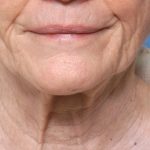
While there are many changes that occur in the face as we age, one of the most bothersome to many patients is the changes that occur in the neck. Progessive fullness of the neck, loose sagging skin, the development of vertical banding, the numerous horizontal wrinkles that appear low in the neck and the loss of a good sharp neck angle all capture the eye of the patient and others as well. These neck changes rank right up there with aging around the eyes as the most concerning facial aging concerns to most patients.
Like the rest of medicine, it is important to determine what the anatomic problems are in the neck to match up the best operation to improve it. Younger patients often just have some beginning neck fullness and a little bit of jowling. Simple liposuction and a little jowl tuck-up may be all that is needed in these younger patients. In some of these cases, I have used LipoDissolve injections alone and have gotten a good result if the patient can tolerate the temporary swelling that comes after eacj injection session and the 3 to 4 months to get the final result. Older patients usually have more sagging and loose skin and something like a more extended facelift (neck-jowl lift) is more appropriate. This is where sitting down with your plastic surgeon and going over your concerns with the aid of a mirror is so important. The selection of which operation is best for you will depend on a good understanding on your part of what do you want to see changed and what are you willing to go through to get it.
The aging neck in the male poses some different issues. They often have more skin excess and the facelift incisions that are used in females have to be altered to account for the male beard pattern. In addition, males have a much greater tendency towards some relapse after facelift surgery due to their thicker and heavier skin. Men also have a much greater aversion to major facelift surgery and may opt for an alternative procedure known as a direct neck lift. This procedure dramatically reshapes the neck and can produce a very sharp neck angle…but at the cost of a midline neck scar from below the chin down to the adam’s apple. For some older men this may be a good trade-off and this scar usually turns out fairly well due to how better hair-bearing skin heals scars.
Dr. Barry Eppley
http://www.eppleyplasticsurgery.com/
http://www.ologyspa.com/
Clarian North Medical Center, Carmel, Indiana
Clarian West Medical Center, Avon, Indiana
Indianapolis
In looking at the latest plastic surgery statistics listed in the Plastic Surgery News, the single procedure with the greatest area of growth was that of facelifts. The statistics show that nearly 116,200 facelifts were performed on patients age 40 or older in 2007, an increase of 14% over 2006. On the one hand, that statistic seems surprising given all of the non-invasive or minimally invasive procedures which are currehtly touted. On the other hand, I am not surprised as I have seen a similar increase in my own practice.
I think what is being ‘discovered’ is that the minimally invasive procedures have sparked more interest in facial rejuvenation for sure. But when patients come in for a consult, what they often find out is that the best value (what do I get for what I am paying) comes from a facelift-type procedure. The facelift may be combined with other things such as chemical peels, laser resurfacing, Botox, and injectable fillers, but the cornerstone of improvement comes from ‘traditional’ lifting and removing excess skin. A tightening and plumping approach if you will.
Also, what the statistics do not report is what type of facelifts are being performed. My guess would be that much of the increase is in the more limited or mini-facelifts that are so popular today. For patients in their 40s, a limited facelift can be a very quick and effective procedure that will stave off the need for a full facelift and more extensive facial rejuvenation procedures until a much later date…or maybe thet might never be needed at all if smaller procedures are done earlier and with some frequency over time.
Dr. Barry Eppley
http://www.eppleypalsticsurgery.com
Clarian North Medical Center, Carmel, Indiana
Clarian West Medical Center, Avon, Indiana
Indianapolis
One of the earliest signs of facial aging is the development of jowls or jowling. The jowls are areas of skin and fat that have fallen from the side of the face to hang along or below the jawline. As we age, these areas tend to become more noticeable as the sag worsens. The once straight jawline of youth is gradually replaced by the saggy full jowls of the aging face. Why this occurs is the age-old phenomenon of time and gravity, weakening the attachments of the skin to the underlying muscle so that a tight bond between the two no longer exists.
I see many patients who are bothered by jowling, including younger patients who often see this as one of the first signs of real aging. There are numerous options to treat the jowls, both surgical and non-surgical, with varying degrees of effectiveness. The most effective methods, to no surprise, are surgical and include facelifts and liposuction. A facelift in its fullest extent is a jowl-neck lift. In its more limited form, it is primarily a jowl lift. It works by pulling skin and deeper tissues up and back, eliminating the jowls by pulling loose tissue above the jawline again. The loose jowl tissue is simply repositioned and not removed. More minor procedures that have recently gained popularity, which aims to do the same thing, are the Threadlifts or Featherlifts. In this simple procedure, barned sutures are passed deep into the cheek and facial tissue above the jowl area and cinched up from above. For very minor degress of jowling, this has some benefit but is not effective enough with large amounts of jowling and the long-term results with these procedures is suspect. Actually removing jowl fat can be done with liposuction, reducing their size. This can be done alone or in conjunction with some form of a facelift. When performed alone, liposuction of the jowls must be done very carefully and conservatively, lest you get irregularities that are apparent in the overlying skin. When done with a facelift, the lifting and tightening of the skin usually eliminates this concern.
Non-surgical options include skin tightening by heat-generating devices and LipoDissolve. neither approach treats both of the jowl issues, skin and fat, and therefore they are usually less effective than surgery. Heating the underside of the skin through a series of treatments can cause a tightening effect. Devices such as Thermage or SkinTyte do it differently but the objective is the same, heat up and the skin on its underside and cause it to tighten. The long-term results of this procedure appear to be short-lived and that is why I perform them in conjunction with other procedures rather than as a stand alone technique. LipoDissolve treats the jowls by fat-dissolving injections done as a series. As the fat dissolves, the jowl is reduced in size. In my experience, it is just as effective as liposuction, albeit a lot slower. When performing non-surgical jowl reduction, I like the combination of LipoDissolve and Skin Tyte. That combination seems be particularly effective as both components of the problem, skin and fat, are addressed. They are also great touch-up procedures to do after a facelift when a little rebound relaxation in the jowl area occurs.
The jowsl can be treated by numerous surgical and non-surgical methods. Limited and full facelifts produce the best and most long-lasting results and should be the first choice when moderate to severe jowling is present. In more minor jowling, LipoDissolve and Skin Tyte work well if the patient can tolerate a slower speed of noticeable improvement.
Dr Barry Eppley
http://www.eppleyplasticsurgery.com
http://www.ologyspa.com
Clarian North Medical Center, Carmel, Indiana
Clarian West Medical Center, Avon, Indiana
Indianapolis
My office often gets asked if we perform the ‘LifeStyle Lift’, ‘S-Lift’, and a variety of other names that end in -lift. The callers and patients don’t know, of course, that all these names really refer to the same procedure, otherwise known as a limited facelift. Their interest is peaked by the allure of improvement in sagging jowls or loose neck skin but without the downtime of a full facelift.
The confusion about this procedure stems from general misconceptions about what an actual facelift is. Most patients envision a facelift as a procedure that starts at the top of the head and ends somewhere below the neck. Visions of weeks of seclusion, obscene facial swelling and bruising, and ruinous financial strain make many patients feel that they definitely don’t want a facelift. They don’t understand that a facelift is really a misnamed procedure. A better name which more accurately describes what it is….is a necklift or a jowl-necklift. A facelift, in isolation, does very little above the jawline or for most of the face. It is a procedure that changes the neck and jowl line only. Many patients will have other facial procedures done in conjunction with a facelift, such as the brow, eyes, nose, cheeks, or lips (often referred to as total facial rejuvenation) but these do not constitute a facelift. As a stand-alone procedure, a facelift is really about the neck and jowls and creating a sharper neck angle and a clean jowl line again.
Therefore, a limited facelift is a scaled down version of the full facelift. It has gotten, for a variety of marketing purposes, many catchy names as previously mentioned. Some plastic surgeons even put their own name on it. But, in the end, there are all the same procedure. A limited facelift is…..limited. Meaning the length of the incisions used (in front of the ear), how much skin is undermined and removed, and the amount of subsequent after surgery care and recovery is much less than a full facelift. And an important concept to grasp here is….the result is also less than that of a full facelift. For this reason, the best candidates for a limited facelift is someone younger who has minimal jowling and loose neck skin or someone older, who really needs a full facelift, but prefers a smaller procedure for any number of reasons.
I have found that one-half of the facelifts I do today are of the limited variety. They are very popular due to their quick recovery, lack of pain, and minimal swelling and bruising. They are a great stopgap measure that will substantially delay the need for a facelift is some patients and may, in others, potentiallhy eliminate the long-term need for a full facelift. Whe combined with other small face procedures, such as eye tucks and peels, they really make a nice change with no chance of getting that ‘operated look.’
Dr Barry Eppley
http://www.eppleyplasticsurgery.com
http://www.ologyspa.com
Clarian North Medical Center, Carmel, Indiana
Clarian West Medical Center, Avon, Indiana
Indianapolis
One of the common sequelae in the massive weight loss patient after bariatric surgery is the devlopment of a very saggy neck. What was once a very full neck for some patients becomes a hanging waddle after bariatric surgery for some. Unlike many of the body changes after bariatric surgery, the development of a sagging neck does not occur in everyone. For many, the loose skin in the neck is not a top priority over many other body areas such as the arms, abdomen, buttocks, and thighs. Often addressing the neck problem is done done until a second or third stage bariatric plastic surgery correction.
When it is important, the saggy bariatic neck can be dealt with through a very conventional approach. The typical full facelift (a facelift is a necklift….it does nothing for the face above the jowls unless other procedures are done with it), with the incisions in front and behind the ear, can lift and tighten a large amount of jowl and neck skin. When the excess is considerable, a perfectly sharp neck angle is not possible to obtain. In some rare patients, I have dealt with the neck skin by cutting it out directly (known as a direct neck lift). This is less of a procedure to go through but does leave a scar running down the middle of the neck from the chin to the adam’s apple. While many of these sscar can look quite good, you have to be prepared to bear with the scar as it goes through its maturing phases over many months. This type of scar always looks much better on men than it does in women.
Either way, a facelift or a direct neck lift are relatively easy to go through. There is virtually no pain, and much less swelling and bruising that you would think. I only keep my patients in a neck dressing for one day after surgery. Even with some swelling and bruising, the appearance is less full than before surgery. Do not confuse an isolated facelift or direct necklift with images you have seen on TV or the internet where patients are swollen and bandaged from the top of their heads to the neck. These patients are getting other facial procedures as well as perhaps including eyelifts, browlifts, nosejobs, etc. which causes a lot of mid- and upper facial swelling.
Dr Barry Eppley
http://www.eppleyplasticsurgery.com
Clarian North Medical Center, Carmel, Indiana
Clarian West Medical Center, Avon, Indiana
Indianapolis
The sagging jawline is one of the first signs of sigificant facial aging. Occurring somewhere in the early to late 40s, the development of jowling begins which may be accompanied by looser skin in the neck and loss of the once-sharp neck angle. In seeing a lot of these early aging patients, they often are initially interested in non-surgical procedures such as threadlifts or device skin tightening. Their belief is that these non-invasive procedures will produce a good result but will not involve any ‘downtime’…..and are relatively inexpensive. At the very least, they definitely want to avoid something radical such as a ‘facelift’.
While most of these early facial aging patients don’t need a full facelift, they are completely unaware of the more limited facelifts options and that significant downtime is not needed. I find most patients don’t even have a good concept of what a facelift is and are under the misconception that it is a ‘full face’ procedure going from the top of the head down to the bottom of the neck with a month for recovery. And, they certainly don’t want that ‘operated look’. These patients require a good education as to a facelift, aka neck-jowl lift, is….which makes transitioning the discussion into the limited facelift options more understandable and appealing. From both a result and value perspective, limited facelifts are definitely superior to threadlifts or any form of external, non-surgical skin tightening.
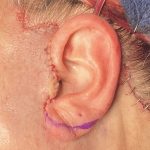
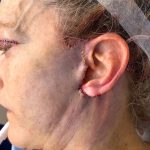
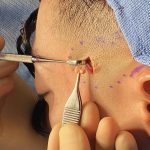
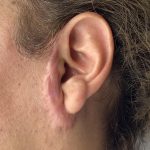
The limited facelift goes by a lot of different names such as a mini-facelift, S-lift, Quicklift, Swiftlift, EpiLift, etc. Despite the different names, the procedure is largely the same. It consists of neck liposuction in most cases combined with skin excision and tightening in front of the ear and some deeper tissue tightening. Given that the neck is not widely undermined, and often not undermined at all, the procedure is associated with less than one week of swelling and bruising. I find most of my patients truly look good in a week. Close inspection will reveal the incision into and out of the ear but it is not all that easy to see. The procedure does a beautiful job of lifting the jowl area, and when liposuction is done in the neck, some real neck changes can be seen as well. The limited facelift can be combined with many other less invasive procedures such as Botox, injectable fillers, and light laser skin resurfacing to enhance the overall effect. Much is made of being able to do this procedure under local anesthesia, but I prefer to do it under a general anesthesia. That enables the patient to be ideally comfortable and the procedure is done in a time-efficient manner.
The limited facelift was a procedure first introduced in the early 1900s and was used then because it was limited and surgery was very primtive at that time. The limited facelift is used today because it is a perfect match for early facial aging when more extensive procedures are not warranted or desired.
Dr Barry Eppley
http://www.eppleyplasticsurgery.com
http://www.ologyspa.com
Clarian North Medical Center, Carmel, Indiana
Clarian West Medical Center, Avon, Indiana
Indianapolis
A facelift is one of the most recognized procedures in aesthetic plastic surgery…..but also one of the most misunderstood. The general public’s perception of a facelift….based on TV shows and the internet…is someone after such surgery being bruised from their eyes to their neck and their face wrapped up in a big dressing…like they had been involved in a major accident. And that it will take weeks to even look good enough to go out in public. In reality, this perception is flawed at best and even grossly inaccurate at worst.
The name of the operation, facelift, is misleading. It does not really describe what the surgery actually does or what the objectives of the procedure are. More accurately, a facelift should be called a neck-jowl lift, for this is what it actually helps. It is a great procedure for tightening the neck, getting rid of the that neck waddle, and lifting those sagging jowls. The medical name for a facelift, rhytidectomy (old plastic surgery meaning cutting out wrinkles), should be described as a cervicoplasty. (reshaping of the neck) However, the name facelift persists and always will as it is embedded in our plastic surgery nomenclature.
Therefore, when you realize that only the neck and jowl are affected by the procedure, many of its misconceptions fade away. In isolation as a stand-alone procedure (which half of my ‘facelift’ patients only have), a facelift causes no bruising or swelling from the nose up. While many facelift patients get their eyes, forehead, nose and other facial procedures done at the same time, this is not a requirement and is only done if one wants the ‘total face’ rejuvenated. I find that after an isolated facelift, one can look pretty good in about a week and can easily be out in public in a few days with a little make-up in the neck area.
Remember, the eyes are not swollen at all!
One of the great misconceptions about a facelift is what is actually done in the operation. A facelift operation is all about tissue layers and vectors of lifting. The lifting off of the skin from the underlying tissues over the side of the face (to the cheek area) and across the neck through incisions placed in and around the ears is obvious in any diagram of a facelift operation. And movement of loose skin pulled back and over the ears at about a 45 degree angle to the face probably accounts for about 80% - 90% of the result created by a facelift. And often this is the only tissue moved in a facelift. This is the safest and easiest approach with the least likelihood of complications. Deeper layers have also been raised up and moved in more recent versions of facelift surgery. These deep layer that can be moved independent of the skin, is a special layer of tissue over the muscle. This tissue, known as SMAS, is raised and sutured up in a more vertical direction compared to the direction of the skin pull, closer to 60 degrees usually. The public erroneously believes that it is muscle that is moved which is not possible. The SMAS sits on top of the muscle. There is considerable debate as to whether the ‘deeper’ versions of the facelift produce better long-term results than skin movement only.
The neck-jowl lift, known historically as a facelift, can lift two different layers of sagging facial tissues in two slightly different up and backward directions.
Dr Barry Eppley
http://www.eppleyplasticsurgery.com/
http://www.eppleyfacelift.com
http://www.ologymd.com/
Clarian North Medical Center, Carmel, Indiana
Clarian West Medical Center, Avon, Indiana
Indianapolis
The Role of the Limited Facelift in the Younger Patient - Dr Barry Eppley in Indianapolis
The last five years has seen the introduction and popularity of numerous non-surgical or minimally invasive techniques for facial rejuvenation. The list includes Botox, injectable fillers, skin tightening devices, and threadlifts. Each one of these techniques has carved out a niche amongst facial improvement methods, some far more effective than others.
From a simplistic standpoint, I like to think of early facial anti-aging procedures as central or lateral, in terms of the areas of the face where they are used. Botox and injectable fillers are widely used, effective and are essentally central facial treatment techniques. Both are used primarily around the eyes and mouth, central treatment areas. Skin tightening devices such as Thermage and threadlifts are used mainly in the neck, jowl, and brow areas, lateral treatment areas. Using this concept, clinical experience has shown that non-surgical methods work well centrally, but are less effective in lateral facial areas.
While I like the concepts of skin tightening and threadlifting, for many patients and their aging issues they don’t produce enough of an effect or last long enough to justify the effort. I have found that more limited types of facelifts, while it is surgery, produce much better results with really minimal recovery. Through limited incisions in the temporal hairline carried in front of and into the ear, the skin can be lifted and the underlying SMAS layer tightened. This produces a nice uplift of the jowl area and jawline and some tightening of the neck. In the younger patient with early signs of jowling and a looser neck, a limited facelift is a much better value than any other lateral non-surgical procedure. It lasts longer and has a more visible and immediate effect. The costs may be higher, but dollar for dollar, it is usually a better investment of your cosmetic resources. The intermittent use of limited facelifts ove the years may eliminate, or at least put off, the need for a more complete and extensive full facelift.
In the central face, however, the use of Botox and injectable fillers is unmatched by any type of more invasive procedure.
Dr Barry Eppley
http://www.eppleyplasticsurgery.com
http://www.ologyspa.com
Clarian North Medical Center, Carmel, Indiana
Clarian West Medical Center, Avon, Indian
Indianapolis
Facelifts in Indianapolis by Eppley Plastic Surgery - Understanding What A Facelift is
It is quite frequent for me to have a patient come in that wants to improve their signs of facial aging, usually the jowls and neck, but doesn’t want a facelift. Or, quite the reverse, they have lines around their mouth and along the nasolabial folds, and thinks that a facelift will improve that area. Without question, I think the concept of a facelift for most patients is an operation that is not well understood, particularly in appreciating what a facelift can and cannot do to help reverse that aged facial appearance.
First and foremost, a facelift is not well named. What it really ought to be a called is a necklift or neck-jowl lift. Quite frankly, a facelift does nothing for much of the face above the chin and jowl line. It is a powerful operation when it comes to improving the droopy neck and eliminating jowling, but it does nothing for the middle and upper two-thirds of the face. Even the medical name of a facelift, a rhytidectomy, is far from helpful as the term rhytid- refers to wrinkle and -ectomy to removal….so wrinkle removal hardly provides a good concept of what the operation does. When most patients think of a facelift, they see a patient after surgery encased in a complete head wrap, eyes bruised and swollen, and many weeks of recovery. As I point out to patients, what you are seeing is someone who has had a facelift and numerous other procedures done at the same time, usually eyes and forehead procedures. This is much more of a total facial rejuvenation approach which can include many procedures. Quite the contrary, an isolated facelift causes no swelling and bruising much above the jowl line.
While aging of the face occurs throughout the face, certain facial areas will age worse than others. For many, the neck and jowls is what bothers them the most. A facelift, then, is the operation of choice and is far ’simpler’ than what they had envisioned. Usually only a week is needed for ’social’ recovery and the bruising is limited to the neck area. Most patients tell them they have little or no pain after an isolated facelift. When others areas of the aged face bother the patient, such as the eyes and forehead, then a combination of these procedures with a facelift is just what the doctor ordered…..and the patient needs.
Dr Barry Eppley
http://www.eppleyplasticsurgery.com
http://ologyspa.com
Clarian North Medical Center, Carmel, Indiana
Clarian West Medical Center, Avon, Indiana
Indianapolis
THREADLIFT - HYPE OR HOPE?
The ThreadLift has received a lot of national attention lately on regional and local news and talk shows as an alternative to traditional facelifting. In this procedure, surgical threads are placed under the skin from the scalp down to sagging brows, cheeks, and jowls. Tightening the threads lifts the sags and bags caused by facial aging. It has received a lot of press and public interest because it is advertised as a non-invasive (non-surgical) procedure, a concept which has tremendous appeal for the obvious reasons.
The burning questions are…….does it work?……and does it last? I have performed a few dozen of the procedures as an in-office procedure under local anesthesia. My experience has shown that the procedure can, in fact, lift sagging tissues to some degree. The effect seems to be greatest in the cheek and jowl area. The amount of lift is not comparable to that of any form of a facelift, however. It is a procedure that is most appropriate for those patients with minor amounts of sagging (usually younger patients) who do not have enough of a problem to justify a more invasive procedure. When done in combination with other minimally invasive treatments (e.g., Botox, injectable fillers, skin resurfacing or tightening), a greater overall result can be obtained. Proper placement of facial threads requires expertise and experience to avoid complications such as skin dimpling, excessive skin bunching, and asymmetry between the facial sides. The most common complication seen are some minor reactions to the knots of the suture in the scalp area. New changes in the design of the Threads will decrease this problem significantly.
How long a ThreadLift lasts largely remains unknown. I have seen some good results with satisfied patients out to a year after the procedure. However, long-term results are unlikely and Threadlifting is best viewed as a stepping stone to eventually needing a more time-proven facelift procedure.
Dr Barry Eppley
http://www.eppleyplasticsurgery.com/
http://www.ologyspa.com/
Clarian North Medical Center, Carmel, Indiana
Clarian West Medical Center, Avon, Indiana
Indianapolis