Archive for the 'facial implants' Category


November 20, 2008

Treating Facial Asymmetry with Jaw Implants

Author: barryeppley

Facial asymmetry exists whenever one side of the face does not match the other in size and shape. The most common reason this occurs is due to different development patterns of the underlying facial bones and is most commonly seen in people who have some facial bone development issues such as cleft lip and palate and other craniofacial birth defects. Sometimes it may just be soft tissue only and the facial bones are fairly symmetric. But aside from these types of patients, some people merely have a light or mild facial asymmetry of which the cause is not obvious or will ever be known. In essence, it is just you.


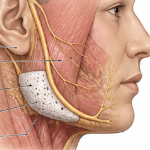
In many cases of facial asymmetry the most common finding or cause is that the lower jaw is different between the two sides. Because the lower jaw is moveable (the only facial bone to do so) and has an L-shape in the back above which the jaw joint hinges, it is the one facial bone that is most prone to having differences between the two sides. Most commonly, these differences are back at the angle area and along the jawline that comes forward. This can create a very visible difference between the jawlines when looking straight forward. It is the most common type of facial asymmetry that I see. Sometimes I will see someone who has a crooked chin, where the chin point if offline, but the origin of the crooked chin usually comes from differential jaw growth between the two sides.


In cases of facial asymmetry it is initally important to make sure that the jaw asymmetry is not best corrected by actually moving the whole jaw and putting the teeth into a better bite relationship. If one is young and the jaw asymmetry is significant, how the teeth come together will determine if this is the best long-term solution. But assuming that jaw bone movement is not a good solution, the more common approach is to correct it with the placement of implants.


Jaw angle and jawline implants can be fairly simple methods of improving jaw asymmetry. These implants are almost always placed through inside the mouth. Off-the-shelf jaw angle implants exist but there is no off-the-shelf jawline implant. Jawline implants have to be fashioned at the time of surgery, usually out of a block or thick sheet of semi-soft material. (Gore-tex or SAM is what I prefer) The key to success with implant augmentation is to be certain of exactly where the jaw asymmetry is. Implants will do little good if they aren’t in the area of bone deficiency or asymmetry. Sometimes this is obvious by feel, other times it may be better to get a 3-D CT scan and have an exact skeletal image to work off of. In rare cases, I have even had a 3-D model made from the CT scan and custom-fabricated the shape of the implants prior to surgery. This is the most exacting method but also the most costly.


When having implants placed for any type of facial asymmetry it is important to walk into surgery with the understanding that the outcome will be better…but not perfect. Surgical facial augmentation with implants is as much an art as it is an exact science.


Dr. Barry Eppley

http://www.eppleyplasticsurgery.com

http://www.ologyspa.com

Clarian North Medical Center, Carmel, Indiana

Clarian West Medical Center, Avon, Indiana

Indianapolis


November 14, 2008

Unique Orbital Rim and Cheek Implants

Author: barryeppley

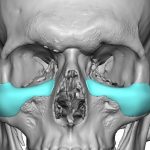
Deficiencies of the lower rim of the eye socket and cheek create a hollowed-out appearance. Some call this a tear-trough deformity although this is not really accurate. A tear trough deformity is a depression between the eye and nose, technically known as the nasojugal fold. Underdevelopment or underprojection of the lower orbital rim and cheek is part of a more global midface issue, with a flatter bone profile across this area. This can be evidenced in a profile photo by dropping a vertical line from the lens of the eyeball downward. If the cheek and orbital rim is behind this line, the bone is deficient. Correction of combined orbital rim and cheek deficiencies is most predictably done with implants.


There are several types of implants for the orbital rim. Some extend from the orbital rim towards the nose and down into the tear trough, some extend out from the rim to the cheeks, and others connect the orbital rim to the outer corner of the eye. Pre-formed orbital rim implants are currently available in solid silicone as well as polyethylene. (Medpor) Implants can also be hand carved out of a block or sheet of Gore-tex. (PTFE) I do not believe that the material used makes any difference. It is more important to have the right shape implant in good position than anything else.


Orbital rim implants are best placed through a lower eyelid incision directly onto the bone. This is an obvious way to go if the patient needs skin removed from the lower eyelid as well. It is possible to place them through the inside of the eyelid (transconjunctival approach) but this is more difficult. Lifting up the periosteum of the bone is important so that a cuff of tissue can be used to cover a part or all of the implant. Bringing tissue back up over the implant is important to prevent the edges of the implant from being visible. This is particularly important in those people with thin lower eyelid skin, which seems to be most people who have bone deficiencies in this area. I always secure the implant to the bone with small tiny screws so that it will never move. You will always be able to feel where the implant is as there is little tissue between the implant and the skin in the eyelid area. Most importantly, you just don’t want to be able to feel them.


The key to a good result with orbital rim implants, with or without a cheek extension, is to not overdo it. The improvement is better to be subtle and not dramatic. It doesn’t take very much implant thickness, just a few millimeters, to make a real visible change in the eye area.


Dr. Barry Eppley

http://www.eppleyplasticsurgery.com

http://www.ologyspa.com

Clarian North Medical Center, Carmel, Indiana

Clarian West Medical Center, Avon, Indiana

Indianapolis


November 7, 2008

Treating the Tear Trough Deformity

Author: barryeppley

 A tear trough deformity is a deep indentation between the eye and the nose. Technically known as the nasojugal fold, this natural indentation becomes very noticeable if it gets too deep. Some people have tear troughs naturally, while others develop them with aging. Either way, it creates a dark shadow which is cosmetically distracting.


Treatment of the deep tear trough requires adding something between the skin and the underlying bone. Injectable fillers are one easy option which are safe although they are not permanent. The best choice for this area are injectable fillers made of hyaluronic acid or collagen because they flow in smoothly and less likely to be lumpy or irregular. Longer lasting fillers seem like a good idea but they are more prone to unevenness and potential lumpiness. The injections can easily be done in the office but there is a significant risk of bruising due to the large number of blood vessels in this area. I tell patients that about half the time, despite my best efforts, one side will get some bruising. While injectable fillers are quick and easy (at least for the doctor), in the long-term I don’t find them satisfying because it is just a temporary fix for the problem.


Injecting fat works similar to the synthetic injectable fillers from a conceptual standpoint. It can fill out the depression. Fat, however, requires a harvest site, a method for concentration, and must be done in a sterile manner to avoid infection. For these reasons, fat injections are not usually an office procedure. They might be an option if one was going to the operating room anyway for other procedures. Then this ‘natural’ injection method makes better economic sense. The thinness of the skin in the tear trough area is extremely thin, however, so any irregularities from the injected fat may be seen also. The biggest issue with injected fat, however, is that it is unpredictable. No one can tell you how much or if any will survive long-term.


Placement of specially-shaped synthetic implants is another option which does offer permanency of the result. Placed through the mouth and secured to the bone with a small screw, implants provide excellent fullness that will have a smooth outer skin appearance. The key is not to place too big of an implant which may look unnatural. Tear trough implants are a good option if one is having surgery for other facial areas. Then the cost and exposure to anesthesia more than  justifies this approach. Implants can always get infected but I have yet to see one in this area of the face do so in a cosmetic patient.


Dr. Barry Eppley

http://www.eppleyplasticsurgery.com

http://www.ologyspa.com

Clarian North Medical Center, Carmel, Indiana

Claarian West Medical Center, Avon, Indiana

Indianapolis


September 26, 2008

Paranasal Implants - The Facial Implant You Never Heard Of

Author: barryeppley

One type of facial implant, and a facial area that can be augmented, is the paranasal area which most have never heard of. The paranasal region is the area just to the side of your nose at the wings of the nostrils.  This is an area that is supported by the bone above the front and canine teeth. I became very familiar this area in treating cleft patients where on the side of the cleft the paranasal region was always deficient and sunken in. I frequently built this area back up with bone grafts or implants as an older child or teenager when I did their reconstructive rhinoplasty (nose ) surgery.  From this experience, I observed how building out this area affected the face.


Cosmetically, some patients have an overall middle of the face deficiency as the upper jaw is a little short and they have flatter cheeks. Other patients have more ideal facial bone development but, as they age, the overlying nasolabial folds become ‘deeper’ as the cheek tissue descends and falls over the more fixed upper lip tissue. In either case, the use of paranasal implants may be aesthetically helpful.


Paranasal imoplants are very small implants, about the size of a quarter, that are placed on the bone right up against the pyriform aperture through a small incision up under the lip. What is the pyriform aperture you ask? If you look at a skull, you will see the nasal passages in the middle of the face. The lower end of this large opening down near the upper teeth is known as the pyriform aperture. You can easily see the bone right next to them which slopes away. By building up this area, you increase the fullness under the side of the nose.

Paranasal implants, while not commonly done, can be useful as an overall strategy with cheek implants to build out the middle of the face or to help soften the deepest end of the nasolabial fold near the nose.


Dr. Barry Eppley

http://www.eppleyplasticsurgery.com

http://www.ologyspa.com

Clarian North Medical Center, Carmel, Indiana

Clarian West Medical Center, Avon, Indiana

Indianapolis


September 24, 2008

Implants for Chin Reshaping

Author: barryeppley

When one thinks of chin augmentation, most envision simply bringing the chin forward. In many instances, increasing the horizontal projection of the chin is all that is needed or desired. Other patients may want changes in the shape of their chin as well. Revisions of previous chin procedures may only need improvement in its shape rather than more fullness.

Today’s chin implant designs are quite different from those simpler designs from the past. Greater emphasis is placed on the lateral wings of the implant so that a more natural blending of the implant into the bone occurs to prevent any stepoff between the two which might be felt. Implant styles are available that can make the chin broader and more square adding width at the sides, with or without increasing central chin fullness. Chin implants can also have very extensive lateral wings that can help correct one’s ‘marionette lines’ by filling out the loose skin along the jawline. Incredibly, there is even one style which has a central grove in it to help create the appearance of a dimple in the chin. (cleft chin) Not only have the length of the implants increased but there vertical height as well. Increasing the height of a chin implant can help decrease the depth of the labiomental sulcus below the lower lip.

There are many different chin implant styles and sizes today. (28 from one manufacturer!) Careful assessment of one’s chin may reveal that the cosmetic enhancement may be improved by more than just increased chin fullness. The chin is truly a three-dimensional facial shape that can be favorably changed by the shape of the implant chosen.

Dr Barry Eppley

http://www.eppleyplasticsurgery.com

http://www.ologyspa.com

Clarian North Medical Center, Carmel, Indiana

Clarian West Medical Center, Avon, Indiana

Indianapolis


September 24, 2008

The Composition of Aesthetic Facial Implants

Author: barryeppley

While many types of implant materials have been tried for use in the face, only a limited few have enjoyed a history of good clinical success. Today’s facial implants are composed of the synthetic polymers dimethysiloxane (silicone), polyethylene (Medpor), polytetrafluoroethylene (Gore-tex), and polyester. (mersilene)

The use of solid silicone rubber (solid, not liquid silicone) have been used as facial implants material for nearly four decades. Silicone implants are by far the most type that are used in the face. Silicone is a essentially a form of plastic created from interlinking silicon and oxygen into a compound known as dimethylsiloxane (SiO(CH3)2) . Its chemical advantage is that it is very resistant to breaking down to the very strong and stable silicon-oxygen bonds. When converted into a polymer and vulcanized, a solid silicone rubber which is elastic and very flexible is formed. When shaped into a facial implant, it has the advantages of ease of placement through small incisions due to its flexibility, can be easily cut and shaped if necessary during surgery, and are of low cost.

Like the material used in coats and shoes, Gore-Tex has been used as a facial implant since 1994. It has been used as more traditional shaped implants for the cheeks and chin as well as soft tubes to be used right under the skin as a soft tissue filler. Gore-Tex is really polytetrafluoroethylene, a fluorocarbon which has a carbon ethylene backbone to which is attached four fluorine molecules (PTFE). The bonding of highly reactive fluorine to carbon creates an extremely stable biomaterial which the body can not break down due to the lack of any known human enzyme to disrupt the fluorine-carbon bonds. The material is extremely flexible and is easily cut and shaped. The fabrication of Gore-Tex results in small interconnected pores on its surface and throughout the material which may allow for some tissue ingrowth. The advantage of tissue ingrowth is probably more theoretical than of any practical significance.

Medpor, known chemically as polyethylene (PE) has been used in the face for over a decade. It is different than Gore-Tex (PTFE) as it has no fluorine molecules in it. The chemical structure may be simple but it has a very firm consistency that makes it the hardest facial implant used. It comes in different facial shapes and sizes and, although it can be shaped, it is not easy. The material does have small channels through it which allows for tissue ingrowth into it. That makes it harder to remove if necessary due to the sticky scar.

Mersilene is a knitted plastic mesh material most commonly used to fix abdominal hernias. It has been historically used in facial surgery where it has been used as a chin implant. The mesh material is rolled onto itself, shaped, and then sewn together to create the implant. Because the implant is a mesh, it has lots of holes in it for tissue ingrowth. The few surgeons who use mersilene do it because they like to fashion their own implants and can do so at a lower cost than buying other off-the-shelf implants.

Your plastic surgeon may use any of these materials for your facial implant surgery. While silicone rubber is the most commonly used, all other materials are acceptable and very well tolerated by the face. Tissue ingrowth into facial implants with pores or channels, while theoretically appealing, has not been proven to offer any advantages over completely solid silicone rubber implants.

Dr. Barry Eppley

http://www.eppleyplasticsurgery.com

http://www.ologyspa.com

Clarian North Medical Center, Carmel, Indiana

Clarian West Medical Center, Avon, Indiana

Indianapolis


September 23, 2008

Principles of Successful Facial Implant Surgery

Author: barryeppley

Chin, cheek, and jaw angle implants are very commoni cosmetic plastic surgery procedures to effect a change in one’s facial profile and appearance. Implants work well in the face because they are well tolerated. Let us not confuse that with them becoming part of the body. That they never do. Implants do not integrate and become a natural part of your body. The end stage healing response to all synthetic materials is that they are walled off and surrounded by scar, otherwise known as fibrous encapsulation. This serves to separate the body from the foreign material, saying you are not a part of me but I can live with you. (as long as we live in separate areas!) All synthetic materials implanted in the face will develop this surrounding scar tissue, regardless of the material’s chemical composition or physical shape.

Good quality and quantity of soft tissue around a facial implant is the most critical factor in their long-term success, usually far more important than the implant’s chemical composition. Soft tissue coverage over an implant should be as thick as possible. Those facial implants that are more deeply placed (i.e., next to the bone) rarely implant-related problems such as infection, exposure or extrusion. Implants placed immediately under the skin or in areas of the face where the tissues are thin with little muscle or fat have a much higher incidence of postoperative complications.

Another important principle of facial implant use is that antibiotics should be given during the surgery.The reason for antibiotic use is to prevent or eliminate any bacterial sticking to the implant during its insertion. And those few that might will then be killed. Most plastic surgeons will also wash or soak the implant in antibiotics prior to its insertion. They may be some patients, or surgeons for that matter, who may be concerned about the overusage of antibiotics. But the risk of developing an infection, and losing the whole reason the surgery is being performed, isn’t worth it.

Dr. Barry Eppley

http://www.eppleyplasticsurgery.com

http://www.ologyspa.com

Clarian North Medical Center, Carmel, Indiana

Clarian West Medical Center, Avon, Indiana

Indianapolis


September 23, 2008

The Popularity of Facial Implants

Author: barryeppley

The use of implantable synthetic materials plays a critical role in a number of cosmetic strategies for  improving the shape of the face. Significant advances in materials science and facial implant designs during the past two decades have made certain types of synthetic implants critical for the esthetic augmentation of facial landmarks and contours. Their  popularity today and their increasing frequency of use is a direct result of increased patient demand for facial improvement, the limitations and complications of trying to do the same thing with bone grafts and the remarkable tolerance of  the face to any implanted material due to its excellent blood supply.

     Regardless of their chemical  composition and structure, synthetic  implants assure the plastic surgeon of two very appealing things. First, it makes the operation fairly simple as an ‘off-the-shelf’  solution to change the face in the desired way. Secondly, synthetic implants are predictable in size and shape which will not change over time. These two features are particularly attractive to any patient seeking elective esthetic facial surgery where a low number of potential risks, how much time it takes to recover, and the reliability of the outcome are major factors in the decision to undergo surgery. In short, facial implants are relatively simple operations that work well and have few complications when done well.


   There are some patients, of course, who are adverse to the concept of a foreign material being put in their face. But once the procedure is explained and they can actually see and feel a real facial implant, these fears are usually washed away. Particularly when the alternative (moving the bone or trying to build the area up with bone) treatment strategies are far less appealing and not nearly as reliable….and cost a whole lot more!

Dr. Barry Eppley

http://www.eppleyplasticsurgery.com

http://www.ologyspa.com

Clarian North Medical Center, Carmel, Indiana

Clarian West Medical Center, Avon, Indiana

Indianapolis  


September 22, 2008

Securing the Future of Facial Implants

Author: barryeppley

The most common complication of facial implant surgery (such as a cheek or chin implants) is that the implant shifts or moves out of position after surgery. From an outward appearance, this can create an asymmetry between two facial sides or, at the very least, less than the desired facial change thaty the patient wants. In some rare cases, a loose facial implant (usually a cheek implant) can actually extrude through  the incision that it was put in through into the mouth.


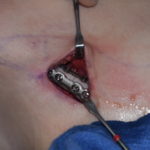
The way to avoid this potential facial implant problem is a simple one. Rigidly secure the implant to the bone so that it can never move. This is done by using a single screw or two which is placed through the implant down into the bone. This extra step will eliminate implant shifting forever. It takes but a few extra minutes and is well worth it in my opinion. This is my preferred technique when placing any facial implants.


Many patients may have some concerns about metal screws in their face. Such as will they interfere with x-rays? Will I be able to feel them? Will the scanner at the airport go off?  Will they eventually get lose?The answer to all of these concerns is no. The screws used are very small (only 1.5mm to 2.0mms  in size) and are made of titanium, a metal alloy that does not corrode and is non-ferromagnetic. (will not interfere with x-rays) In addition, the screw is placed into the implant so that it is flush with the outer surface of the implant, making it impossible to feel even if you were rubbing right across the actual implant itself. When you put the thickness of your facial tissues on top of the implant, you now know why it is impossible to feel it. It is may be possible for a screw to eventually get loose but the scar around the implant at that point will hold it in its place.


The use of small metal screws to secure facial implants permanently into place provides great security for the plastic surgeon and the patient alike. It adds no risk to the procedure and does so at a very minimal cost.

Dr. Barry Eppley

http://www.eppleyplasticsurgery.com

http://www.ologyspa.com

Clarian North Medical Center,Carmel, Indiana

Clarian West Medical center, Avon, Indiana

Indianapolis


A smaller lower face has been shown to be more attractive and youthful looking. Recent research (at the University of Texas - Southwestern and published in Plastic and Reconstructive Surgery 2008 by Dr. Joel Pessa) has shown that, as we age, the lower jaw continues to grow more so than the rest of the face. Therefore, there is a change in the shape of the face as we get older that in some patients makes it less attractive. These bony changes combined with the loss of facial fat as one ages accentuates the appearance of age. A youthful face is full which is lost as we age, particularly around the eyes and cheeks. These bone and fat changes make the cheeks more sallow and give the impression, with the development of jowling, that the chin is bigger.
Understanding these aging changes provides direction as to how to approach facial rejuvenation surgery in the aging patient. While you can’t make the jaw smaller, you can make it appear smaller by augmentation of the cheek and midface areas. This can be done with either fat grafts or cheek implants. Which one is best must be individualized for each patient. Cheek implants or submalar (under the cheek) implants can help lift a sagging midface as well as provide better cheek projection. If malar crescents (sagging skin from the lower eyelid hanging on the cheek) are significant, then a midface lift may also be done with a lower blepharoplasty to work out the excess skin as well.
The lower face and jowling still relies on the ‘traditional’ facelift approach with the objective of eliminating the jowling and tightening up loose neck skin. This effect, combined with cheek volume restoration, helps make the face look younger by changing the disproportions caused by aging.
In the younger patient with early signs of facial aging, injectable facial fillers can be an effective non-surgical approach in the cheek area. When these fillers become more long lasting or even permanent, we will see more of these patients seeking these treatments earlier before the negative facial effects of aging become too noticeable.
Dr. Barry Eppley
http://www.eppleyplasticsurgery.com
http://www.ologyspa.com
Clarian North Medical Center, Carmel, Indiana
Clarian West Medical Center, Avon, Indiana
Indianapolis