Archive for the 'injectable fillers' Category
When one thinks of facial aging, they inevitably look to the jowl and neck area.While this lower facial area is of big concern to many and is the foundation of facial rejuvenation surgery (usually through a facelift-type procedure), the underlooked area is the midface or cheek. As one ages, the cheek area sinks in and sags for many as it loses volume through fat atrophy. This is partly why a heavy person with a full face may still look somewhat youthful as they age. (known as the Santa Claus effect) A gaunter, thinner face, while interesting when one is young, can really show age when one is older.
Adding volume to the cheek has been recently shown to to help make a more youthful face. Based on cadaver work by Dr. Joel Pessa at the University of Texas at Southwestern, a deep fat compartment was identified in the cheek. When this fat compartment was enhanced through implants or fillers, there was an immediate improvement in the hollowing of the face. Not only does restoring volume to this cheek compartment make the cheek/midface area more youthful, it also helps improves the look under the eyes as well as around the nose and upper lip area.
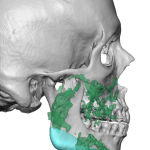
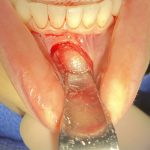
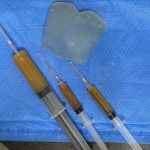
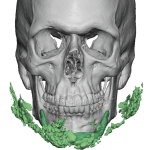
The jury is still out, however, on the best method to do this cheek volume addition. Fat injections would be the simplest and the most versatile, but fat survival remains unpredictable particularly in the older patient. I currently add PRP (platelet-rich plasma extract from the patient) to the injections and isolate the fat through a unique centrifguation method. Early results are encouraging but only one year results count when it comes to fat grafting. Cheek implants are simple to do, remain stable in volume over time, and come in a few styles to add volume to some different areas around the cheek. Unfortunately, the more lateral cheek area, which is not over bone is not affected by the introduction of an implant. And there is always the risk of infection or malpositioning. Injectable fillers are as versatile as fat injections and don’t involve an operating room experience. But their effects are only temporary and, when adding up the cost per volume injected, can potentially rival surgery fees if a large cheek area needs to be treated.
Not every aging face patient needs cheek enhancement nor is it the mainstay treatment of most aging faces. But it can be a good complement to more conventional facelifting procedures and is a ‘missing component’ of some patient’s treatment plans whether they are young or old.
Dr. Barry Eppley
http://www.eppleyplasticsurgery.com
http://www.ologyspa.com
Clarian North Medical Center, Carmel, Indiana
Clarian West Medical Center, Avon, Indiana
Indianapolis
Do your hands give away your age? In many people, the hands are just as revealing as our faces about our age. But our faces understandably get much more attention and the hands are often forgotten. (but not unseen by others) As we age, our hands (particularly women) loose that once plump fullness and youthful look. Aging hands become thinner with vein and joint exposure, loose creapy skin, and brown spots over the back of them. These changes occur from chronic sun exposure and extensive use. While hand creams are a good first line of defense, they are not enough to produce a dramatic rejuvenating effect.
Adding volume back into the hands through injectable fillers is a good way to lessen the prominence of the veins and give a more plump appearance. The question is….which injectable filler? In my experience, you have 4 options…three off-the-shelf and one operative (which is only done if you are in the oprating room anyway for other procedures)
While all of the hyaluron-based injectable fillers (e.g., Restylane, Juvaderm) are extremely well tolerated, their effects are too short-term and do nothing to stimulate actual collagen tissue ingrowth so I prefer not to use them in the hands. The particulated fillers, such as Radiesse and Artefill, are better options as they last longer and may actually help stimulate favorable tissue ingrowth for longer-term results. Radiesse uses resorbable ceramic beads in its mixture so the effects are immediate but the beads are eventually resorbed over a year or so. It is also white in color although much of this is masked by the color of the skin. Artefill uses non-resorbable plastic beads in a collagen base which is much more likely to last longer and produce a better tissue-thickening result. Because both particulated fillers have a tendency for ‘clumpiness’ and irregularities, injection technique is critical and it is best to not inject too much at once. A
few staged treatments (spaced 6 to 8 weeks apart) slowly adding volume, and doing daily massage over the injected areas is the best way to ensure a smooth-looking result. Sculptra is another off-the-shelf filler option that is really like injecting ‘liquid plastic’ rather than a bead or particulated approach. Its material is resorbable over time and you have to be really careful about adding too much volume at once as it can cause local tissue reactions. Which one of these off-the-shelf injection materials is better for the hands is not yet known….and none of them are FDA-approved as of yet for use in the hands.
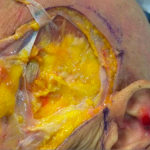
Another injectable option, which has been around for a long time with a track history of use in the hands…is your own fat. This is certainly the injectable filler option with the least potential for any downside with the exception that it has not historically lasted. In the past, I have done some beautiful results with it as it fills the depressed areas between the rays (fingers) quite well creating a nice plump hand. Five to seven ccs of fat per hand (which is much more volume than one could afford with an off-the-shelf- filler) is about what each hand needs. But the long-term outcome was disappointing. Now with improved purification and concentration methods, and with the addition of PRP concentrate (extracted platelets from the patient), fat is more likely to have a better long-term result. For this reason, this is my preferred method when the patient is in the operating room anyway…particularly if they are already having a liposuction procedure.
Hand rejuvenation, sometimes referred to as a ‘hand lift’ (erroneous term but catchy nonetheless), is based on the concept of restoring volume. Whether it is from a synthetic injectable filler or your own fat, short-term results appear to be quite good. Whether they will stand the test of time and what complications may yet emerge is not yet known. But at this point in time, I will give it at least a temporary thumbs up with the other four fingers still in neutral position.
Dr. Barry Eppley
http://www.eppleyplasticsurgery.com
http://www.ologyspa.com
Clarian North Medical Center, Carmel, Indiana
Clarian West Medical Center, Avon, Indiana
Indianapolis
Human-derived Collagen for Facial Injections - Where is it Today?
Author: barryeppleyAs an extension of animal-derived collagen, the development of human-based collagen material for cosmetic injections was inevitable and based on the science of cell culture technology. CosmoDerm™ I and II and CosmoPlast™ (sound similar to Zyderm™ and Zyplast™ ?) are injectable implants derived from highly purified human collagen. Both CosmoDerm and CosmoPlast were FDA-approved for use in facial aesthetic enhancement in March 2003 and are the only FDA approved injectable fillers made from human collagen.The collagen is cultured from a single cell line of human dermal fibroblasts that has been used for over ten years to manufacture human-based tissues; these cells produce natural collagen that is then isolated and purified for injection. Like its ‘cow cousins’, CosmoDerm™ and CosmoPlast™ differ in the concentration of collagen per cc. and both have a local anesthetic agent (lidocaine) in them for pain control after injection.
Despite the tremendous appeal of combining two biologically favorable concepts, collagen and human-derived, the actual results with these injectable materials appears to be quite similar to bovine collagen. No study has ever been reported that has shown that it produces longer-lasting results, no matter how intriguing this combination should be. In theory, one would think that human-derived collagen would be much less prone to being broken down and would have a longer-lasting effect. But this apparently is not so. Human or animal, collagen is only a very temporary resident in the human body.
The biggest advantage to human collagen injections is that no skin testing is required prior to treatment. Because it is created from purified human collagen, the risk of an allergic reaction to it is much less than with extracts from animal material. While this is a great advantage over Zyderm™ and Zyplast™, the plethora of hyaluronic acid injectable fillers (and other compositions as well) today has made this advantage irrelevant.
Collagen injection implants, albeit derived from cows or humans, turns out to be only a very temporary space filler. They are reasonably well-tolerated for a short time but do not invoke any collagen production or formation that would provide for some thickening effect that would lead to a longer-term result. In short, collagen does not appear to make collagen in human skin. While all other injectable fillers are only temporary also, their mechanisms of breakdown are much slower and they therefore have a longer lasting effect. This has relegated the collagen injection materials to an almost historic role in aesthetic facial treatments.
Dr. Barry Eppley
http://www.eppleyplasticsurgery.com
Clarian North Medical Center, Carmel, Indiana
Clarian West Medical Center, Avon, Indiana
Indianapolis
Bovine Collagen Implants - The Historic Injectable Filler for the Face
Author: barryeppleyBovine( cow-derived) injectable collagen (ZyDerm 1, ZyDerm 2, and ZyPlast) has been around longer than any other injectable filler. In fact, they were the first injectable fillers approved by the FDA way back in 1981. There were unrivaled until 2002 when the first hyaluon-based injectable fillers came unto the market. As a result, they are the ‘granddaddy’ of all injectable fillers and are what every injectable filler since has been compared to in FDA pre-market testing. From an FDA standpoint, they are what is viewed as the ‘predicate device’. (which means to a patient….. to have a modern day advantage all you have to do is be better than the old thing) Injectable bovine collagen comes in different formulations based on how much collagen is present per cc and how it is cross-linked for durability.
Because of its age and ‘older technology’, it is the least expensive of the many types of injectable fillers currently available.. But it has two distinct disadvantages…Unfortunately, around 3 to 6 percent of people will develop an allergic reaction due to the differences between human and cow collagen. As a result, everyone must have a skin test prior to an injection session. Only if no reaction is observed at the injection site after four weeks should one be injected. Unfortunately still, some patients who have had a negative skin test will still go on to have an allergic reaction. Because of these potential allergic reactions, people with connective tissue diseases such as rheumatoid arthritis, lupus, scleroderma and dermatomyositis should never receive bovine collagen injections. The second disadvantage is that it doesn’t last very long, usually only 6 to 12 weeks. It is rapidly broken shortly after being injected as the body’s enzymes do not recognize it as ‘self’ and begins dissolving it fairly quickly.
While pure bovine collagen injections are almost of historic significance only, being surpassed by every new injectable filler in terms of longevity and less reactivity, it has established some important principles to which modern-day injectable fillers should strive to achieve. These include the ease of injection through a very small (30 gauge) needle, the combination with the local anesthetic lidocaine, and establishing the public’s awareness of the simplicity and effectiveness of cosmetic injection therapy.
Dr. Barry Eppley
http://www.eppleyplasticsurgery.com
http://www.ologymd.com
Clarian North Medical Center, Carmel, Indiana
Clarian West Medical Center, Avon, Indiana
Indianapolis
Elevess - Aesthetic Hyaluronic Acid Dermal Filler - Indianapolis
Author: barryeppleyThe newest hyaluronic acid HA) filler on the market, known as Elevess, offers a combination of new twists that do make it somewhat different. It is produced by the manufacturer of ArteFill (the most expensive filler on the market) as a companion to that product as well as an effective and less expensive alternative. It has the highest concentration of HA of any injectable filler on the market at 28 mg/ml. In theory, this should result in more long-lasting results than most other HA fillers. The manufacturer states that it has good duration up to 6 months but longer-term data may pu9t its expected duration of action to be longer.It also contains 0.3% lidocaine, providing a local anestheic effect after it is injected. Currently, it is one of the few HA fillers that has a local anesthetic in it. Its other features are similar to all other HA fillers in that it can be injected through a very small needle and it has a superb safety profile without any significant complications with its use.
How does Elevess compare to other HA fillers and where does it fit amongst the many HA fillers that are now on the market?. When it comes to HA fillers, in my practice, I am only interested in using one HA filler that has the longest period of sustained correction. Why use different HA fillers that last variable lengths of time? The prices between them are not so significantly different to justify, in most cases, using shorter-acting filling brands. Whether Elevess lasts as long as Juvaderm or Perlane (the two longest lasting HA fillers), for example, I do not know. If it is just as long-lasting, then I would prefer Elevess because of its local anesthetic component. The only other key issue, for injector and patient both, is the cost per syringe. My assessment is, as previously noted, that the cost is not appreciably higher. When it comes to HA fillers, go for the one that lasts the longest.
Dr. Barry Eppley
http://www.eppleyplasticsurgery.com
http://www.ologyspa.com
Clarian North Medical Center, Carmel, Indiana
Clarian West Medical Center, Avon, Indiana
Indianapolis
The recent commercial introduction of the injectable hyaluronic acid (HA) filler, Prevelle Silk, is the first one to have the numbing medication lidocaine in it. While some fillers in Europe already have it in their preparations, this is the first such filler here in the U.S. There will undoubtably be others in the near future given its potential patient appeal. Pre-approval clinical studies have shown that patients had less pain with injections using this product compared to HA injections without lidocaine.
The question is….what is the value of pain reliever that does not take effect until after it is injected? In my practice, I make a big point of making any injection procedure as painless as possible. When it comes to fillers, which are most commonly done in the lips and nasolabial folds, I usually perform an intraoral nerve block which takes away most of the injection pain and is well tolerated by all patients when skillfully done. A filler with a numbing agent would have great value if it prevented the pain of injection. However, this product concept doesn’t start working until after you have injected, a little late from the patient’s standpoint. I think it does have some utility if you inject an area very slowly, taking a break between the injection sites. This gives the local anesthetic time to take effect. I have tried this product a few times in lips which I have not previously numbed up. I must admit it was more tolerable with this ’slow’ technique than any other lip filler that I have used.
I like the concept of a numbing injectable filler but I still will not rely on its anesthetic effect exclusively. It is the needle stick that makes up at least half of the pain of injection and this still requires an external anesthetic method to have the most pain-free experience.
Dr. Barry Eppley
http://www.eppleyplasticsurgery.com
Clarian North Medical Center, Carmel, Indiana
Clarian West Medical Center, Avon, Indiana
Indianapolis
Injectable Fillers - The Relationship between Cost and Longevity
Author: barryeppleyInjectable fillers provide a simple and immediate cosmetic treatment that is particularly good for the areas of the nasolabial folds (cheek-lip grooves) and for lip enhancement. While there are many different name brands of injectable fillers, they basically do the same thing (plump up the skin) even though there are some differences in what they are made of. These basic differences in makeup (collagen vs. hyaluronic acid vs particulated), while not conferring any different filling properties, are different in more than just the name also.
In theory, what you are primarily paying for with an injectable filler treatment is for how long it lasts. The least expensive injectable fillers, such as old-style Zyderm and Zyplast (pig collagen) or more modern Prevelle (hyaluronic acid), last about 6 to 12 weeks or less than three months. The longer-lasting fillers, such as Radiesse (dissolvable ceramic beads) and ArteFill (non-dissolving plastic beads), are by far the most expensive but they do last anywhere from 12 to 18 months after a single injection session. The real question is then…..how much are you paying for what length of time. (no true permanent injectable fillers exist at this time) You want to be sure that the price somehow correlates to how persistent the result is.
That can be a difficult task for any patient to decipher. Many times what a practitioner may charge may not necessarily correlate with the product’s behavior. But the purchase price to the injector (which does differ for all injectable fillers) is the same throughout the country for all syringes sold. Therefore, you can ask to see a price list or ask the price (per syringe) for the types of injectable fillers that they offer. This makes it easy to do comparison shopping…although beware that price may not be indicative of the injector’s experience or expertise.
Here in the midwest, very short-term (3 - 4 months) injectable filler treatments (one cc or a full syringe) will cost around $300 - $400, medium-lasting (6 to 8 months)injectable fillers around $550 - $650, and long-lasting (9 to 18 months) injectable fillers around $850 - $1250. While these are price estimates for just one geographic area in the country, they do reflect the relative relationship between injectable filler cost and duration of action.
Dr. Barry Eppley
http://www.eppleyplasticsurgery.com
http://www.ologyspa.com
Clarian North Medical Center, Carmel, Indiana’
Clarian West Medical Center, Avon, Indiana’
Indianapolis
Much advertising cosmetic today touts the wonderful results that can be obtained with non-invasive injectable filler materials. When it comes to lips, nasolabial folds (cheek-lip grooves), and fine lines and wrinkles, injectable fillers are unrivaled in what they can achieve for these facial areas. However, the prevalence and easy-to-use nature of injectable fillers has seen their use expand to many facial tissue deficiency problems as well. In looking at a lot of training videos on injectable fillers and numerous internet sites, it is clear that some physicians are pushing the boundaries of what injectable fillers are made to do.
The use of injectable fillers is being pushed to the limits for facial rejuvenation purposes in some cases. Trying to use too much filler for an underlying volumetric facial problem, albeit from aging or congenital deficiency, can certainly lead to problems of disappointing results, only a temporary effect, and high costs for an injectable procedure…that may approximate surgical costs in some instances. Just because it is easy to do does make an injectable filler the best treatment for all facial volume problems.
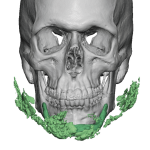
When it comes to volumetric problems of the midface, in particular, a facial implant is often (usually) a better solution. The difference between facial implants and injectable fillers is very clear, implants at the bone level provide permanent and very predictable results by adding support to the underlying soft tissues. As opposed to injectable fillers which add smaller amounts of indistinct volume that is only temporary. Through small incisions high up under the lip, facial implants can easily be slide into place and they come in a wide variety of midfacial shapes and thicknesses. The other nice thing about facial implants is that they are easily reversible, being able to be removed or exchanged quite easily.
When it comes to volumetric changes of the midface, one should think of the underlying bone anatomy first. Is the bone deficient or would adding bone projection (through an implant) be helpful for creating a favorable external change? I think too often today the thought first turns to soft tissue enhancement when, in some cases, underlying bone enhancement would create the same or even a better result. In the midface, in particular, where no masticatory attach since the upper jaw is a fixed bone, pain and recovery from midface implants is quite limited.
Dr. Barry Eppley
http://www.eppleyplasticsurgery.com
http://www.ologyspa.com
Clarian North Medical Center, Carmel, Indiana
Clarian West Medical Center, Avon, Indiana
Indianapolis
Like all procedures, in-office injectable filler treatments should have a full disclosure as part of the consent, which should be reviewed in detail before the injection session. While there are many different injectable fillers available, they are produce similar results and only fundamentally differ in how long they last and how much they cost. Important pre-treatment issues to know include what Type of filler is being used, what are the specific Treatment areas, what Outcome can be expected, Risks and Complications, and at what Cost.
Before you have any injection filler treatment to the face, know exactly what type of filler is going to be used…..and why. I find that many patients who have had injectable filler treatments before can not tell me what was used. While the scientific composition of the material is not really important to the patient, what was used and how did it work or how long it lasted is important for future injectable filler treatments, whether it is done by the same or different physician injector.
In general, the vast majority of injectable filler treatments are done in either the lips or the nasolabial folds (cheek-lip grooves). Unlike Botox® injections which is done over a broader surface area, injectable filler treatments are more specific to one area that is well-defined. Most patients do have a good recollection as to what areas were filled.
One of the best benefits of injectable filler treatments, and an expected outcome, is that the benefits of the injections (unlike Botox®) will be immediately seen. However, it is important to understand that no filling treatment is permanent. Injection treatments will have to be repeated based on the expected length of time the filler will last for the results to be maintained.
The most common adverse result from an injectable filler treatment, albeit it only temporary, is that the result may be over- or undercorrected or it may not be perfectly smooth and even. Injecting fillers is an art form and not an exact science. Also, there may occasionally be some bruising in a small area or two. Very rarely, it is possible that one may have a localized allergic reaction to the material which appears as redness and swelling. This may go away on its own or could require some steroid injections if it persists.
Lastly, each injectable filler is charged based on a full syringe cost. That is an easy number to know before treatment by asking…and it should be told to you without asking. Some practices charge you for a full syringe whether you use it or not. Others only charge by the amount of the syringe used. Ask what the practice policy is in advance.
Dr. Barry Eppley
http://www.eppleyplasticsurgery.com
Clarian North Medical Center, Carmel, Indiana
Clarian West Medical Center, Avon, Indiana
Indianapolis
A variety of injectable fillers now exist for the treatment of facial folds and deep lines as well as enlargement of the size of the lips. While many of the injectable fillers are different and last varying lengths of time after injection, there is no question about their immediate satisfying results. Despite the instantenous results that they create, many patients fear (understandably) the actual injection process. No matter how you look at it, the sticking of a needle into very sensitive facial areas can certainly give one pause for thought.
While it is true that most injectable fillers use very small needles (typically 30 gauge, the smallest needle made by mass manufacture methods), they will cause some discomfort. I have found that some patients, remarkably, tolerate injections with little discomfort while others experience significant discomfort. Given that no injectable filler is permanent, meaning one injection for life, the need for repeat injection treatments is necessary. Since repeated injections are necessary, I feel that the recurrent needling experience be as comfortable as possible.
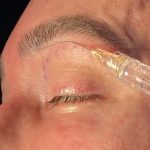
Many pain-reducing methods are available for facial injections such as ice application, numbing creams, and numbing agents in the injectable fillers themselves. I have not found, however, that most of these commonly and easily used methods to be particularly effective. I routinuely use nerve blocks which can quickly be done and are far more effective. Nerve blocks, also known as dental blocks, are injections done from the inside of the mouth. When doing such nerve injections, what you are really after is where the big sensory branches of the trigeminal nerve exits from the jaw bones. For the upper lip and nasolabial (cheek-lip grrooves) folds, the nerve comes out through a bone hole immediately underneath the eyebone. (infraorbital nerve) For the lower lip, the nerve (mental nerve) comes out between the first and second bicuspid teeth of the lower jaw. A few tenths of a ccs. of plain lidocaine, which wears off in less than 30 minutes, will make most of the planned injection area go numb.
While many patients fear a ‘dental injection’, it can be minimally uncomfortable if done well. Besides… one small needle stick is better than many needle sticks that are usually needed for most injectable facial filler treatments.
Dr. Barry Eppley
http://www.eppleyplasticsurgery.com
Clarian North Medical Center, Carmel, Indiana
Clarian West Medical Center
Indianapolis