Top Articles

How Forearm Implants Differ From Upper Arm Implants
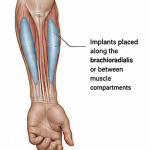
Bersides being far less commonly performed forearm implants are designed for different anatomical goals, muscle groups, and visual effects thsn upper arm implants. Forearm Implants These are placed to enhance the lower arm between the elbow and wrist. Common goals: Increase forearm thickness and definition Create a more athletic or muscular appearance Correct asymmetry or Read More…

Male Custom Forearm Implants – Anatomy and Surgical Technique

Forearm implants are a niche type of cosmetic body-contouring procedure where a solid implant (usually silicone) is placed along the forearm to increase its size, definition, or symmetry. Here’s the straightforward reality: What they’re for Enhancing muscle appearance (especially for people who feel their forearms are underdeveloped) Correcting asymmetry from injury or congenital differences Very Read More…

Right Deltoid Implant Reconstruction for Severe Atrophy: A Case Study

Barry Eppley, MD, DMD World-Renowned Plastic Surgeon Introduction One of the most common shoulder muscle deformities is atrophy resulting from axillary nerve injury. The axillary nerve, a branch of the posterior cord of the brachial plexus (C5–C6), innervates the deltoid and teres minor muscles. Damage to this nerve—whether due to trauma, shoulder dislocation, or iatrogenic Read More…

Deltoid Muscle Atrophy and Shoulder Restoration Using Custom Implants Case Study

Introduction The shoulder’s outer contour is primarily defined by the deltoid muscles, which give it its characteristic rounded appearance. Anatomically, the deltoid forms a broad, triangular structure arising from the clavicle and scapula and inserting onto the humerus. It consists of three distinct muscle bellies—anterior (clavicular), lateral (acromial), and posterior (spinal)—that collectively produce the shoulder’s Read More…

Plastic Surgery Case Study – Trapezius Muscle Implants in the Older Male

 Background: There are eleven (11) different muscle areas that can be aesthetically enhanced by implants in the body. (minus the face) In the upper body this includes the pectoral (chest), bicep and tricep (upper arm), deltoid (shoulder), brachioradialis (forearm) and trapezius. (upper back muscles) Of all of these muscle enhancement sites the trapezius is the Read More…

Plastic Surgery Case Study – The Anatomy and Design of Custom Forearm Implants

 Background: Amongst the numerous types of implants for aesthetic body augmentation the arms are the least commonly performed. Breasts, buttock, pectoral and calf implants make up the majority of augmentations while arm implants (shoulder, biceps, triceps) are done by comparison far less frequently. This is evidenced by lack of any FDA-appoved shoulder and arm implants. Read More…

Top Articles