
Top Articles

Decision Tree for Implant vs Genioplasty in Revisions

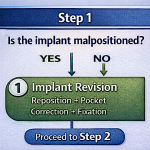
In treating chin implant asymmetries the decision is between implant revision vs. sliding genioplasty. This is how to think about that choice in a structured manner.s Decision Tree: Implant vs. Sliding Genioplasty (Revision Cases) Step 1: Is the implant malpositioned? YES Proceed with implant revision (reposition ± pocket correction ± fixation) NO  go to Step Read More…

Aesthetic Chin Surgery Concepts – How To Avoid Complications

Having performed thousands of every conceivable type of aesthetic chin surgery I have learned many basic lessons in how to avoid complications and undesired outcomes. I see on an almost daily basis patients that inquire about unsatisfactory chin surgery results most of which fall into consistent patterns.  Had the surgeon followed some basic rules in Read More…

Revisional Setback Bony Genioplasty Case Study

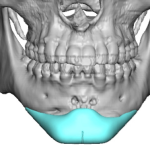
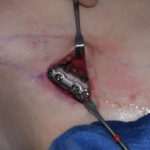
A revision bony genioplasty is a secondary surgery to correct problems from a prior sliding genioplasty. It’s done when the first chin operation didn’t heal, position, or look the way it was intended—or when changes over time create new issues. Common reasons for revision Malposition: chin too far forward/back, too high/low, or asymmetric Nonunion or malunion: the Read More…

Custom Jawline Implant After Vertical Bony Chin Lengthening Case Study

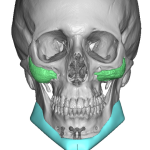
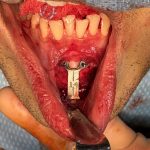
A custom jawline implant after vertical chin lengthening is a very logical and commonly paired sequence when the goal is a stronger, longer, and more continuous lower facial contour. Here’s how these procedures can be done either staged or together. In the staged approach 1. Vertical Chin Lengthening Comes First Vertical chin lengthening by an opening wedge Read More…

Chin Lengthening Surgery: How Bone Grafting Helps Healing

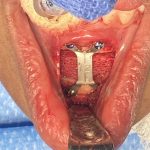
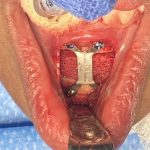
When the chin is lengthened through a surgical technique called vertical lengthening genioplasty, a small gap is created in the bone. A fixation plate and screws hold the new chin position securely in place and set the amount of lengthening. However, the plate itself does not determine whether the gap fills in with bone over Read More…

Female Vertical Chin Lengthening by Bone Expansion – A Case Study

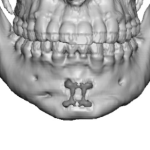
Background The most common dimensional deficiency of the chin is inadequate forward projection, which is often well-corrected with an implant for modest augmentation. While horizontal projection is the most frequently treated deficiency, vertical chin deficiency is often underdiagnosed or overlooked. This is largely because most standard chin implants—except for one specialized type—only address horizontal augmentation. Read More…

Top Articles