
 Custom facial implants represent the most advanced approach available for structural facial enhancement. By combining high-resolution imaging with precise digital design, they allow for a level of customization that was not previously possible with standard, off-the-shelf implants.
However, while their technical accuracy is extremely high, their ability to deliver a perfectly predictable aesthetic outcome is more complex. Understanding this distinction is essential when considering this procedure.
Technical Accuracy: A High Level of Precision
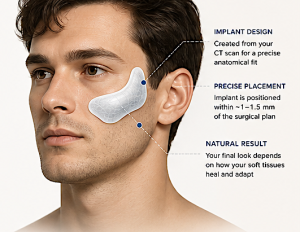
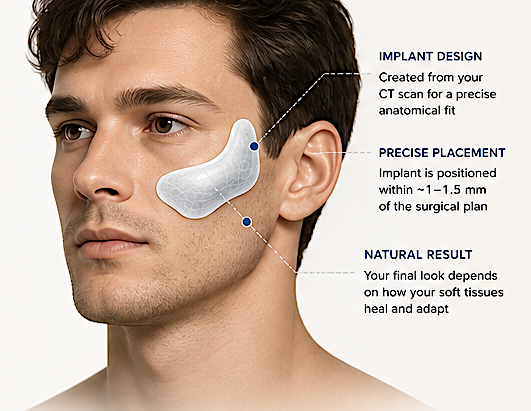
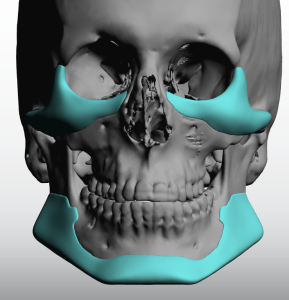
Custom implants are created using CT-based 3D imaging and CAD/CAM technology, allowing them to be designed specifically for your anatomy.
This results in:
- A precise fit to your underlying bone structure
- Highly controlled shape, volume, and projection
- Consistent and reproducible surgical planning
Clinical data and surgical experience show:
- Most implants are placed within 1–1.5 mm of the planned position
- Overall success rates are approximately 94–95%
What this means for patients:
From a structural and engineering standpoint, custom implants are extremely reliable. The implant you have seen during the design process is, in all cases, the exact implant that is placed.
Why Aesthetic Outcomes Are Less Predictable
Despite this level of precision, the final visible result is influenced by several factors that extend beyond the implant itself.
1. Soft Tissue Response (The Most Important Variable)
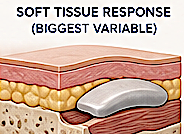
The implant sits on the bone—but what you see externally is determined by the soft tissue envelope (skin, fat, and muscle).
These tissues can:
- Vary in thickness and elasticity
- Swell and settle differently during healing
- Respond uniquely based on age, genetics, and prior procedures
Even small differences in soft tissue behavior can significantly affect the final contour and definition.
2. Limitations of Digital Simulation
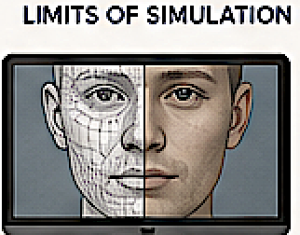
Preoperative simulations are valuable tools for planning and communication, but they are approximations—not guarantees.
- There is no universal standard for predicting facial aesthetics
- Software cannot fully account for tissue dynamics
- Lighting, angles, and perception all influence how results are interpreted
Key point:
A well-designed implant does not always translate into an identical visual outcome.
3. Surgical Execution
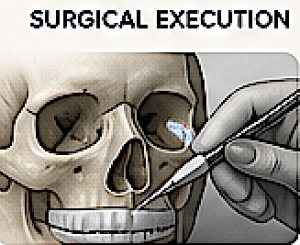
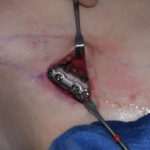
Even with a custom-designed implant, the surgical process still requires:
- Precise positioning
- Stable fixation
- Symmetry between both sides of the face
Subtle variations during placement—even within a small margin—can influence the final appearance.
Patient Satisfaction and Revision Considerations
Overall satisfaction rates for facial cosmetic procedures are high, typically in the 85–90%+ range.
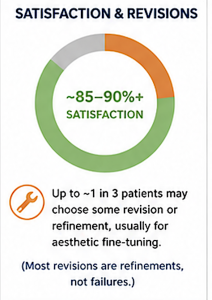
With custom facial implants:
- A portion of patients elect to undergo revision procedures
- These revisions are usually minor refinements, not corrections of failure
In some cases, patients may wish to:
- Increase or decrease projection
- Improve symmetry
- Fine-tune contour transitions
Important perspective:
Revision is often part of the refinement process rather than an indication that something went wrong.
Understanding Accuracy in Practical Terms
A helpful way to think about accuracy is to separate structural precision from aesthetic predictability:
| Aspect | Reliability |
|---|---|
| Fit to underlying bone | Very high |
| Reproduction of planned implant design | High |
| Exact match to aesthetic vision | Moderate |
| Long-term satisfaction | High |
A More Realistic Way to Think About Custom Implants
Custom facial implants are not like ordering a perfectly predictable result.
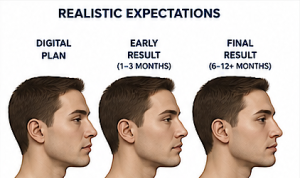
They are better understood as a process of guided structural sculpting, where three elements interact:
- Engineering precision
The implant is designed with exact dimensions and fit - Biologic response
Your tissues adapt, heal, and settle over time - Aesthetic perception
The final result is interpreted visually and subjectively
This combination is what makes outcomes highly effective—but not perfectly exact.
What Most Influences a Successful Outcome
The quality of the result depends less on the implant itself and more on the overall planning and execution process.
Key factors include:
Clear Definition of Goals
Patients who can communicate specific, realistic goals tend to achieve more satisfying outcomes.
Surgeon Experience with Custom Design
Experience in designing custom implants—not just placing them—is critical. This includes understanding how design choices translate into real-world results.
Anatomical Feasibility
Not every aesthetic goal is fully achievable within the limits of an individual’s anatomy. Good planning balances vision with structural reality.
Acceptance of Possible Refinement
In some cases, achieving the best result may involve staged adjustments once healing is complete.
The Advantage Over Standard Implants
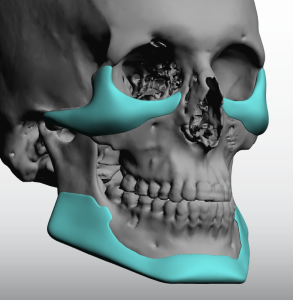
Compared to traditional implants, custom implants offer:
- Greater control over shape and contour
- Improved symmetry and anatomical fit
- The ability to address complex or asymmetric concerns
- More predictable structural changes
While they do not eliminate variability, they significantly improve the likelihood of achieving your intended result.
Bottom Line
Custom facial implants provide the highest level of precision available for structural facial enhancement.
They:
- Accurately reproduce the planned design
- Fit your anatomy with exceptional precision
- Substantially improve the ability to achieve targeted changes
However:
- They are not perfectly predictive of the final aesthetic outcome
- Soft tissue behavior and healing introduce variability
- Minor refinements are a normal part of achieving optimal results
With proper planning, realistic expectations, and experienced surgical execution, custom implants offer one of the most powerful tools available for facial enhancement.
Dr. Barry Eppley
Plastic Surge0n