
Reducing the size of the temporal muscle on the side of the head is done for both
Both approaches aim to slim the temple/upper face area by reducing the bulk of the temporalis muscle, but they differ a lot in permanence, risk, predictability, and recovery.
|
Feature |
Temporalis Botox |
Temporalis Reduction Surgery |
|
Invasiveness |
Non-surgical injections |
Surgical procedure |
|
Downtime |
Minimal (1–3 days mild soreness) |
2–6 weeks recovery/swelling |
|
Permanence |
Temporary |
Permanent-ish |
|
Predictability |
Good for testing aesthetics |
More variable |
|
Degree of reduction |
Mild to moderate |
Moderate to dramatic |
|
Risk profile |
Low |
Significantly higher |
|
Reversibility |
Yes |
No |
|
Cost over time |
Repeated treatments |
One-time larger cost |
|
Best for |
Mild/moderate hypertrophy |
Severe hypertrophy or patients wanting permanent change |
How Botox Works
Botox weakens the temporalis muscle so it gradually atrophies (shrinks) from reduced use.
The effect develops over:
- 2–6 weeks initially
- More slimming after repeated sessions
Typical duration:
- About 3–6 months per treatment
Many patients get:
- Softer temple contour
- Less lateral fullness during clenching
- Mild narrowing of the upper face
Advantages of Botox
Biggest advantage: reversibility
If the face becomes too hollow or narrow, the effect fades.
Other benefits:
- No scars
- Minimal downtime
- Lower complication risk
- Good “preview” of surgical reduction
- Adjustable and customizable
It’s also useful diagnostically:
If Botox slimming looks good, surgery may later make sense.
Limitations of Botox
Botox has a ceiling effect.
It may not help enough when:
- Muscle hypertrophy is severe
- The head width is mostly bony
- Patients want dramatic narrowing
Potential side effects:
- Temporary chewing fatigue
- Headache
- Temporal hollowing
- Asymmetry
- Rare smile or brow imbalance if toxin spreads
Still, complications are usually temporary.
How Surgery Differs
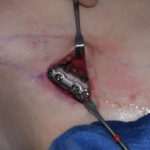
Surgical reduction physically removes or debulks portions of the temporalis muscle.
This can create:
- Stronger contour change
- More permanent narrowing
- More dramatic aesthetic effect
But the tradeoff is much greater risk.
The biggest surgical concern: temporal hollowing
The temple naturally loses volume with age. If too much muscle is removed:
- the temples can become skeletonized,
- the upper face can look aged,
- or the contour can become unnatural.
That’s why many surgeons today are more conservative than in the past.
What Many Facial Surgeons Recommend Now
A common modern approach is:
- Try temporalis Botox first
- Assess appearance after 2–3 sessions
- Only consider surgery if:
-
- the patient likes the slimming effect,
- wants more reduction,
- and accepts permanent change/risk
This approach avoids irreversible over-reduction.
Who Usually Benefits Most From Each
Better Botox candidates
- Mild/moderate hypertrophy
- Younger patients unsure about permanent change
- Patients worried about hollowing
- Functional clenching/grinding cases
Better surgical candidates
- Severe muscle hypertrophy
- Patients wanting major narrowing
- Patients who already tested Botox successfully
- Patients comfortable with permanent structural change
Overall Comparison
For most cosmetic patients, Botox is safer and usually the preferred first step.
Surgery can absolutely be effective, but it’s:
- less forgiving,
- harder to reverse,
- and more dependent on surgical judgment.
In facial aesthetics, especially around the temples, “too much reduction” is usually a bigger problem than “too little.”