Explore the World of Cosmetic Plastic Surgery, Medical Spa, and Skin Care from Indianapolis Plastic Surgeon, Dr Barry Eppley

Archive: fat injections

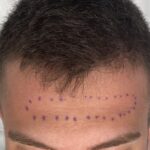
Fat Injections to the Face
Posted on 08 August 2008 | Category: fat, fat injections

While now nine different synthetic injectable fillers exist for the cosmetic treatment of facial lines and wrinkles, none of them are permanent. As they are all artificially-created materials, the body will eventually absorb or break them down so their plumping effect dissipates with time. Fat from your own body remains as a very appealing injectable filler material with its own set of advantages and disadvantages.
Because fat is taken from your own body, it will never be rejected or cause any type of foreign-body reaction issues. But although it is your own tissue, its survival after being transferred to a new site by injection is not a sure thing. In fact, the unreliability of fat injection volume retention has plagued its use for over 50 years. Today we have learned and use certain techniques that help improve how well fat survives after it is harvested and injected. One thing that is certain is that the face does better with fat graft survival than the rest of the body. This is because that smaller volumes of fat are needed and injected which gives it a better chance of regaining a blood supply and surviving. Also, the face has a very robust blood supply (better than from the neck down) which makes more blood vessels available (and hence oxygen) to starving fat cells struggling to survive.
An interesting study on facial fat grafting and how well it survives was published in the July 2008 issue of Aesthetic Surgery Journal from Spain. In this study, 26 patients with HIV disease were treated with fat injections. HIV-positive patients were chosen as they usually have severe facial wasting (fat loss) which makes determining how fat grafts have survived easier to measure as little surrounding natural fat tissue remains. By CT scanning and computer measurements, they were able to show that a persistent (out to one year) change in the amount of facial fat present after the injections was maintained. This is particularly significant given that the HIV patient is challenging for a fat graft to survive over time given that their retroviral drug regimen had already destroyed the patient’s natural fat.
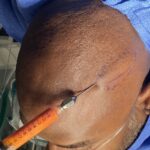
Despite the appeal of fat injection grafting, it does have several disadvantages. First and foremost, it can not be placed into lines and wrinkles in the skin. Fat grafts are thick viscous materials that have to be injected through fairly large needles. All of the synthetic injectable fillers are materials whichi flow easily through very small needles. Therefore, fat grafts must be injected under the skin which makes them good for adding volume and plumping facial areas. Like the synthetic innjectable fillers, they can be used for lip and cheek-lip groove augmentation. But they should not be thought of as lines and wrinkles treatments since they can not be placed directly into the skin. Secondly, fat grafts are not ‘off-the-shelf’ injectable fillers. They require fat to be harvested, processed, and then injected. This entire process must be done in a sterile manner, which means that they can not be done in the typical office setting most of the time. Because of this consideration, I usually use fat grafts when the patient is having other surgery and we can take advantage of the operating room environment. Outside of having surgery, I will use synthetic injectable fillers in the office setting when no recovery and an instantaneous result is most important to the patient.
Dr. Barry Eppley
http://www.eppleyplasticsurgery.com
http://www.ologyspa.com
Clarian North Medical Center, Carmel, Indiana
Clarian West Medical Center, Avon, Indiana
Indianapolis

Fat Injections to the Face - A Concept Which Continues To Intrique
Posted on 17 July 2008 | Category: fat injections, platelet-rich plasma

Despite the many off-the-shelf injectable fillers which currently exist, none of them can promise permanent results or complete biocompatibility and lack of any type of foreign-body reaction in everyone. Only one’s own fat, when done as an injection, can potentially fulfill those promises. But fat has another problem…..its survival after injection is unpredictable and it can not be injected very easily into small places or directly into the skin due to its irregular thick flow and the need for a large-bore needle from which it is introduced. But despite these drawbacks, the allure of fat as a filler material continues and its ample donor source (for most patients) perpetuates the mystique of a simple transfer from someplace undesired to a more desireable one.
There is no getting around the fact that fat injections are unpredictable. While there are some that blame a surgeon’s outcomes on their methods, an honest assessment of results will show that, even in the best of hands, the fate of fat transfer is not technique dependent alone. There is still much about fat biology that we do not know or understand. Many factors other than method of harvest and preparation influences its transplantation outcome including source, patient age, and the recipient site. It is naive to think that the important but relatively simple step of concentration after harvest is the dominant step that controls how much fat survives later. It is important for sure but it can be only one of the contributing factors. Much active research work is going on right now to study many of these other factors including how fat differs between donor sites and what other factors may be added to fat to improve its survival after injection.
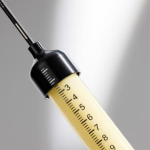
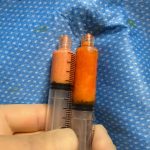
The face is a fortunate site for fat injections in that the relatively small volumes needed have a better chance of survival. The smaller volume to surface area caused by linear injection patterns favors a quicker ingrowth of blood vessels which provides nourishment to traumatized and starving fat cells. As a result, fat does better in the face than any other bodily area. I currently strain all harvested fat and/or do a few minutes of centrifugation to get out most of the liquid debris and pack presumably good fat material into a syringe. Using 1cc syringes and a 16 gauge needle provides a relatively smooth outflow of fat into the desired facial areas.
One biologic approach that I am currently looking at is the addition of PRP or platelet-rich plasma to a fat graft concentrate. PRP is derived from the patient’s blood and is a spin down of concentrated platelets which can be easily added to any fat graft mixture. The dosing (amount of PRP) per fat graft that is necessary is unknown and must be studied further, but I am empirically using 1cc of PRP per 10cc of fat. Early results, particularly in the lips which can be easily followed and assessed, are promising.At the least, PRP is not harmful in any way as it is derived from each individual patient.
The conceptual allure and simplicity of the fat injection makes it a useful facial augmentation technique. It may not have guaranteed survival and is ideally a procedure best done in the operating room at the time of other more major interventions. The future will undoubtably make its use more widespread as a better understanding of fat biology is realized.

Dr. Barry Eppley
http://www.eppleyplasticsurgery.como/
http://www.ologyspa.com/
Clarian North Medical Center, Carmel, Indiana
Clarian West Medical Center, Avon, Indiana
Indianapolis

Fat Injections for Calf Augmentation
Posted on 09 June 2008 | Category: calf augmentation, fat injections

Augmentation of the calfs is most consistently done with a synthetic implant. Most patients who seek calf augmentation are typically body builder types, those born with very thin calfs who have been unable to build them up, or sosmeone with significant calf asymmetry. Despite an implant’s predictable improvement in the size and shape of the calfs, calf implants are not without problems. Implant placement into and on top of the calf muscles makes recovery uncomfortable and having to stand and walk around early on afetr surgery makes it possible for the implant to shift, develop a fluid collections (seroma) or possibly even get infected.
Because of these implant concerns, the alternative treatment of fat injections or free fat grafting has emerged. A recent article in Plastic and Reconstructive Surgery presents a patient series using fat injections for calf augmentation. Their reported experience is encouraging. Fat grafting to the calfs has numerous potential advantages such as the elimination of the need for a synthetic implant, the use of a patient’s own body tissues, an easier recovery with few limitations, and a very low risk of bleeding or infection. Such advantages over an implant gives serious thought to its use.
All of these advantages of free fat fat grafting is counterbalanced by one significant disadvantage….an unpredictability of after surgery shape and size. How much fat survives and is retained is widely variable. No plastic surgeon can guarantee or predict with 100% accuracy how much fat will survive on a consistent basis. The article reports using 75 - 125cc per calf with good volume retention.The burning question through the past several decades is…how to make fat grafting work better. The injection technique is, of course, important but is only half of the answer. How the fat is prepared after harvest in the oeprating room is the other half. Everyone agrees that concentration is very important after harvest. This is the mechanical process of removing the liquids from the more solid fat components. Whether this is done by a centrifuge or passing the fat aspirate through a strainer or sieve are two methods of which one has not been proven to be better than the other. Additives to the fat are theoretically appealing but there is no universal magical additive. Currently, I add platelet-rich plasma (PRP) to the concentrated fat prior to injection. Whether this aids fat survival is not proven but since it is a product of the patient, there is no risk in so doing. PRP is a concentrate of a patient’s own blood done at the time of surgery. While there is no standardized amount of PRP to add to fat, I would envision adding 3cc of PRP per calf graft site.
While I have yet to do calf augmentation with fat injections, the technical aspect of this approach is straightforward. Careful marking of the patient while standing beforehand is critical to get the proper areas augmented. Like all fat injection surgeries, the patient must accept that the amount of fat that will survive is unpredictable. It may require more than one injection session to obtain the best result. Most fat grafting methods will not achieve the degree of volume enhancement that a calf implant will. In reviewing the before and after photos from the above mentioned article, that observation seems to be true.
Dr. Barry Eppley
http://www.eppleyplasticsurgery.com
http://www.ologyspa.com
Clarian North Medical Center, Carmel, Indiana
Clarian West Medical Center, Avon, Indiana
Indianapolis

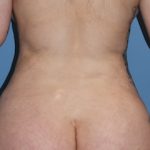
Fat Injections for Buttock Augmentation
Posted on 08 June 2008 | Category: buttock enlargement, fat injections, fat transplantation, gluteal implants

Enhancement of the buttocks is most consistently done with a gluteal implant. Despite its predictable improvement in the size and shape of the buttocks, buttock implants are not without complications. Intramuscular implant placement makes recovery more uncomfortable and having to sit on the implant predisposes it to positional shifting and the formation of fluid collections and possible infection.
Because of these concerns, the alternative treatment of fat injections or free fat grafting has emerged. Fat grafting to the buttocks has numerous potential advantages such as the elimination of the need for a synthetic implant, the use of a patient’s own body tissues, an easier recovery with few limitations, a simultaneous benefit of cosmetic emhancement of the donor site, and a very low risk of bleeding or infection. All of these advantages of free fat fat grafting is counterbalanced by one significant disadvantage….an unpredictability of after surgery shape and size. How much fat survives and is retained is widely variable. No plastic surgeon can guarantee or predict with 100% accuracy how much fat will survive on a consistent basis. I prefer to inject no more than about 300cc per buttock as I think much volume than that results in greater volume loss.
The burning question through the past several decades is…how to make fat grafting work better. The injection technique is, of course, important but is only half of the answer. How the fat is prepared after harvest in the oeprating room is the other half. Everyone agrees that concentration is very important after harvest. This is the mechanical process of removing the liquids from the more solid fat components. Whether this is done by a centrifuge or passing the fat aspirate through a strainer or sieve are two methods of which one has not been proven to be better than the other. Additives to the fat are theoretically appealing but there is no universal magical additive. Currently, I add platelet-rich plasma (PRP) to the concentrated fat prior to injection. Whether this aids fat survival is not proven but since it is a product of the patient, there is no risk in so doing. PRP is a concentrate of a patient’s own blood done at the time of surgery. While there is no standardized amount of PRP to add to fat, I typically use 3cc of PRP per buttock graft site.
If a patient opts for buttock augmentation with fat injections, they must accept that the amount of fat that will survive is unpredictable. It may require more than one injection session to obtain the best result. Most fat grafting methods will not achieve the degree of volume enhancement that a gluteal implant will.
Dr. Barry Eppley
http://www.eppleyplasticsurgery.com
http://www.ologyspa.com
Clarian North Medical Center, Carmel, Indiana
Clarian West Medical Center, Avon, Indiana
Indianapolis

Plastic Surgery in the HIV/AIDS Patient
Posted on 16 May 2008 | Category: AIDS, HIV, fat injections, lipoatrophy, liposuction, plastic surgery, submalar cheek implants

I have seen numerous patients over the years who are positive with the HIV virus, otherwise known as the acquired immunodeficiency syndrome (AIDS) and probably some that had the virus but it was unto them or they did not disclose it. Thesd patients fall into two categories of procedural requests; those patients seeking typical cosmetic procedures and those patients who have the adverse effects of antiretroviral therapies known as the lipodystrophy syndrome. In either case, there is always the question of the adviseability of performing elective plastic surgery. Are the patients healthy enough so that they are not at increased infection and complication risks?….and….What is the real risk to the operative team in terms of potential disease transmission?
In an excellent article in Plastic and Reconstructive Surgery (May 2008), Dr. Steve Davison of Georgetown University reviews these basic issues. In HIV positive patients, they can safely undergo elective plastic surgery provided that a thorough preoperative workup has been performed. Patients with CD4 counts greater than 200 and low viral loads have surgical risks that are similar to the general population. There is no evidence to support the historic contention that they have poor or compromised wound healing. Increased surgical risks are in those patients whose CD4 counts are less than 200 or have viral loads greater than 10,000. The risk of disease transmission to the surgical team is not precisely known but is estimated to be around 0.3% for penetrating injuries from surgical sharps, a rate that is less than 10% that of hepatitic C exposure which is far more dangerous.
In my practice, I generally see known HIV-positive patients for facial lipoatrophy of the cheek and temple areas and fat accumulation of the back of the neck (buffalo hump). Both of these can be managed by non-surgical options although I find the surgical alternatives to give superior results. Injectable fillers, such as Scuptra, Radiesse, and ArteFill can be used to correct the typical patterns of facial wasting but they do require large volumes of injectate and numerous sessions. They quickly become as costly as surgery. A surgical alternative are submalar implants and fat grafting whichi I have found quite satisfying even if 100% of the fat does not survive. Buffalo hump reduction (dorsocervical fat accumulation) can be treated by LipoDissolve injections if the area is not too large but it usually takes at least 3 sessions over a greater number of months to get a reasonable result. Ttraditional liposuction is far more efficient and can take away a larger amount of excess fat in an obviously shorter time.
I have found performing plastic surgery on HIV positive patients to be rewarding and well appreciated. They often suffer the stigmata of their disease and wish its improvement to improve their self-esteem and improved social acceptance. I have seen no greater incidence of complications in this patients than any other types of patients.
Dr. Barry Eppley
http://www.eppleyplasticsurgery.com
http://www.ologyspa.com
Clarian North Medical Center, Carmel, Indiana
Clarian West Medical Center, Avon, Indiana
Indianapolis

Patient Selection in Lipodissolve - Dr Barry Eppley
Posted on 12 April 2008 | Category: fat injections, fat removal, lipodissolve, liposuction

LipoDissolve offers an alternative non-surgical treatment option for select fat problems. While liposuction, when it was originally in the United States in 1981, was to be used for ’spot reduction’ (and we know its application has been extended well beyond that initial use), successful use of LipoDissolve really depends on the spot reduction concept. Careful patient selection is of the utmost importance in getting good results with an injection-based fat reduction treatment.
After using LipoDissolve in my plastic surgery practice now for two years and having performed hundreds of injection sessions, I have developed my own system for patient selection. This is a simple system based on one practical consideration, how would LipoDissolve compare to Liposuction for each patient’s problem. I divide patients into 4 types. Type 1 problems are ideal for LipoDissolve treatments as one can expect close to similar results if the area was similarly treated with liposuction. This includes areas about the size of your hand and could include areas such as the neck, small abdominal areas, flanks, back rolls, small saddlebags, and the knees. Generally an area that is small enough that it would be hard to justify the expense of going to the operating room for liposuction surgery. Type 2 patients are the opposite of Type 1. In Type 2 fat concerns, liposuction would result in a much better result than LipoDissolve, often considerably so. These would be larger areas or a combination of more than 3 Type 1 areas. The entire abdomen, combination of inner and outer thighs, back, buttocks, or large flanks are typical Type 2 areas. Type 3 areas are patients who have had liposuction and have some residual areas of irregularities due to underresection. (postoperative LipoDissolve therapy) Type 4 patients are those have have fat tumors known as lipomas. I have found lipomas respond particularly well to LipoDissolve injections, although large ones may require 4 to 5 treatments for complete eradication.
With this relatively simple system of classification, it is easy to not only carefully select those patients most likely to be happy with LipoDissolve therapy but it also makes it easy to counsel patients and make them understand their candidacy for treatment or why liposuction is a better treatment option.
Dr Barry Eppley
http://www.eppleyplasticsurgery.com
http://www.ologyspa.com
Clarian North Medical Center, Carmel, Indiana
Clarian West Medical Center, Avon, Indiana
Indianapolis

Fat Transplantation and Grafting in Plastic Surgery
Posted on 22 March 2008 | Category: fat, fat injections, fat transplantation

 Despite the more recent public awareness of fat removal by liposuction and fat injections for volume addition in the past 20 years, the use of fat in plastic surgery has been around for over 50 years. The history of liposuction dates back to the early 20th century with the famous first case of unsuccessful liposuction in a ballerina who subsequently lost her leg. Necessary improvements in liposuction techniques made it an everyday procedure in the United States by the mid-1980s. Fat transfer or transplantation work by the famous plastic surgeon Dr Peer in the 1950s started by establishing that big pieces of fat don’t survive as well as small ones. The important concept of the need for blood vessels to grow into the transplanted fat as fast as possible for survival was established by this first experimental work.

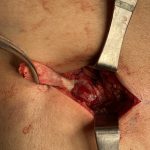
As we sit here today, what do we know about fat transplantation? Certain aspects of fat transfer do work well and have been used for years. The ‘old’ dermal-fat graft, while completely unknown to the public in general, is still a reliable method for correcting small contour problems or acting as an interface to thicken up some areas. Its problem is that it results in a scar from the harvest (must take skin and a thin layer of fat) so this is only good if you already have a scar somewhere or the scar is more ‘tolerable’ if the procedure is being done for reconstructive purposes rather than purely cosmetic. Small whole pieces of fat can work well but you have to again get the ‘chunks’ from somewhere (scars) and you then have to get it in where you need it. (possibly more scars?) So, these whole fat grafting methods can reliably work but their uses are more limited due to scarring.

Fat injections today remain, by far, more widely done than whole fat methods because they cause little if any scarring and their placement can be more precise……even if they do not work as well. Despite what is frequently touted, fat injections are unpredictable in how much actually ‘takes’. That is why overcorrection is always done. Why do they not always work well? The harvest of the fat, through liposuction, dices it into many minute pieces and kills some of the fat cells. Therefore, what is injected is some portion of liquid fat that will simply be resorbed. While we strain the fat obtained by liposuction, and this helps get rid of loose liquid and blood, and makes it more ‘concentrated’,  there still is ‘dead’ fat in the concentrate. What we have not mastered, yet, is how to make those fat cells that survive this hazardous journey grow in their new home, rather than merely survive.

Recent scientific work and interest has been in the awareness that stem cells, which in theory can grow into any type tissue, are in great numbers in fat tissue. Why do these not grow after being injected with fat into more fat? Perhaps we have just not found the right trigger yet….whether it be a drug to mix with it or the type of fat injected.

The beauty of fat injections, despite their unpredictability, is that they are generally safe, easy to do (in the operating room), and the availability is plentiful in most patients. As plastic surgeons, we will continue to work with fat and I am confident one day we will turn it into a more reliable soft tissue filler.

Dr. Barry Eppley

http://www.eppleyplasticsurgery.com

http://www.ologyspa.com

Clarian North Medical Center, Carmel, Indiana

Clarian West Medical Center, Avon, Indiana

Indianapolis

Fat, Liposuction, and Fat Injections
Posted on 22 March 2008 | Category: fat, fat injections, fat removal, liposuction

As a plastic surgeon, I certainly am asked and do treat a lot of fat concerns. Whether it be liposuction treatments for fat removal or fat injections for adding volume somewhere, plastic surgeons probably handle more fat than any other medical specialty. Yet, we still do not understand much of its physiology and its response to treatments that we routinuely do.

In looking around at a lot of fat in the body, we do know that it is not all the same. Nor is its functions similar. Most patients think of fat as an unnecessary evil and that its only purpose is to store excess fat and be a source of annoyance and embarrassment. While many fat areas in the body are indeed ‘depot’ areas. Many other fat areas, however, are not. For example, fat in the cheek and temple area (the buccal fat pad) is not a depot area but is intended to serve as buffer between the jaw muscles and allow them to glide smoothly and not interfere with each other. Why the buccal fat pad, for example, goes away in the HIV patient due to the antiviral medications (and fat forms on the back of the neck…the buffalo hump deformity) is not understood at all. For the sake of simplicity in patient consultations, I divide fat into depot and non-depot sites. (although not entirely scientifically accurate) So when a patient asks me, for example, during a liposuction consult if the fat will come back, my answer is…..if it is removed frm a depot site such as the stomach, then if you gain weight after surgery it may most likely come back….if fat is removed from a non-depot site, such as the inner knees or neck, it is much less likely to do so.

Fat transplantation, or fat injections, also remain a somewhat unpredictable procedure. The procedure is very appealing because it is your own natural tissue but, unfortunately, that does not mean that it always survives well (and maintains volume) after surgery. Much effort has been put into doing the obvious, such as minimizing the trauma to the fat by the way it is extracted and prepared to be injected as well as how it is placed. But, yet, how well it works is still unpredictable. We know even less about whether where it comes from (stomach vs. knee, for example) makes any difference in how well it works.

Fat, despite its preponderence and ever-presence, still has mysteries that remain to be unlocked. Fat is a hot research topic now because of the stem cell load that it carries. It is better than bone marrow in this regard as there is more of it and it is easier to get out. No one has ever thought of fat before as being a healing tissue. I frequently wonder as I watch a cannister of fat fill up during a liposuction procedure…..as to what potential benefits we may be throwing away.

Dr Barry Eppley

http://www.eppleyplasticsurgery.com

htp://www.ologyspa.com

Clarian North Medical Center, Carmel, Indiana

Clarian West Medical Center, Avon, Indiana

Indianapolis

Lip Enhancement in Indianapolis
Posted on 03 February 2008 | Category: advanta, artefill, fat injections, juvaderm, lip advancement, lip augmentation, lip implants, lip lifts, radiesse, restylane

Lip Enhancement in Indianapolis by Dr Barry Eppley

Improving the size and shape of the lips is a frequent cosmetic request and a very commonly performed aesthetic procedure done in the office. While the vast majority of lip enhancements are done by injectable fillers, and most patients are only aware of this approach, there are other less common but equally effective options.

Injectable fillers are the most common lip enhancement method and the hyalurons such as Restylane and Juvaderm are usually used. The longevity of hyaluron fillers, while touted differently amongst manufacturers, is in the range of 4 to 6 months. While longer-lasting injectable fillers exist, such as Radiesse and Aretfill, these contain particles which may be prone to lumpiness and foreign-body reactions. Because of their predictability and safety, with very few complications, hyaluron lip enhancement is the current gold standard.

There other other types of non-injectable lip fillers. Over the years, many collagen-based implants have been tried, such as Alloderm and Fascian. Unfortunately, while conceptually appealing, their longevity has not been shown to be any greater than the hyaluron fillers. But they are more expensive and cause much more lip trauma to place. As a result, they have fallen into disuse.

Despite the frequent touting of your own fat as an injectable filler, and reports of great longevity and possible permanency, most plastic surgeons have not had that experience. Fat in the lip is simply unpredictable. I will still use it…..when I am performing other procedures in the operating room where the use of fat is ‘easier’ than in the office and there is little to lose by doing so. I suspect that repeat fat injections over time do consistently work but that is fairly traumatic for a patient to go through.

Permanent lip augmentation can be done by synthetic implants known as Advanta. These very soft implants are threaded into the lips, corner to corner, by a metal trocar under local anesthesia. They are non-resorbable, fairly soft, and the volume added is permanent. They can definitely be felt in the lips but I have not had a patient yet who has reported that as a problem. I use Advanta when the patient is ‘qualified’, meaning they have tried injectable fillers first and want to move on to something permanent.

More surgical lip enhancement is known as vermilion advancements or subnasal lip lifts. While these are highly effective are making the lip bigger, they have a trade-off of permanent scars. A patient must be very willing to make this trade-off and accepting of fine-line scars. I use these in patients that have very thin lips and a very flat cupid’s bow and have ‘failed’ lip enhancement by fillers. (meaning it does not look good or do what the patient expected. Lip lifts are often most effective in the older patient whose lips (which were not big to start with) have shrunken with age.

As you can see, lip enhancement has lots of options. All work well at achieving larger lips….but not every enhancement procedure is for every patient.

Dr Barry Eppley
http://www.eppleyplasticsurgery.com
http://www.ologyspa.com
Clarian North Medical Center, Carmel, Indiana
Clarian West Medical Center, Avon, Indiana
Indianapolis

Fat Injections for Buttock Enlargement in Indianapolis
Posted on 25 December 2007 | Category: buttock enlargement, fat injections

Buttock Augmentation through Fat Injections by Dr Barry Eppley in Indianapolis

I have previously discussed buttock enlargement through the use of implants, known as implant or alloplastic gluteoplasty. Another popular option is buttock enlargement through the use of fat injections or transplants, known as autogenous gluteoplasty. Fat injections as a method for soft tissue volume enhancement is well known and has a good track history in the face where smaller amounts of fat are needed, usually in the range of 1 to 10ccs. In the buttocks, however, much larger amounts of fat are needed to make a significant size difference, usually in the range of hundreds of ccs per buttock.

Here in my practice in Indianapolis, I always discuss the merits of buttock implants vs fat injections for buttock enlargement. Fat injections to the buttocks have several advantages. First, it eliminates the need for a synthetic implant and all the inherest risks such as infection, implant malpositioning, and notoriously a seroma build-up or fluid collection. Second, the buttock enlargement operation is much simpler, less invasive and has less pain after surgery. Thirdly, the amount of recovery is dramatically different with no activity limitations after surgery unlike implants. Fourth, there is an added cosmetic bonus from the harvest at the donor site. Some other body area gets to be reduced at the same time, usually the abdomen, waistline, or thigh areas. A two-for-one bonus if you will.

However, despite these significant advantages, fat injections to the buttocks for enlargement has one big potential disadvantage. How much of the fat will survive and get the volume that was put in at the time of surgery? That is an unknown question. And the issue of volume retention of injected fat has persisted with the use of this fat technique since its inception. What we do know for certain is this; 100% of the fat will not survive. Somewhere in the range of 1% - 99% will be the amount of fat that will persist. In larger fat injection volumes, such as the buttocks (and there is no larger amount of fat that is injected anywhere), a good result is probably in the 50 - 60% range for most patients. Therefore, I always tell my patients here in Indianapolis this: I will over-correct with fat injections to the buttocks (I don’t think you can ever inject too much fat or get the buttocks too big as they will only hold so much) and be prepared that it will likely take more than one fat injection session to get the best volume improvement. Unlike a buttock implant, which remains the same after one surgery, fat injections to the buttocks are unstable and require more than one surgery to get close to the same result.

The most important question for patients who want to avoid a buttock implant by undergoing fat injections for buttock enlargement then is; is the price and recovery from possibly two surgeries better than having a buttock implant? That is a question that each patient has to decide on their own in consultation with their plastic surgeon.

Dr Barry Eppley
http://www.eppleyplasticsurgery.com
http://www.ologyspa.com
Clarian North Medical Center, Carmel, Indiana
Clarian West Medical Center, Avon, Indiana
Indianapolis

Categories

This is a list of the categories. Every post is categorized by the author to help you find what you need.

Archives

This is a list of the monthly archives. Click on the appropriate month to see the historical posts.

Links

This is a list of the links to related resources and websites. Use this list if you'd like to do some additional, relevant reading.