EXPLORE
Plastic Surgery
Dr. Barry Eppley

Explore the worlds of cosmetic
and plastic surgery with Indianapolis
Double Board-Certified Plastic
Surgeon Dr. Barry Eppley

Archive for the ‘Uncategorized’ Category

Stem Cell and Fat Concentrates For Plastic Surgery and Anti-Aging Therapies

Saturday, October 15th, 2011

The use of stem cells in medicine has garnered much media and public attention. Because it is a natural component of human tissues and it is a pluripotent cell that has the capability of converting to many different adult cell types, it holds much promise for numerous medical therapies. While the quest for which medical diseases stem cells offers the best benefit is being investigated with much fervor, there is no question that anti-aging conditions are one logical application.

While not a disease in the truest sense, aging is a natural medical condition  that is degenerative of both cells and the substrates in which they exist. The use of stem cells and the factors that they may excrete would seem like they could offer some regenerative effects on one’s external appearance. Thinning and wrinkled skin, atrophy of fat and supportive connective tissues, and restoration of face and body contours have the potential to be enhanced with adjunctive stem cell techniques.

The promulgation of stem cells to the forefront of anti-aging treatments has been driven by the realization of their easy access. While stem cells have traditionally been thought of as existing largely in bone marrow, it is now known that fat is the richest source of adult stem cells. Estimates are that fat has 300 to 500 times more stem cells than bone marrow. Given that fat can be quickly harvested through liposuction, the acquisition of stem cells is now easy.

While plastic surgeons have trued numerous methods of isolating stem cells at the time of their harvest, the present reality is that it is not easy to obtain really true concentrates of them. Most so-called stem-cell therapies today in plastic surgery are nothing more than concentrated fat injections. While these fat injections do contain some stem cells, calling them stem cell injections or stem-cell enhanced fat injections is a stretch and more of a marketing concept that it is a true stem cell therapy.

To obtain stem cell in sufficient numbers from fat, it requires that they be isolated, grown and processed in laboratory conditions. It was only a question of time before a commercial laboratory became available to provide this service for plastic surgery and anti-aging applications. Cryo-Lip, a bio-tech startup laboratory based in Indianapolis, is now offering the service of cryopreservation of adipose-derived stem cells, fat, or both. It is now possible that patients and plastic surgeons can not only obtain viable stem cell concentrates but can have them stored and grown for future use.

While liposuction surgery is an obvious source of fat to be processed, it can also be done when one is not desiring body contour changes. The amount of fat needed for processing is in the range of between 25 to 50ml which can be obtained using a patented syringe system under local anesthesia in the office if desired. The sample is then sent to Cryo-Lip for processing and storage. The average turnaround time to obtain injectable materials is two weeks. The samples can be sent as either a fat or concentrated mesenchymal stem cell mixture. The existence of viable stem cells is confirmed by testing and analysis before being sent. If not an adequate number of viable stem cells is present in the sample, the provider is informed and the tissue is discarded at no charge to the patient.

The now easy access to stem cell concentrates allows them to be used for numerous potential cosmetic and regenerative medicine uses. Some of the well known current applications include their adjunctive use with fat for lipofilling for facial volume restoration and breast and buttock augmentation. When used as isolated stem cell concentrate injections, they have potential use for facial skin rejuvenation, wrinkle reduction and fold and crease filling.     

Dr. Barry Eppley

www.eppleyplasticsurgery.com

Indianapolis, Indiana

The Influence of the Skin In Rhinoplasty Results

Wednesday, August 24th, 2011

Rhinoplasty can make significant changes to the appearance of the nose whether it is the removal of a bump from the bridge or a narrowing and lifting of the tip. No matter what structural reshaping of the nose has been done, its aesthetic improvements can only be perceived by how the skin overlies it. Often overlooked, the skin should not be ignored as an important contributor to the final effects of a rhinoplasty procedure.

Regardless of how the bone and cartilage of the nose has been reshaped, these changes require the overlying skin to shrink and adapt down to the newly altered framework. In essence the effects of a rhinoplasty is highly influenced by the size and thickness of the enveloping skin. It is well known that thinner skinned patients gets less nasal swelling after rhinoplasty, show the results sooner and is more likely to show any irregularities or asymmetry caused by the surgery. Thin-skinned patients show more refined rhinoplasty results. Conversely, thick-skinned patients get a lot of nasal swelling, takes a long time for it to settle down and masks framework imperfections better.

Compared to the bone and cartilages that make up the sides of the nose, the overlying skin actually occupies a larger surface area. It can not be manipulated or removed so it is not a variable that can be changed by surgery. It is really a fixed variable in rhinoplasty even though it is usually perceived as a variable one. While widely believed that skin has a great ability to shrink, it really has a limited ability to do so. The perception of skin shrinking after rhinoplasty is probably more that of the swelling going away rather than less skin resulting afterward.

It is important to realize that whatever shrinkage or adaptation that the skin of the nose does is also influenced by where on the nose it is located. The skin across the bridge can more easily adapt as it is essentially a simple saddle shape. The skin on the tip of the nose, however, has a more complex shape. Like wrapping a piece of paper around one side of a sphere, its shrinkage can create more of a bobbed-nose appearance.

The skin of the nose must be respected in a rhinoplasty. Large thick-skinned noses must not have too much structural support removed underneath it, particularly in the tip area. Otherwise a contracted unshapely tip appearance may result that can be uncorrectable later. Rhinoplasty should be done with an appreciation for the volume of the overlying skin and where it is least likely to adapt well.

The size and thickness of the skin of the nose should also temper a patient’s expectations. Too much can be expected in thick-skinned rhinoplasty patients when more subtle changes are realistic.

Dr. Barry Eppley

www.eppleyplasticsurgery.com/

Indianapolis, Indiana

What Will Be My Plastic Surgery Price and Costs?

Wednesday, May 25th, 2011

Obtaining financial information is one of the most important considerations for most people when considering elective plastic surgery. Since medical insurance does not cover any plastic surgery procedure that is deemed cosmetic (not improving a medical function), all patients need to have a full understanding of the costs of the desired plastic surgery operation(s). But getting a reasonably accurate cost of surgery without an in-person plastic surgery consultation is virtually impossible. Many cost ranges exist on numerous websites, including those of plastic surgeons, but these are always given in ranges extending over thousands of dollars in difference because they must cover the wide variability of patient’s problems.

The price of plastic surgery is influenced by many factors. The biggest component of any plastic surgery fee is that of the doctor’s time to do the procedure. Cosmetic surgery fees are not like medical insurance, there are no usual and customary fees and plastic surgeons are completely free to charge whatever they think is appropriate for their practice. One significant variable that affects fees is that of the plastic surgeon’s expertise and experience. While high fees do not guarantee a better result, be careful when you see or are given a price that is a bargain. The most highly experienced plastic surgeons who have great expertise do not have bargain basement fees. Be careful of saving costs at the expense of by cutting corners with expertise and reputation of a surgeon.

Like medically covered procedures, the geographical location of the plastic surgeon affects price. Fees are higher on the coasts and large metropolitan areas in between them. This can work to your advantage if you are willing to travel for your procedure. There are disadvantages in doing so in terms of follow ups, potential complication management etc, but medical tourism today is not just limited to leaving the nation’s borders.

The other component of the price of plastic surgery is the use of an operating room and an anesthesiologist. While they will almost always make up collectively less than the plastic surgeon’s fee, they can easily account for a third or more of the total costs. Some fees that are given may only include the surgeon’s fee which is why they may seem low or different than other surgeon’s fees. Look carefully for any asterisk next to the fee or at the bottom of the page. That is a sure sign that it will say…’operating room and anesthesia costs are additional.’

While there is no substitute for an actual face-to-face consultation with a plastic surgeon who can give their exact price afterwards, it is possible to get a pretty good cost prediction doing internet research alone. The My Plastic Surgery Price site allows one to provide a few photos and list the procedure of interest and a price estimate for the procedures(s) will be provided. Because cosmetic plastic surgery is completely external and thus very visible, a good photographic review of the patient’s face or body concerns can allow for such pricing to be done.

While not everything in life is or should be available at the click of a mouse, getting a plastic surgery price for your surgery can be. This is extremely useful information as it can help separate a wish from a reality early in the plastic surgery research process.

Dr. Barry Eppley

www.eppleyplasticsurgery.com

Indianapolis, Indiana

Non-Surgical (Injectable) Enhancement of the Jawline

Saturday, April 2nd, 2011

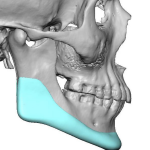
The shape of the jawline has become a new area for facial enhancement in the past decade.  As a u-shaped curve that makes up the lower third of the face, it is an acute transition line between the face and the neck. The jawline has numerous dimensional features including a desired curved or v-shape from one angle to the other and three easily seen and well-defined bony prominences, the chin and the two jaw angles. The width of the jawline is highly influenced by the size of the masseter muscles in the back end of the jaw. Deficiencies in any of the bony prominences or an irregular inferior border make for an undesired weaker jawline appearance. Large masseters muscles can make the jaw look too wide.

A smooth jawline is often age-related and the development of jowls, which everyone will eventually get, can be reversed by conventional facelifting techniques. A shorter chin and/or high jaw angles are the result of one’s genetics and are only affected to a minor degree by small amounts of bony atrophy with aging. Augmentation of the chin and jaw angles by synthetic implants can make dramatic changes in these bony prominences. Large thick masseter muscles are usually ethnic-related but some cases of hyperactivity do exist. Masseter muscle reduction defies a surgical procedure but chemodenervation can be very effective albeit a much longer term treatment.

Despite these known surgical procedures for jawline enhancement, some patients do not want an invasive treatment. Non-surgical (injection) treatment strategies do exist for all areas of the jawline. While they are not ideally effective for many jawline problems, they can offer some temporary and modest improvement. For some, they may be a test before considering surgery. For others, they may be all that will ever be done. Besides effectiveness, what separates surgical vs injectable treatments is the permanency of the results they create.

Injectable fillers are intended to primarily plump up soft tissues such as lips and nasolabial folds but they can be used for bony augmentation. They can be easily and quickly injected onto the chin and at the jaw angles as an office procedure. Of all the injectable fillers, Radiesse is the best choice for jawline augmentation. It is not just because it is partially composed of hydroxapatite particles, which is the inorganic component of natural bone, but because of its greater persistence over most of the hyaluronic acid fillers. (e.g., Restylane) Its thicker viscous consistency also does a better job of pushing the overlying soft tissue away from the bone for a greater effect per volume of injected material.

For the large masseter muscle, Botox injections have proven to be very effective. While it requires multiple injection sessions every 4 to 6 months, the masseter muscle does remarkably shrink. This is evident even several months after the very first injection. Three injection sessions over the course of a year can visible shrink the muscle and make the width of the jaw more narrow. The only question about Botox injections in the masseter muscle is are the atrophy effects permanent? Some tout that once the muscle has been significantly reduced it will stay that way. No long-term clinical trials have ever been conducted to determine if that Botox effect is true. We know it is not true in the cosmetic treatment of the muscles of facial expression but the masseter muscle is a much larger muscle composed of different types of fibers.

Injectable jawline enhancement can be done by Radiesse filler in the chin and jaw angle and Botox into the masseter muscles. Its disadvantages are that neither is permanent and must eventually be repeated to maintain their effects. But for those opposed to more invasive surgery, non-surgical jawline modification is a viable alternative.  

Dr. Barry Eppley

www.eppleyplasticsurgery.com

Indianapolis, Indiana

Risks of Jaw Angle Reduction Surgery

Saturday, December 11th, 2010

A recent report out of China was that of a death due to plastic surgery. What was most significant about this report, besides the obvious tragedy, is the procedure which ultimately resulted in the patient’s demiss. While deaths from plastic surgery procedures are extremely uncommon and have been reported in the past, most involve a cosmetic operation done on the body. Such lethal occurrences are even more rare in plastic surgery of the face.

A young prominent 24 year-old female (she was an aspiring pop singer who was on China’s equivalent of ‘American Idol’) died in November while undergoing ‘facial-bone grinding surgery’. According to the report, her jaw bleed uncontrollably at some point in the operation which lead to it accumulating in her throat. This blocked her ability to breathe and she subsequently suffocated and died.

What was this ‘facial bone grinding surgery? This does not sound like a very common cosmetic facial procedure and why would anyone have their facial bones ground on? While I don’t know any of the details of this specific surgery, it could only be that of a jaw angle reduction procedure. While very rarely requested or done in Caucasian patients and in the U.S., it is actually a fairly common cosmetic facial procedure in the Asian patient and in countries such as Korea and China. In the desire to have a more slim and less broad face, narrowing the prominent jaw angle is one facial procedure that helps achieve that goal. It is not usually done by grinding or burring of the bone but by actually cutting off the angle of the jaw bone with a saw. One of the known potential complications, albeit rare, is to inadvertently cut one of the large blood vessels to the surrounding masseter muscle which envelopes the bone. This may cause a lot of bleeding but it isn’t usually a lethal complication.

How is it possible for this young lady to have suffocated from the bleeding during her surgery? This could only have happened from the type of anesthetic she was having. Always in my hands, this is an operation that is done with the patient fully asleep (general anesthetic) and having their airway protected by an endotracheal tube. This breathing tube not only makes sure that one’s airway does not get blocked but also prevents any fluid that would enter the throat from being allowed to get into the lungs. For her to have suffocated from the bleeding, she must not have had a breathing tube in a place. This also means she was done under some form of local or sedation anesthesia…an almost unthinkable notion for this kind of surgery. Besides patient comfort, a general anesthetic with a protected airway also helps ensure patient safety should bleeding events like this one should occur.

Like many tragic outcomes from cosmetic procedures, close inspection of the story often bears out that uncommon and unusual approaches were being done. Taking shortcuts in cosmetic surgery should never over ride patient safety measures.

Dr. Barry Eppley

www.eppleyplasticsurgery.com

Indianapolis Indiana

Common Questions about Arm Lift Surgery (Brachioplasty)

Wednesday, January 6th, 2010

1.      How do I know if an arm lift is right for me?


Deciding about an arm lift (also known as a brachioplasty) is a balance between how much does a scar bother you versus how much does the way your arm looks now bother you. In other words, would a scar running down the inside of your arm be better than the floppy saggy skin that is there now? It is about trading off one ‘problem’ for another. You just have to make sure the new problem (scar) is preferable to the way the arm looks now.


2.      Would liposuction work as well as an arm lift?


In almost all cases, no. Liposuction only removes fat. And while some skin shrinkage (contraction) does occur with liposuction fat removal, that skin change is not nearly as much as the skin that is removed with an arm lift. When you look carefully at arms that are saggy, a lot of the problem for many patients is primarily loose skin which hangs down from the triceps area. While there certainly is some fat as well, the amount and stretched nature of the skin is usually the greater problem.


3.      Will an arm lift get rid of loose skin in my armpit or on the side of my chest?


In many upper arm problems, particularly after large amounts of weight loss after bariatric surgery, the skin problem extends beyond the arm into the armpit (axilla) and even down onto the side of the chest or breast. When this occurs, one needs a modification or extension of the traditional arm lift procedure. The cut out pattern must extend beyond the arm (horizontal component)to include this vertical excess as well. This is known as an extended arm lift. The transition area in the axilla poses the biggest potential postoperative problem as any scar that crosses a joint area is prone to developing a tight scar band. When this occurs in the axillary region, the full upward motion of the arm may be restricted and painful. Secondary scar revision may be necessary.


4.      Where and how long is the scar on the arm?


The scar will be as long as the distance between your elbow and the armpit. In an extended arm lift, the scar will be double that length as the vertical length of the scar extending down from the armpit may be just as long as the horizontal arm scar. In my opinion, I would be less concerned about the length of the scar and more focused on how the scar will look. Arm scars do tend to get wide and be red for sometime after surgery. And I have rarely seen what I consider a great armlift scar. Because of the location of the scar and that it is closed under considerable tension, they never turn out to be great-looking scars. That being said, most armlift patients do not undergo scar revision as they usually feel that however the scar looks is preferable to what they had before. This is also the reason why one should not undergo an armlift unless the arm problem is fairly severe. These type of scars are not a good trade-off for a minor arm sagging problem.


5.      Is an arm lift painful?


Remarkably, no. The arm will feel tight and little sore, but there is no significant pain afterwards.


6.      How soon after can I shower and use my arms?


I have my patients remove their arm wraps and shower after 48 hours. All sutures are under the skin and the incision is covered with tapes. There is no harm in getting the tapes wet. They will be removed in one week. In some cases, I do place a drain which is usually removed in two or three days after surgery.


7.      Will insurance pay for my arm lift?


Unfortunately, no. While sagging arm skin is unsightly and does interfere with the wearing of certain clothes, its correction is not considered a medical necessity. The insurance companies do not see any medical benefit to be gained by its removal.


8.      How can I improve the arm scar if it looks bad?


Arm lifts scars can be revised six months to a year after surgery if a patient desires. Seconday revision always produces a better looking scar as the skin is more relaxed, less tissue is being removed compared to the original arm lift, and the incision is closed under much less tension. One can use topical scar creams after the original arm lift surgery but they tend to have limited benefit in the arm lift scar.

Dr. Barry Eppley

http://www.eppleyplasticsurgery.com

http://www.ologyspa.com

Clarian North Medical Center, Carmel, Indiana

Clarian West Medical Center, Avon, Indiana

Indianapolis

Case Study: Breast Augmentation with Silicone Gel Implants in an Older Patient

Tuesday, January 5th, 2010

Background: Breast augmentation continues to be one of the most popular of all cosmetic plastic surgery procedures because of its instantaneous results and success in enlarging a woman’s breasts.

This is an interesting case of a 50 year-old female who had a lifelong desire to make her body more proportionate and improve her clothing options. She had endured having essentially no breast tissue (A cup bra size) since she was a teenager. Despite having children, her breast skin was excellent with no skin sag or stretch marks and a well-placed nipple. This is unusual for a woman of her age to have such good quality breast tissue and it forecasts that she would have a great result…a result that would be uncommon for a ‘senior’ breast augmentation patient.

Several of the critical decisions that she had to make where what type of breast implant to use (saline vs silicone) and what size did she want to be. Given her lack of any breast tissue, the choice of silicone gel is a good one so that she would not have any unnatural implant rippling. Placing it through a lower breast crease incision does not create a scar concern in an older patient who is much more accepting of any breast scars. (note in her photos how she already has a prominent upper pole breast biopsy scar) Also, this type of implant would be the most assured to last the rest of her lifetime.

Like almost all women who undergo breast augmentation, a natural and not too large of a result is what they desire. This would be particularly true in a mature patient who has had no significant breast size for her entire life. Conversely, one does want to go too small and regret later that they should have gone bigger. One of the keys to breast implant size selection is the measurement of the diameter of the width of the natural breast. You do not want an implant size whose diameter is wider than your own breast base width. This is how implants get too far to the size and interfere with arm swing. Her breast width was 14.5cms. Given her relatively above height average (5’ 8”), she could handle a 400cc implant without looking too big.

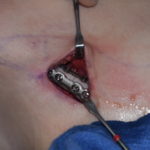
The operation was performed through a lower breast crease incision. Placing the incision is a bit of guesswork in that her lack of breast tissue would make the use of her existing crease too high. One of the main effects that a breast implant creates is lower and lateral pole expansion, more than any other area of the breast.  Therefore, the incision placement must be a little lower than the existing crease to have it right in the fold after. Submuscular dissection and pocket development was done with some release of the most inferior attachments of the pectoralis muscle. Failure to release this muscle can cause an implant that stays too high afterwards or creates an implant that is positioned too far to the side. In my Indianapolis plastic surgery practice, I like to use a special lighted retractor as seen here to have good vision of the pocket and to get any bleeders. Submuscular dissection can cause more bleeding and it is important to do a thorough inspection and coagulation to not have a postoperative bleed and subsequent hematoma. (1% risk)

Sizers are used during surgery to help create a good pocket so that the actual placement of the final implant is ideally handled only once. Before placing the implant, it is soaked in an antibiotic solution, the pocket washed with same, and I change gown and gloves before handling. All of these intraoperative maneuvers are designed to decrease the risk of implant infection after surgery. (1% risk)

Recovery after breast augmentation is a muscular one. It is like recuperating from a big pulled muscle. The best way to do it…is to use it. I placed her on arm range of motion exercises and 800mg of Ibuprofen the night of surgery. Her use of pain medications was just for one day. She returned to work as a laboratory technician five days after surgery. By three weeks after surgery, the breasts will begin to soften and the final position and shape become more obvious. By three months after surgery, they have a completely natural feel and look.


One of the hallmark’s of a good lower breast craese approach is to have the incisions perfectly placed in the new breast crease. While this does not always occur, it is influenced by the guesswork used during the preoperative marking. These scars will red for awhile and are maximally so at three months. By six to nine months, the scars will face into a near indiscernible white line.


Case Highlights:

1)      Breast augmentation can be done just as easily in an older patient as when one is younger. There is no upper age limit when this procedure can be performed. Because of a more mature patient who is often more pain tolerant, the recovery may actually be slightly easier.

2)      The quality of a breast augmentation result is highly influenced by the nature of the overlying breast skin. Good quality skin, at any age, results in better breast augmentation results.

3)      A rapid recovery after breast augmentation requires an aggressive physical therapy approach. Early range of motion exercises, no physical restrictions, and the use of early anti-inflammatory drugs can have one back to near normal activities within days.


Dr. Barry Eppley

http://www.eppleyplasticsurgery.com

http://www.ologyspa.com

Clarian North Medical Center, Carmel, Indiana

Clarian West Medical Center, Avon, Indiana

Indianapolis


Medical Skin Care on Indianapolis Doc Chat Radio Show

Sunday, August 16th, 2009

On this week’s Doc Chat Radio show on WXNT 1430AM in Indianapolis from 1:00 - 2:00PM on Saturday afternoon, hosted by Dr. Barry Eppley Indianapolis plastic surgeon,  the topic of Medical Skin Care was discussed. Covering the popular facial treatments of ayurvedic facials, medical facials, microdermabrasion, chemical peels, and laser micropeeling, the medical aestheticians from Ology Spa explained when and why these are used and how they fit into a skin care program. Other skin care topics covered were laser hair reduction, micropigmentation, light therapies for brown spots, and eyelash rejuvenation with Latisse medication and eyelash extensions.


The benefits of a medical skin care porgram with the proper selection of treatments and topical products can have a real anti-aging effecte with better skin texture and reduced wrinkling.


Medical skin care and Plastic Surgery consultations with Dr. Eppley can be arranged by calling his Indianapolis suburban area facilities at Clarian North office at  317-814-4100 or his Clarian West office at 317-217-2200.

Reconstruction of Cranial Defects with Synthetic Materials

Monday, May 25th, 2009

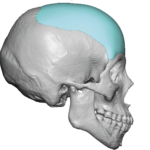
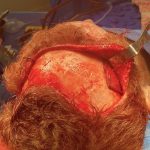
Defects of the outer skull produces indentations and depressions in the scalp or forehead. Skull deformities can be caused by a variety of sources including craniotomy surgery, fractures, and muscle atrophy (if in the temporal region) While hair can cover many of these issues, some patients will seek reconstruction of these cosmetic defects.

Building back out the skull bone, also known as cranioplasty, has been done for over a hundred years. Many materials have been used to onlay onto or over the defect including natural and synthetic bone, ceramics, calcium phosphate cements, and metallic plates and meshes. Which one is best is really a function of the surgeon’s expertise and experience and not so much what type of material is used as they all can be made to work.

In most small to moderately-large cranial defects that are not full-thickness, I prefer hydroxyapatite cements (HAC) or PMMA (poly methylmethacrylate) Both are liquid and powder mixtures that are turned into a slurry which can be molded to all margins. HAC is a bit trickier to work with but in a young patient may be better in the long-run as it is does allow for some tissue ingrowth through its fissures and cracks. PMMA is easier to work with and is quite fracture-resistant. It is also much less expensive which can be a significant advantage if one is paying out of pocket. In either case, I always put some powdered antibiotics into the mixtures for a slow release after surgery.

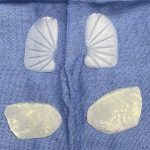
In large full-thickness cranial defects, I have used computer-generated implants made of a porous material known as HTR. (hard tissue replacement) These are usually used in cases of loss of a craniotomy flap or for the immediate replacement of a skull bone tumor. The exactness of the computer imaging and modeling is quite impressive although most cases still require some minor modifications during surgery. The great benefit of HTR implants is that they allow for a lot of fibrovascular ingrowth which makes them resistant and/or treatable to infections should they develop. Bone ingrowth, while theoretically appealing, is usually of no practical significance due to the high fracture resistance of the material. When facing complex cranial defects, particularly of the forehead, cranial HTR implants have a long track history of clinical success.

Reconstruction of cranial defects is a highly successful procedure that can be done with a variety of materials. Synthetic bone substitute materials such as HAC and HTR produce very consistent results in experienced hands. These materials should be used with caution if there is predicted difficulty with scalp closure, if the patient has been irradiated or has a past history of osteoradionecrosis, or there has been an active or recent history of bone infection.

 Dr. Barry Eppley

http://www.eppleyplasticsurgery.com

http://www.ologyspa.com

Clarian North Medical Center, Carmel, Indiana

Clarian West Medical Center, Avon, Indiana

Latisse Eyelash Growth Stimulant

Thursday, April 16th, 2009

Latisse (bimatoprost ophthalmic solution 0.03%) is a new prescription product that promotes eyelash growth. In late December, the FDA approved Latisse for treating eyelash hypotrichosis. (poor or stunted growth) This same drug, known as Lumigan in ophthalmologic use, first received FDA approval in 2001 for lowering intraocular pressure in patients with open-angle glaucoma and ocular hypertension.

Applied to the upper eyelid margins once nightly for 16 weeks, an FDA clinical trial showed that more than 78 percent of patients treated with Latisse experienced significant eyelash growth. The amount of improvement was more than 100% over the original thickness of the lashes. Eyelash length increased 2 to 3mms and thickness of eyelash hair increased up to 60%. Patients tolerated Latisse well with few side effects. Some patients experienced redness for the first few days to weeks of treatment which gradually decreased or disappeared.

One potential complication with Latisse is the risk of a change of the colored portion of the eye, the iris. People with light irises run the risk of increased iris pigmentation and eye-color change, particularly light brown becoming darker. It is unknown if this change, if it occurs, is reversible or permanent. This is clearly noted in the product insert and prescribers have been educated to relay that information to patients.  A rare side effect of Latisse is inflammation. If the patient develops a red painful eye, referral to an  ophthalmologist should be done for further evaluation of the health of the eye.

It is not known at this point how often the drug must be used each week after the first two months to sustain the increased length and thickness of the eyelash. Like Rogaine for male pattern baldness, continual use of Latisse is likely needed for maintenance.

In my Indianapolis plastic surgery and medical spa practice, eyelash enhancers are very popular and the demand for Latisse has already been brisk. This topical medication is now a part of overall eyelash enhancement which previously consisted only of makeup and eyelash extensions.

Dr. Barry Eppley

http://www.eppleyplasticsurgery.com

http://www.ologyspa.com

Clarian North Medical Center, Carmel, Indiana

Clarian West Medical Center, Avon, Indiana

Indianapolis


Dr. Barry EppleyDr. Barry Eppley

Dr. Barry Eppley is an extensively trained plastic and cosmetic surgeon with more than 20 years of surgical experience. He is both a licensed physician and dentist as well as double board-certified in both Plastic and Reconstructive Surgery and Oral and Maxillofacial Surgery. This training allows him to perform the most complex surgical procedures from cosmetic changes to the face and body to craniofacial surgery. Dr. Eppley has made extensive contributions to plastic surgery starting with the development of several advanced surgical techniques. He is a revered author, lecturer and educator in the field of plastic and cosmetic surgery.

Read More


Free Plastic Surgery Consultation

*required fields


Pricing

The cost of any type of elective plastic surgery plays a major role in the decision to undergo the procedure(s).

More Info


Military Discount

We offer discounts on plastic surgery to our United States Armed Forces.

More Info


Categories