Top Articles

Calf Implant Sizing in the Charcot-Marie-Tooth (CMT) Patient

Implant sizing in Charcot–Marie–Tooth (CMT) patients is very different from standard cosmetic calf augmentation because the tissues are usually: thinner tighter more asymmetric neurologically compromised less forgiving of oversized implants The reconstructive goal is usually: “restore proportional leg contour without creating implant conspicuity.” Core Principles of Sizing in CMT 1. Conservative sizing is critical The Read More…
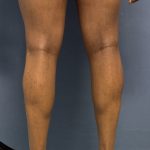
Calf Implants in the Charcot-Marie-Tooth (CMT) Patient

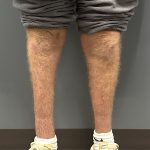
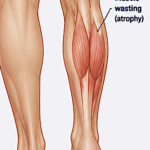
Calf implants can be a useful reconstructive option in selected patients with Charcot–Marie–Tooth (CMT) disease, particularly when there is severe lower leg muscle wasting (“stork legs”) that causes cosmetic deformity and sometimes difficulty fitting clothing or feeling comfortable socially. A few important considerations make CMT patients different from standard cosmetic calf augmentation patients: Why calf Read More…

Calf Implant Surgery – Anatomy and Surgical Placement Considerations

Introduction The most reliable method of calf augmentation is with the use of implants.. Fat injections may benefit patients who have adequate donor sites and can tolerate their unpredictable volume retention, but most muscle augmentations get the most predictable and effective results from implants. Like most extremity implants, subfascial placement inside the muscle sheath is Read More…

Calf Implant Surgery: Nerve Anatomy, Technique, and Considerations

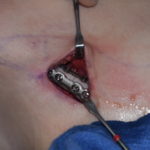
Implants remain the most definitive and reliable method of calf augmentation. While fat injections may benefit select patients, calf implants consistently provide a more predictable and effective outcome. Like other extremity implants, calf implants are linear in design, with length greater than width, and are placed in a north–south orientation. The incision is favorably positioned Read More…

Plastic Surgery Case Study – 4 Implant Male Calf Augmentation

Background: Augmentation of the lower legs can be done by either fat injections or implants. Each has their advantages and disadvantages which is consistent with the same choice for any other body muscle augmentation. Fat injections are an autologous procedure that has few complications and is a natural material but its volume retention is unpredictable Read More…

OR Snapshots – Calf Implants and the Peroneal Nerve

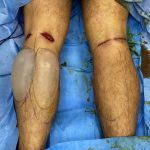
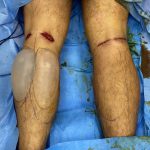
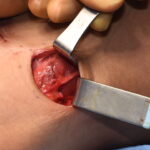
Calf implants involve dissection from incisions on the back of the knee inferiorly down to the gastrocnemius muscle fascia. The fascia is then entered so that the implant can be placed underneath it on top of the muscle. There are two gastrocnemius muscles,  an inner or medial muscle belly and an outer or lateral muscle Read More…

Top Articles