EXPLORE
Plastic Surgery
Dr. Barry Eppley

Explore the worlds of cosmetic
and plastic surgery with Indianapolis
Double Board-Certified Plastic
Surgeon Dr. Barry Eppley

Archive for the ‘cheek implants’ Category

Structural Facial Surgery In Men And The Male Model Look

Wednesday, August 3rd, 2011

Almost anyone in the world is aware of the recent tragedy in Norway with the mass killings of an incomprehensible number of Norwegian teens and young adults. The murderer Anders Breivik appears to have acted alone, driven by his white supremacist and anti-Muslin views. What has caught my attention as a plastic surgeon, however, is comments that have been written about his facial appearance.


According to the head of Norway’s intelligence agency, it is believed that he had undergone plastic surgery in the past to look more “Aryan.” The agency’s head has stated that “You do not have that Aryan look naturally in Norway”…”Hitler would have had him on posters. He has the perfect, classic Aryan face. He must have had a facelift.”


While I am not an expert on Norwegian facial structure, I do know that he would not have had a facelift to change his facial appearance. That is not what a facelift does. A facelift is what I call ‘anti-aging facial surgery’, where one is trying to return to one’s prior appearance. This does not change your face but rather makes it look rejuvenated and less tired like it did 10 or 15 years ago. But you still look like you, just a better you.


Rather he would have undergone ‘structural facial surgery’, where the foundational components of the face are altered. That can and often does change one’s appearance. Foundational facial procedures are done at the bone or cartilage level, not just the skin and soft tissues. This includes plastic surgery procedures such as rhinoplasty and facial bone augmentations. (forehead, brow, cheek, chins and jaw angles) According to reports, he supposedly underwent nose and chin surgery at age 21. This would make more sense as these can change the structure of the face and definitely can make one more Aryan in facial appearance, particularly if certain elements of the face are already there.


This raises the question of what is an Aryan facial appearance and why does it look so? The word Aryan, at least as it was perceived and used in Nazi Germany, specifically refers to being white, blond-haired and blue-eyed. But there is not necessarily a specific set or arrangement of facial features that are ascribed to an Aryan face. People talk about it and one would know if they saw it but may not be able to describe the details of it.  But what it undoubtably refers to is a strong and well-chiseled face. For a male this would be highlighted by well-defined facial bony prominences of the brows, cheeks, chin and jaw angles. The nose would have a strong and high dorsal line with a balanced ratio between the three nasal thirds.


The concept of an Aryan face continues to exist today but it is better known as the ‘Male Model Face’. Most young male models in any advertisement today almost all have this type of facial appearance. Whether they have it by genetics, plastic surgery or the use of good lighting and/or Photoshop, the strong and desireable male face has these consistent features.


Plastic surgery techniques today can help many men undergo these type of structural facial changes. Rhinoplasty, anatomical cheek implants, square chin implants, vertical lengthening jaw angle implants and occasionally select fat removal below the cheeks and in the neck can create a face that has more well-defined angles and is more masculine in appearance. For some men, this ‘Male Model Surgery’ can be very effective provided they don’t have a lot of facial fat and not an overly round face.  


Dr. Barry Eppley

http://www.eppleyplasticsurgery.com

Indianapolis, Indiana

Cheek Augmentation and Facial Attractiveness in Men and Women

Saturday, July 23rd, 2011

It is well known that one of the major contributors towards the perception of an attractive face, albeit a man or a woman, is the proportion of certain features. Known as indicators of facial beauty, disproportionate and asymmetric features are the main reasons many patients seek plastic surgery procedures. One can debate endlessly why this is so, but we are fundamentally driven to an attractive face from an innate drive of evolution and the desire to procreate. Attractiveness is desireable because it is perceived, right or wrong, to be associated with better genes.

But what are some of these features and can they really be changed by plastic surgery? For women it is bigger eyes, a rounder forehead, a smaller nose, well defined cheeks, larger lips and a chin that is not too prominent. For men, slightly prominent brows, a nose with a high dorsal line, well-defined cheeks, and a strong chin and jaw angles are associated with more masculinity. Short of the size of the eyes, all of these facial features can be modified by differing plastic surgery techniques.

The one desireable facial feature that both men and women share is the value of high and well-defined cheek bones. It is probably the only facial feature whose size and prominence is considered attractive for both sexes. It is also the one facial feature that I never receive requests to be reduced. (short of Asian patients and this more about the zygomatic arch width not anterior cheek projection) Few patients, if any, really want smaller cheeks.

What is it about high cheekbones that makes them some desireable? Many say that they feminize a face. If high cheek bones contribute to greater femininity, then why would it be attractive on men? The caveat is that it is only an aesthetically desireable facial feature in a man when it coexists with a stronger jawline as well. Strong cheekbones on a man with a small jaw or chin does not make for an attractive face. It is the angularity of the three defining points of a male face, the cheeks, chin and jaw angles, that makes for its aesthetic desireability. Such well-defined facial skeletal highlights equates with a strong and virile personal character. (and maybe the chance to pass along some good genes)

The benefits of cheek augmentation in either a man or a woman must take into consideration these aesthetic and gender differences. While cheek enhancement can be done with injectable fillers, I am reserving my comments here to the insertion of implants. Injectable fillers are largely a good trial method to determine the merits of proceeding to a permanent cheek augmentation in my opinion. Cheek implants in women should be softer and more round to provide volume but they usually don’t need to be angular or cross onto the zygomatic arch or encroach upon the lateral orbital rim area. This can add too much width which is not usually feminizing. Cheek implants in men often need to be more angular and add more height. They are beneficial to help balance out a strong jawline or should be done in conjunction with chin and jaw angle augmentation.

The cheeks can contribute significantly to one’s facial attractiveness. But it needs to be considered within the context of the whole face. The balance of one’s facial features is what makes for gender-specific facial beauty.

Dr. Barry Eppley

http://www.eppleyplasticsurgery.com

Indianapolis, Indiana

Cheek Augmentation - Preventing Complications and Improving Outcomes

Thursday, November 19th, 2009

Cheek augmentation is done for a variety of different aesthetic reasons. Besides the obvious need to fill out a sunken in cheek appearance and improve facial balance, they are just as commonly used for an anti-aging effect. By augmenting the soft submalar tissue to fill midfacial hollows, the lifting of this tissue provides a facial rejuvenating effect and may even soften the depth of the nasolabial fold beneath it. This tissue lifting or anti-aging effect is unique amongst facial implants.

The shape of the cheekbone and its location between the convex orbital rim and the concave maxillary wall make it the most complex facial area to augment from an aesthetic standpoint. Where along the cheekbone should the implant be positioned and what shape and size of implant should be used are what the plastic surgeon ponders. There really are no guidelines as to how to exactly to make these selections. Artistic technique is as important as any type of scientific approach. This high degree of variability lends to revision rates that are higher than any other facial implant currently used.

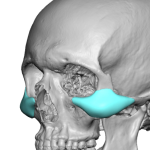
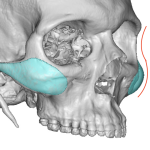
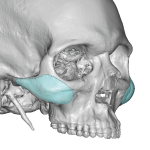
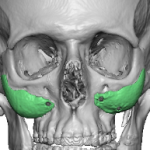
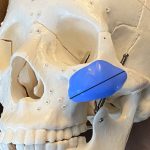
Cheek implant complications usually are of two types, undesired aesthetic outcome and implant shifting or migration. Unhappy outcomes come from either an implant that is too big or positioned in the wrong location. Either way, an unnatural appearance often results. Because of where cheek implants are located, they catch attention almost as much as one’s nose or eyes. Cheek implants come in a variety of sizes and shapes but can fundamentally be divided into malar and submalar implants. Malar implants being placed on top of the zygomatic bone and submalar implant highlighting the underside of the bone. (submalar hollow or buccal space) Malar implants have different extension that either go back further onto the zygomatic arch, up around the lateral orbital wall , or anteriorly along the underside of the orbital rim. Because of these variable implant shapes, it takes a good aesthetic eye and communication with a patient beforehand to get a good result.

Cheek implants are also unique because of where they are positioned on the zygomatic bone. They often are sort of hanging from the side of the cliff, which makes them prone to shifting. Shifting will usually occur in a downward direction from whence they were initially inserted, which is usually through the mouth. For this reason, it is possible for cheek implants to shift around and end up with asymmetry. This is particularly true if the implant is made from silicone which is very smooth and slippery. Other implant composition have a much greater frictional grip on the bone and will not move as easily.

One interesting silicone cheek implant design which can effectively address the shifting problem is that of the Conform midfacial implant. Its undersurface is not smooth silicone but rather a pebbly or nubbed surface. The many little ‘’fingers’ of silicone allow it to develop some degree of frictional gripping to the bone surface. Also when soft tissue grows around it, the capsule will absolutely lock it into place. This is very similar to the concept of placing a textured surface on a breast implant which was developed nearly twenty years ago. Its shape also allows it to be trimmed and used as either a malar or submalar implant. 

Dr. Barry Eppley

http://www.eppleyplasticsurgery.com

http://www.ologyspa.com

Clarian North Medical Center, Carmel, Indiana

Clarian West Medical Center, Avon, Indiana

Indianapolis


Midface Rejuvenation - Cheek Lifts vs Cheek Implants

Saturday, October 17th, 2009

As one ages, the entire face changes. Some parts of facial aging are more obvious than others as the face does differentially age. The forehead, brows, eyes, mouth, jawline and neck are all areas whose aging is well recognized. The aging of the midface and cheek areas, however, has only become more recently recognized.

With the aging process, the fatty tissue that normally drapes over the cheekbones can begin to sag. The result is less prominent cheekbones, and a droopy fold of skin and fat between the nose and the cheek (the nasolabial fold). The sagging cheek fat can also alter the appearance of the lower cheek. For example, bagginess of the lower eyelids often becomes more apparent after the fat of the upper cheek begins to sag. This in essence ‘unveils’ the bagginess of the lower lids, which have always been there. In addition to sagging of the skin and fat of the midface, there is also volume loss in the cheek due to loss of fat and muscle.

A number of cheek lift or midface lift procedures exist to address this aging area. The goal of all of them is to lift up droopy cheek tissue over the cheekbone restoring the more prominent youthful contour, improving the tear trough and bagginess of the lower lids, and softening the undesirable cheek fold. Fundamentally, they may be divided into lifting approaches vs volumetric addition. In some cases, they may even be done together.

Lifting approaches aim to reposition the sagging fat of the cheek over the cheekbone to restore the youthful fullness of the cheeks. Such midface lifts use differing access including the lower eyelid, scalp, and temporal incisions using open incisional or endoscopic instrumentation. Implants have also been devised to provide less invasive options including suspension sutures and bone-anchored lift devices. The plethora of differing lifting approaches suggests that no one of them is universally successful.

Contrarily, cheek implants have also been used to help create a degree of cheek lifting. By placing an implant through the mouth onto the cheek bone, some fullness is added to the volume-depleted cheek and the cheek tissue on top of the implant is pushed upward. While not creating as dramatic effect as a lifting procedure, it is far simpler and with fewer complications. This cheek lift approach, using a specially designed submalar implant which fits on the underside of the cheek bone, has been around for nearly two decades. When used in the right patient and properly sized, it can have a good cheek enhancement effect. But it is also easily overused and overdone (too large a size) as older celebrity faces are rife with examples of odd-looking and peculiar cheek prominences due to oversized implants.

Given the choices between cheek lifts and cheek implants, which is the most helpful for cheek rejuvenation? The answer is no one of them is best for all patients. Over the years, I have used almost of all of them in my Indianapolis plastic surgery practice….and have also seen and learned the downsides to each of them. Midface or cheek rejuvenation is as much an art form as almost any area of anti-aging facial surgery. Given the potential complications that can occur with lifting procedures, most specifically lower eyelid ectropion, their use should be reserved for the most severe sagging cheek problems. More moderate cases with less prominent cheekbones may benefit with a small to moderate-sized implant. In all cases, moderation is the key…not too much lift or too big of an implant. The midface is one area that does not look good overdone and is easy to do.  


Barry L. Eppley, M.D., D.M.D.

http://www.eppleyplasticsurgery.com

http://www.ologyspa.com

Clarian North Medical Center, Carmel, Indiana

Clarian West Medical Center, Avon, Indiana

Indianapolis

Cheek Implants in the Edentulous Patient

Thursday, October 15th, 2009

Cheek implants are a fairly simple and effective method for adding projection of various areas of the zygomatic midface. Because they are various shapes of cheek implants that are available, there is a fair amount of art as opposed to science in selecting style and size of implant to get the patient’s desired effect. Because these implants are placed on the side or underside of a bony surface, they are also prone to postoperative migration in an inferior direction of they are not secured.

Cheek implants are typically shown in textbooks, journals, and patient results in patients who have teeth. By having teeth, the vertical distance from a positioned implant to the maxillary vestibule (highest area under the upper lip) is maximized. There will always be a good soft tissue buffer between the implant and the inside of the mouth. This lessens the long-term likelihood of implant exposure should it ever migrate downward. (if one secures the implant with screws, this will not happen)

In the patient without teeth, however, the use of cheek implants can be more problematic as the facial anatomy has changed…unfavorably. The loss of upper teeth changes the structural integrity of the face. The vertical dimension of one’s occlusion (bite), or the height of the bite formed by the contact of the upper and lower rows of teeth, determines the shape and length of the cheeks. When a patient becomes edentulous, the mouth closes too fully with no teeth to separate the jaws, thus contributing to a sunken in appearance of the cheeks. Without teeth, the cheeks tend to wrinkle, the angle between the nose and the lips changes, the ridges that hold the teeth flatten, and the tongue may splay out to fill the open mouth space. These changed features often make the edentulous patient seek midface volume replacement.

The fundamental concern in placing cheek implants in a patient who wears an upper denture is two-fold. First, the distance between the cheek bone and the maxillary vestibule has shortened considerably. There is less soft tissue coverage between the implant and the oral mucosa. This makes the use of certain types of cheek implants, the submalar implant specifically, more risky. Because it sits on the underside of the zygomatic bone, it is even closer to the lining of the mouth. Secondly, the flange of an upper denture can be an erosive source causing implant exposure. A high-riding denture flange may eventually cause pressure necrosis of the thin soft tissue between it and the implant. At the least, it can be a source of irritation and discomfort.

Cheek implant selection is critical in the edentulous maxilla. The implant should be placed on the zygomatic prominence and its maxillary extension trimmed if necessary to keep it from hanging too low. The implant should absolutely be secured in place by a screw. If the implant needs to be extended for midface volume, it should go as close to the infraorbital nerve (without compression) as possible. The canine fossa area should be avoided, as tempting as it is to help this volume deficient area. Lastly, the patient’s dentist should be consulted to shorten the posterior flange of the maxillary denture before surgery. The broad palatal surface provides enough surface area for retention that the flanges can be shortened without sacrificing denture stability.

Cheek implants can work effectively in the typical older edentulous patient who usually suffers midfacial volume depletion and sag. Several alterations in surgical technique are necessary to avoid the increased risk of eventual implant problems caused by vertical maxillary shortening.


Barry L. Eppley, M.D., D.M.D.

http://www.eppleyplasticsurgery.com

http://www.ologyspa.com

Clarian North Medical Center, Carmel, Indiana

Clarian West Medical Center, Avon, Indiana

Indianapolis

Facial Implants for Correction of Midface Deficiency

Monday, September 7th, 2009

Implants are very useful for producing three-dimensional facial changes. By extending the outer boundaries of bony prominences, the proportions and shape of the face can be changed dramatically. Implants essentially camouflage facial bony deficiencies or enhance a normal prominence. Traditional and well known facial implants are that of the chin, cheeks, or  nose. Jaw angle implants are also becoming more commonplace today.


Most facial implant use is for one region only (e.g., chin) even if the area of enhancement has two sides. (e.g., cheeks) Multiple sites of enhancement at one procedure can also be done and are associated with more significant facial changes. The use of combination cheek and chin augmentation or even chin, cheek and jaw angle augmentation are traditional implant duets and trios.


Another good facial implant combination is in the use of camouflaging a midface deficiency. Some midface hypoplasias are obvious, other are more subtle. Either way, there is an apparent flatter or less convex facial profile. In its severest form, the facial profile will actually be concave. The degree of midface underdevelopment is most evident by looking at one’s teeth or bite relationship. There may be an underbite or an edge-to-edge bite at the incisors. Someone may have had prior orthodontics so the ‘true’ bite relationship may have become obscured.


Midface deficiency is marked by flatter cheekbones and a ‘sunken’ base to the nose, known as the paranasal region. The entire midfacial skeleton is recessed from below the eyes down to the upper teeth. This bony position will have an impact on other facial areas making the nose and chin look bigger and the upper lip look smaller and thinner.


In young patients or more severe midfacial deficiencies, one should consider moving part or all of the midfacial bones. Traditional LeFort osteotomy patterns in conjunction with orthodontics is the standard approach. For patient’s with less significant deficiencies or who are not desirous of making that degree of surgical effort, augmenting the deficient bone is another option.


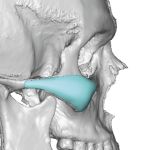
The combination of cheek and paranasal augmentation is a good facial implant combination for this problem. Using four implants (two cheek and two paranasal) placed through two incisions under the upper lip, the midface area can be brought out for greater facial convexity. It is important to secure these implants to the cheek and maxilla with small screws to prevent movement or migration after surgery.  The choice of implant material is not important but good sizing and placement position is.


With an improved midfacial profile, the nose will appear smaller and may not require any alteration. For others, changing the shape of the nose through a rhinoplasty may be simultaneously beneficial. This can be determined before surgery through computer prediction imaging.


Dr. Barry Eppley

http://www.eppleyplasticsurgery.com
http://www.ologyspa.com
Clarian North Medical Center, Carmel, Indiana
Clarian West Medical Center, Avon, Indiana
Indianapolis


Cheek Implants in the Aging Face

Wednesday, April 8th, 2009

One of the common facial aging changes for some people is the loss of fullness in the middle of the face and a longer distance between the height of the lower eyelid and the prominence of the cheek. This is most apparent when you look in the mirror and notice a flattening of the cheek area and a hollowed out look around your eyes.  This occurs as the soft tissue of the cheeks, much like the jowls and neck skin, goes south due to gravity and skin loosening. The specific anatomic reason is that the ligaments that attach the skin to the bone weakens  or stretches out and the skin that is stretched out over the cheek bone falls. This can also appears as folds or festoons of skin that hang down from the lower eyelid to below the cheek.


To improve  this cheek ‘deflation’, adding volume through cheek implants is one approach. By ‘re-inflating the cheek by putting an implant underneath it, the cheek tissue is lifted back up and the cheek highlight or prominence is restored…or even made more evident. In my Indianapolis plastic surgery practice, I perform cheek implantation by making small incisions inside the mouth above the gum line with no visible external incisions and this is my preferred approach in my Indianapolis plastic surgery practice. Cheek implants can also be placed through a lower eyelid incision but this is prone to placing the implant too high. There is no evidence in the medical literature or in my experience that an increased infection risk exists by going through the mouth.

This relatively simple surgery gives a notable richness to the face resulting in a more rejuvenated look. The face also seems to age better after cheek augmentation as the implant helps lessen the potential for future sagging. Cheek enhancement can be done at the same time as a facelift, resulting in a dual change that can be more significant.


In the use of cheek implants in the aging face, it is common to see it overdone. Too much cheek enhancement can look unnatural and be apparent that something was done. A subtle change is more natural and less obvious. Cheek implants come in a variety of sizes and shapes and it is far better to use a small or the smallest size. Because it is done on both cheeks, the after surgery effect can be more than one would expect. Unlike the naturally deficient (underdeveloped) cheek patient, who usually needs a bigger size, the aging face does not usually have a bone deficiency but a much thinner soft tissue prolapse.

Dr. Barry Eppley

http://www.eppleyplasticsurgery.com

http://www.ologyspa.com

Clarian North Medical Center, Carmel, Indiana

Clarian West Medical Center, Avon, Indiana

Indianapolis

Revisions of Cheek Implant Complications

Sunday, December 14th, 2008

Cheek implants are one of the more common types of facial implants used for esthetic or reconstructive enhancement of the malar area. They are second in use only behind chin implants which are the most common implant placed on the facial bones. Like all implants, they have the potential for some complications such as infection, shifting and asymmetry, and poor sizing and positioning. Cheek implants also have a few unique complications as well.


Infection from any type of facial implant is possible but it is rare. The extensive blood supply of the face and the implant’s position at the bone under a muscle layer make infection uncommon. In the very few that I have seen, reopening the implant pocket, cleaning off the implant thoroughly and immediately reinserting it has always worked with smooth silicone rubber implants. Porous type implants are another story because it is not possible to rid the bacteria which are embedded in the irregular deep channels of a porous surface. Cheek implants made of these materials should be removed and replaced at a later date.


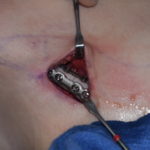
Cheek implants are unique from many other facial implants because they are positioned ‘on the side of a cliff’ so to speak, with no natural resting place. Only the soft tissue pocket developed on the bone becomes their containment method. Because a pocket must be developed that is bigger than the implant to allow it to slide into place without folding or bending of its edges, it is possible for cheek implants to slip around and be different between the two facial sides. This is probably the number one complication related to them….asymmetry. Persistent asymmetry over time can also lead to eventual migration of the implant down to and through the mouth incision which is commonly used for their placement. To prevent shifting of the implant after surgery, I prefer to ‘nail’ the implants into place with a small screw through them into the underlying cheek bone once the position I want is assured.


Aesthetically, cheek implants are often oversized in my opinion. What makes a significant change on the operative table can often be too dramatic to the patient later. The cheek is a unique three-dimensional facial unit that defies a precise measurement or method of implant selection. (the chin is very straightforward in this way) Computer imaging of the cheek, unlike the chin or nose, is more artistic than scientific and does not help in selecting a size or shape of a cheek implant. A subtle augmentation or increase in cheek size is almost always better. Don’t try and make a cheek implant do too much. Fortunately, downsizing of a cheek implant is a simple replacement surgery that is much less traumatic than the original surgery. Re-entering the same pocket without extra dissection makes adjustment surgery usually easier.


Revisions of problematic cheek implants with a satisfactory outcome can usually be done by changing the size and shape of the implant or repositioning it with more secure fixation to the bone. Cheek implants, however, are highly critically assessed by most patients and meeting their aesthetic demands of size, shape, and symmetry make them one of the most challenging of all the facial implants for a satisfactory outcome.


Dr. Barry Eppley

http://www.eppleyplasticsurgery.com

http://www.ologyspa.com

Clarian North Medical Center, Carmel, Indiana

Clarian West Medical Center, Avon, Indiana

Indianapolis

Avoiding An Unnatural Cheek Implant Result

Wednesday, December 3rd, 2008

Cheek implants are a fairly simple and effective method of enhancing this important aesthetic part of the face. By placing implants through an incision on the underside of the upper lip, the cheek area can be enhanced in various three dimensional ways with different types of implant designs. While once used exclusively for people with flat or deficient cheeks, its use has been expanded in the past decade to help lift sagging cheek tissues to reverse the effects of age and gravity.


The original type of cheek implant to lift up sagging cheek tissues is known as the submalar or Binder implant. It has been around now for over 15 years. Designed to sit on more of the underside of the cheek bone, it synthetically increases the fullness of the cheek bone which causes a lifting effect of the overlying cheek skin because of greater support underneath. This type of implant will not lift sagging skin as much as a true midface lift, but it is a far simpler procedure and poses no risks of any problems with the lower eyelid as a midface lift has the potential to do.


Traditional cheek implants (which sit on top of the cheek bone) can create a similar lifting effect but they also can make an artificial appearance to the midface with a non-anatomic fullnerss below the eye. This can make the cheek look too big and the eyes look artificially sunken in. This is exactly what happens when the approach to treating the aging face involves large cheek implants, often combined with a facelift. The face may be more wrinkle-free and the sagging is gone, but the face somehow looks unnatural and just doesn’t look right. In the male face, this approach often feminizes the face. In the female face, the cheek bones are just too full and they don’t fit the face well. I could name numerous famous actors, actresses, and musicians who have this look from their plastic surgery procedures (which they of course would deny) but I won’t. (as you could probably name them anyway….you certainly know they look odd when you see them)


The key to using any type of cheek implant for facial rejuvenation is…..not to overdo it. Too large of an implant is unnatural. Small to medium-size cheek implants are better for most patients. Don’t try and make the implant do all of the lifting…or make the cheek area too big. It is easy to do as it may look quite good on the operatuve table to the plastic surgeon but not so good to the rest of the world.  If the cheek sagging is severe, the patient may be better off with a small cheek implant combined with a midface lift. Or just use a cheek implant alone and accept improvement but not perfectly tight skin across the cheek area. When it comes to natural vs obvious cheek enhancement, less is always more.


Dr. Barry Eppley

http://www.eppleyplasticsurgery.com

http://www.ologyspa.com

Clarian North Medical Center, Carmel, Indiana

Clarian West Medical Center, Avon, Indiana

Indianapolis

Cheek Implants - Different Styles for Different Problems

Wednesday, November 5th, 2008

The cheek area is a central and critical element of one’s facial appearance. Situated between the pyramidal landmarks of the eye, mouth, and jaw angle, its prominence (or lack thereof) provides projection to the middle of the face. In today’s society, the perception of high or prominent cheekbones is one that is a positive statement about attractiveness and beauty. It is not clear why high cheekbones cast this image, but we all know the emotional response when we see it.


Today’s plastic surgery techniques and modern facial implants now make it possible to provide a wide range of cheek enhancements. Highlighting different areas of the cheek complex is made possible because of the many different styles of cheek implants that are available. Different cheek implant shapes are available that can enhance the front, side, underside, as well as the bone underneath the eye in front of the cheek. Because of these different style options, it is critical that a plastic surgeon look carefully at the anatomy of the cheek to determine which parts of it should be improved.


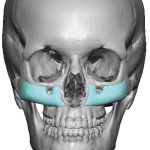
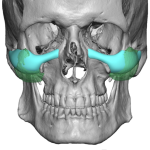
The ‘traditional’ cheek implant is really like a shell which covers all aspects of the curved cheek, adding volume to the front and sides of it in equal amounts. For those patients with really flat cheeks, this is usually a good choice. The implant can be slid further forward or further to the back of the cheek to customize its effects. Submalar cheek implants sit more on the underside of the cheek bone. They push up loose overhanging cheek tissue and , as a result, are more ideal for the aging patient with loose or sagging cheek skin. They also are good for patients who have had loss of the buccal fat pad and hollowing of this area. (facial lipoatrophy, e.g.,  HIV disease)  Because the submalar implant fills the upper part of the buccal space as well as the underside of the bone, a dual effect is achieved. Tear trough implants are not really cheek implants per se. They fill underneath the eye area which is in front of the cheek. For those patients with some good cheek width but flattening of the bone in front of the cheek, this is the only facial implant made for that use. Sometimes it can be used in combination with a traditional cheek implant for greater fill of a flat midface. 


To get the best effect from these different cheek implant styles, their position on the bone is critical. For this reason, I always secure any style of cheek implants to the bone with screws. This is the only way to be certain of their long-term position after surgery.


Dr. Barry Eppley

http://www.eppleyplasticsurgery.com

http://www.ologyspa.com

Clarian North Medical Center, Carmel, Indiana

Clarian West Medical Center, Avon, Indiana

Indianapolis


Dr. Barry EppleyDr. Barry Eppley

Dr. Barry Eppley is an extensively trained plastic and cosmetic surgeon with more than 20 years of surgical experience. He is both a licensed physician and dentist as well as double board-certified in both Plastic and Reconstructive Surgery and Oral and Maxillofacial Surgery. This training allows him to perform the most complex surgical procedures from cosmetic changes to the face and body to craniofacial surgery. Dr. Eppley has made extensive contributions to plastic surgery starting with the development of several advanced surgical techniques. He is a revered author, lecturer and educator in the field of plastic and cosmetic surgery.

Read More


Free Plastic Surgery Consultation

*required fields


Pricing

The cost of any type of elective plastic surgery plays a major role in the decision to undergo the procedure(s).

More Info


Military Discount

We offer discounts on plastic surgery to our United States Armed Forces.

More Info


Categories