EXPLORE
Plastic Surgery
Dr. Barry Eppley

Explore the worlds of cosmetic
and plastic surgery with Indianapolis
Double Board-Certified Plastic
Surgeon Dr. Barry Eppley

Archive for the ‘buttock augmentation’ Category

Case Study: Brazilian Butt Lift in Thinner Women

Sunday, April 15th, 2012

Background: The size and shape of the buttocks is an important part of the aesthetics of one’s body. The importance of size and shape varies amongst different cultures and ethnic groups. This has led to the popularity of buttock augmentation procedures, using either the insertion of an intramuscular implant or fat injections. Fat injections, known as the Brazilian Butt Lift, is the more popular due to its use of one’s own body tissues and the generous availability of donor material in most patients.

But regardless of one’s ethnic or racial background, a completely flat buttocks is not viewed as aesthetically desireable. Such a flat buttocks, and sometimes even an indented one, is prone to occur in those that are thin and lean. To no surprise, a thinner overall fat distribution in one’s body can lead to minimal fat over the buttocks as well. While the gluteal muscles are not small, much of buttock volume comes from the amount of fat between the skin and the muscles.

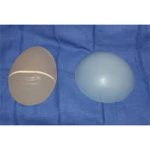
In the thinner woman who desires a buttock augmentation, specifically a Brazilian Butt Lift technique, the lack of sizeable donor material is a limiting factor. For very thin women, this procedure is an impossibility and an implant is the only treatment option. But moderately lean to average-size women may have a fat injection buttock technique if they recognize that the buttock size obtained will be more modest and always less than they ideally desire.

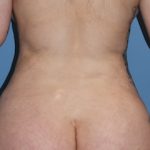
Case Study: This 31 year-old female had long been bothered by her flat buttocks. She had tried to build up her buttock size through different exercises but without success. She did have some excess fat on her stomach and around her waistline and wondered if this would be enough for a Brazilian Butt Lift. On feeling her stomach and flanks, it was felt that maybe a liter of fat aspirate could be obtained but not much more. She wanted to proceed with surgery as she did not want to have synthetic implants.

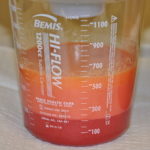
Under general anesthesia she first underwent liposuction harvest of the entire abdomen and flank regions in the supine position. A total of 1,150cc of aspirate was obtained after initial Hunstad infiltration. She was then turned over into the prone position where additional liposuction was done across the top of the buttocks, in the sacral triangle and below the buttocks in the infragluteal fold. This brought the fat aspirate to 1,275ccs.

The fat aspirate was processed by passing it through a sieve and draining off the excess fluid. This brought the concentrated fat amount to 450cc. Using an injection cannula, 225cc of the concentrated fat was injected into each buttock. The injection amount combined with surrounding buttock liposuction fat reduction gave her a visible amount of buttock enhancement.

When seen at her three month follow-up, her final result showed a slightly more rounded buttock shape and size. Her overall buttock shape was more pleasing even if it was not dramatically bigger.

An important question when considering the Brazilian Butt Lift is how much fat will end up being injected into the buttocks. As a general rule, expect only 1/3 to ½ at best ending up being the concentrated amount of fat available for injection. This means that one has to have at least a mimimum of 1,000cc to 1,200 available for removal. It is better that 1,500cc to 2,000cc can be harvested. When only 150cc to 250cc of fat is available for each buttock, the patient needs to appreciate that the buttock size gain will be modest. Some improvement will also come from the buttock sculpting obtained by the liposuction. It is the combination of both that creates the final result. In thinner women, the Brazilian Butt Lift is more of an overall buttocks reshaping effort than exclusively an augmentation outcome.

Case Highlights:

1) The results of fat injection buttock augmentation is limited by the size of the donor harvest areas. These come primarilyfrom the abdomen and hip rolls.

2) In thinner women, the enhancement of the buttock is contributed to as much by the surrounding fat reduction as the buttock size achieved by fat injection.

3) The Brazilian Butt Lift in thinner women is better thought as buttock reshaping than buttock augmentation.

Dr. Barry Eppley

Indianapolis, Indiana

Medically-Safe Injections For Buttock Augmentation

Friday, March 23rd, 2012

The proven and effective method for buttock augmentation is through the use of soft flexible synthetic implants or fat injections. While each of these two approaches is not perfect and has their own advantages and disadvantages, they are safe medical therapies. But like in every other cosmetic procedure, patients do seek easier and less expensive methods that are not surgery to get more instant results. Buttock augmentation is no exception.


The past few years has seen the rise of non-surgical buttock augmentation procedures in the news, all using different non-medical filler materials. The recent arrest of Philadelphia’s Black Madam highlights this disturbing practice which is seen most commonly in major metropolitan areas and in susceptible African-American and Latino female populations. Some of these news reports have involved caulking compounds obtainable at the local hardware store which should suggest to even those most medically naïve that this would be problematic. But many other unreported buttock injection shops involve the use of silicone oil. On the surface this seems less risky but silicone oil is not FDA-approved for use as an injectable filler in the U.S. and its risk of granuloma, lumps and skin pigmentation changes are well known.


The use of any form of injectable filler for large volume body augmentation, such as the buttocks and breasts, is not under study in the U.S. Fat remains the gold standard for such uses even if it is far from yet perfected. But outside the U.S., other countries have been exploring and developing medical-grade fillers for body contouring. These materials are different formulations of those that are commonly used in the face, usually of the hyaluron-based family or hydrogel compounds.

Recognizeable by such names as Juvederm or Restylane, hydrogels are synthetically-created sugar-like compounds that are chemically similar to what our bodies already have and are very familiar. Thus they are well tolerated and is why they are more biocompatible than any collagen-based injectable filler to date. But their other interesting feature is that they attract water, hence the hydrogel name, and through this sponge-like effect is why they last as long as they do.


While the use of hydrogels for injectable buttock augmentation would seem to make sense, the sheer volume of material needed makes it too expensive. This expense combined with their short duration of effect has led to the development of more concentrated hydrogels. The higher the concentration of a hydrogel the longer it will last. Such international hydrogel materials like Aquamid are being tested but their long-term results and what side effects may exist as body fillers is not yet known.


No matter what is done in different countries, including the use of hydrogel injections, there is no good evidence of their effectiveness and safety. This certainly applied to silicone oil as well. Patients considering buttock augmentation should only consider what is medically proven and remember…you often do get what you pay for. There is no cheap and easy method to larger buttocks that is not fraught with significant risks of potentially unsolveable complications.


Dr. Barry Eppley

Indianapolis, Indiana

Buttock Anatomy and Buttock Augmentation with Fat Injections

Sunday, January 22nd, 2012

Buttock augmentation has become a part of mainstream body contouring plastic surgery. Creating a larger buttock has become desirous of those who have a normal size and just want to become bigger (ethnic buttock enhancement) to those who simply have never had one or ‘lost’ it at some point. Its popularity is largely due to the use of fat injections which offers a safe and natural method of increasing one’s buttock size even if fat survival is unpredictable and not everyone has enough fat to do the procedure.

But in increasing the buttock size with fat, we are only adding volume to the smallest component of what makes up a buttock. The greatest contributor is not fat but muscle, specifically the trio of the gluteus maximus, minimus and medius muscles. The gluteus maximus, as the name suggests, is by far the biggest of the three and occupies the lower 2/3s of the buttock. The medius is a pork chop-shaped muscle that is near the top of the hips and the minimus is sandwiched between the medius and the maximus. This composite large muscle mass is what keeps us upright as we walk, the bipedal feature which separates us from our primate ancestors.

The shape of the buttocks is largely a function of genetics which determines the size of the muscle and the amount and distribution of the overlying subcutaneous fat. Women almost always have more buttock tissue than men, regardless of race. One’s buttocks will also change with time as fat loss occurs with aging due to hormonal changes and a shift of where fat is preferentially stored. While exercise can certainly help shape and even slightly enlarge the gluteal muscles (up to a ½ to 1 inch), it can not simulate the size effect of a surgical buttock enlargement.

Despite what shape and size the gluteus muscles contribute to the buttock contour, it is fat that makes up the round or fuller buttock. Specifically this is a form of fibrofatty tissue and not the typical more gelatinuous fat that one finds in the stomach for example. The fibrous component is needed to keep the fat suspended over the buttocks not unlike that of the breasts.

With buttock augmentation by fat, most of the injectate goes into this subcutaneous fat layer. While the gluteus maximus muscle is a vascularized bed which more ideally supports fat survival, it is not possible to put all the injected fat into it. Most of the time the bulk of it goes into the fatty layer under the skin. The thicker the fat layer, the more fat that can be injected into it. This is why a really flat buttock has less of a chance for successful enlargement than a more full one. Without a certain amount of subcutaneous buttock fat, one may be better off considering a buttock implant as opposed to fat injections that does not have a sufficient reservoir in which to be placed.  

Dr. Barry Eppley

www.eppleyplasticsurgery.com

Indianapolis, Indiana


Dr. Barry EppleyDr. Barry Eppley

Dr. Barry Eppley is an extensively trained plastic and cosmetic surgeon with more than 20 years of surgical experience. He is both a licensed physician and dentist as well as double board-certified in both Plastic and Reconstructive Surgery and Oral and Maxillofacial Surgery. This training allows him to perform the most complex surgical procedures from cosmetic changes to the face and body to craniofacial surgery. Dr. Eppley has made extensive contributions to plastic surgery starting with the development of several advanced surgical techniques. He is a revered author, lecturer and educator in the field of plastic and cosmetic surgery.

Read More


Free Plastic Surgery Consultation

*required fields


Pricing

The cost of any type of elective plastic surgery plays a major role in the decision to undergo the procedure(s).

More Info


Military Discount

We offer discounts on plastic surgery to our United States Armed Forces.

More Info


Categories