Top Articles

Blog

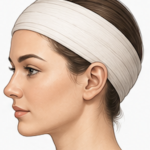
7 Forehead Shapes Seen on CT Scans That Guide Implant Design

In designing custom forehead implants from CT scans  I notice that patients fall into a limited number of recurring skull shape patterns. These patterns determine implant thickness distribution, coverage, and edge design. Below are 7 common forehead bone shapes that often drive implant design. 1. Flat Forehead Description Minimal forward projection Straight or slightly sloping Read More…

The 5 Most Common Forehead Implant Requests

Despite the many potential custom forehead implant types that can be designed,patient requests for forehead implants tend to cluster into a few very consistent aesthetic patterns. Most patients fall into five common forehead reshaping goals. 1. Flat Forehead Correction Most common request overall in females Typical patient description “My forehead looks flat.” “My forehead profile Read More…

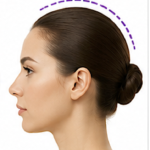
The Wide Diversity of Custom Forehead Implant Designs and Aesthetic Effects

The forehead occupies one-third of the aesthetic facial units and, because of its broad featureless surface, seems like a very straightforward augmentation area. In reality, however, there are numerous shape changes that can be done for differing aesthetic effectsbased on desired changes to its height, width, projection and shape. Thus forehead augmentation is more complex Read More…

Adult Plagiocephaly Skull Asymmetry Correction Case Example

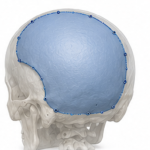
Custom skull implants are one of the main surgical options used to improve cranial asymmetry in adult plagiocephaly when the skull bones can no longer be reshaped. In adults, the cranial sutures are fused, so correction is typically done by augmenting the skull contour rather than moving bones. Below is a structured overview of how Read More…

Custom Jawline Implants and Submental Soft Tissue Repositioning Effects

When I have reviewed post-operative photos and some with CT scans after large custom jawline implants I sometimes notice a repositioning of the submental soft-tissue envelope. This helps explain why some patients report that their neck looks better 6–12 months after surgery than it did initially. This is not just swelling resolution; it reflects long-term Read More…

Custom Jawline Implants and the Platysma Tension Vector Effect

Another mechanism behind the “mini-neck-lift” effect of jawline implants involves how they change the tension vectors of the platysma muscle, the main superficial muscle of the neck. 1. The platysma is anchored along the jawline The platysma muscle is a thin sheet that runs from the upper chest and clavicle upward to attach along: the Read More…

Custom Jawline Implants and the Mandibular Arc Skin Recruitment Effect

Surgeons sometimes observe that large custom jawline implants improve neck appearance even in patients in their 40s–50s, which seems counterintuitive because neck aging is usually thought to require a neck lift. The mechanism is largely due to skin recruitment and tension along the mandibular arc. The “Mandibular Arc Skin Recruitment” Effect 1. The mandible acts Read More…

Custom Jawline Implants and the Mini Neck Lift Effect in Younger Patients

Jawline implants can create a “mini-neck-lift effect” in younger patients because the improvement comes from skeletal support and soft-tissue redraping, not from removing skin or tightening muscles. Younger necks still have elastic skin and relatively tight platysma, so when the underlying framework changes, the tissues can reposition themselves. Here are the main mechanisms. 1. Upward Read More…

Why Jawline Implants Affect the Neck More Than Chin Implants

Custom jawline implantw have a more profiound effect on the neck than chin implants for multiple reasons including: 1. Mandibular perimeter expansion A custom jawline implant enlarges the jaw in three regions: Chin (anterior) Mandibular body (side of the jaw) Jaw angles (posterior) This increases the total perimeter of the mandible. Result The soft tissue Read More…

Top Articles