Top Articles

Custom Jawline Implants and Submental Soft Tissue Repositioning Effects

Surgeons who review post-operative CT scans after large custom jawline implants sometimes notice a gradual repositioning of the submental soft-tissue envelope over months. This helps explain why some patients report that their neck looks better 6–12 months after surgery than it did initially. This is not just swelling resolution; it reflects long-term soft-tissue adaptation to Read More…

Custom Jawline Implants and the Platysma Tension Vector Effect

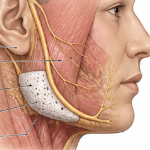
Another mechanism behind the “mini-neck-lift” effect of jawline implants involves how they change the tension vectors of the platysma muscle, the main superficial muscle of the neck. Platysma Tension Vector Effect 1. The platysma is anchored along the jawline The platysma muscle is a thin sheet that runs from the upper chest and clavicle upward Read More…

Custom Jawline Implants and the Mandibular Arc Skin Recruitment Effect

Surgeons sometimes observe that large custom jawline implants improve neck appearance even in patients in their 40s–50s, which seems counterintuitive because neck aging is usually thought to require a neck lift. The mechanism is largely due to skin recruitment and tension along the mandibular arc. The “Mandibular Arc Skin Recruitment” Effect 1. The mandible acts Read More…

Custom Jawline Implants and the Mini Neck Lift Effect in Younger Patients

Jawline implants can create a “mini-neck-lift effect” in younger patients because the improvement comes from skeletal support and soft-tissue redraping, not from removing skin or tightening muscles. Younger necks still have elastic skin and relatively tight platysma, so when the underlying framework changes, the tissues can reposition themselves. Here are the main mechanisms. 1. Upward Read More…

Why Jawline Implants Affect the Neck More Than Chin Implants

Custom jawline implantw have a more profiound effect on the neck than chin implants for multiple reasons including: 1. Mandibular perimeter expansion A custom jawline implant enlarges the jaw in three regions: Chin (anterior) Mandibular body (side of the jaw) Jaw angles (posterior) This increases the total perimeter of the mandible. Result The soft tissue Read More…

Custom Jawline Implant and Its Effects On The Neck

A custom jawline implant can have a noticeable effect on a sagging neck, but the effect depends heavily on the cause of the neck laxity (skin, fat, muscle, or skeletal support). Here’s how it works anatomically and aesthetically. 1. Structural effect: expanding the jawline Custom jawline implants augment the inferior border of the mandible (chin Read More…

Design Patterns in Vertical L:engthening Custom infraorbital-Malar Implants

In custom infraorbital–malar (IOM) implant design, vertical infraorbital rim lengthening can be conceptualized in three different design patterns based on how aggressively the orbital–malar relationship is altered. These patterns are useful during planning because they correspond to different anatomical problems and aesthetic goals. 1. Subtle Vertical Rim Lengthening (Contour enhancement pattern) Concept A small inferior Read More…

The Role of Vertical Lengthening in Custom Infraorbital-Malar Implants

Vertical infraorbital rim lengthening is one of the most important—but often under-appreciated—design variables in custom infraorbital-malar (IOM) implants. Its value lies in correcting the three-dimensional skeletal deficiency of the upper midface, not just adding projection. Below is a structured explanation of why it matters biomechanically and aesthetically. 1. What “vertical infraorbital rim lengthening” actually means Read More…

Quantitative Modeling of Midface Projection-to–Soft Tissue Response: Predicting Lid–Cheek and Midface Surface Change From Skeletal Augmentation

Skeletal augmentation of the infraorbital rim, anterior maxilla, and malar region produces a nonlinear, region-specific soft tissue response. For surgical planning—especially with custom infraorbital–maxillary or “midface mask” implants—quantitative modeling helps answer a practical question: How many millimeters of surface change (soft tissue forward movement) will occur for each millimeter of bony/implant projection? A workable, clinically Read More…

Top Articles