Top Articles

Blog

Custom Hip Implants – Current State of the Art

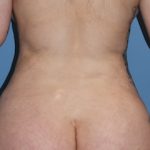
Aesthetic hip implants are silicone implants placed over the outer pelvis/hip region to increase hip width, roundness, and curve, enhancing the waist-to-hip ratio.They are most often used to: Correct hip dips Create a more hourglass silhouette Complement previous BBL results when fat alone isn’t enough Done with rib removal waist reshaping surgery for a more Read More…

Custom Midface Implants vs Standard Cheek Implants – Comparison Case Study

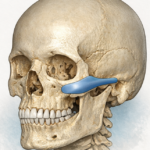
Cheek implants are a well known permanent facial augmentation method that was originally developed for true  skeletal deficiencies. Such congenital or developmental deficiencies include: Flat or under-projected cheekbones Poor midface projection despite normal weight Long faces Class II skeletal patterns Patients with weak zygomatic prominence Sunken mid faces Cheek volume loss Cheekbone asymmetries Implants restore Read More…

The Custom MIdface Mask Implant – Indications and Benefits

Custom midface mask implants are a specific subtype of custom facial implants that act as a single, continuous skeletal “overlay” for the central face rather than separate cheek or infraorbital pieces. Think of it as a one-piece midface framework that sits on top of the maxilla and along the infraorbital rims and cheeks. What a Read More…

Comparing Custom vs Off-The-Shelf Infraorbital Implants

Standard off-the shelf (OTS) implants exist for just about every facial area below the brow bones. This is true for the infraorbital area of the upper midface as well with the tear trough implant. It is an implant that was originally made to treat a limited or the entire infraorbital rim bone. How does this Read More…

Custom Infraorbital vs Infraorbital-Malar Implant Comparison

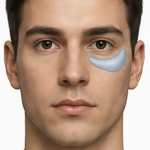
Custom implant designs offer great versatility for  augmentation of upper midface aesthetic bony deficiencies particularly the undereye area.  There are two basic types of undereye custom designs, infraorbital (IO) and infraorbital-malar (IOM) implants. A comparison of infraorbital-only versus infraorbital–malar implants, focusing on when each works, when it doesn’t, and why, will make the difference in Read More…

Ciustom Infraorbital-Malar Implants in Negative Orbital Vector Anatomy Case Study

Custom infraorbital–malar implants are one of the most powerful (and under-used) solutions for true undereye hollowing, especially when the problem is skeletal deficiency, not just soft-tissue fat loss (e.g., after lower blepharoplasty) Undereye hollowing is often caused by: Infraorbital rim deficiency Negative vector midface Low malar projection with deep tear trough Thin lower-lid soft tissue Read More…

Cupped vs Solid Displacement Testicular Implants – A Comparative Case Study

Introduction There are two primary implant concepts used for testicular enlargement: wraparound implants and side by side (displacement) implants. The side?by?side technique uses a solid testicular implant placed adjacent to the natural testicle. Implant size is determined by how much volume is required to adequately displace the native testicle. The wrap?around technique uses an implant Read More…

Adult Brachycephaly Skull Reshaping Case Study

Adult brachycephaly refers to a persistently short, wide head shape (increased cranial width relative to length) that began in infancy and remained into adulthood. What it is Definition: Brachycephaly = reduced front-to-back skull length with increased width Cephalic index: Typically > 80–85 In adults, the skull bones are fused, so the shape is stable and non-progressive The most common cause is positional Read More…

Top Articles